
3 November, 2013
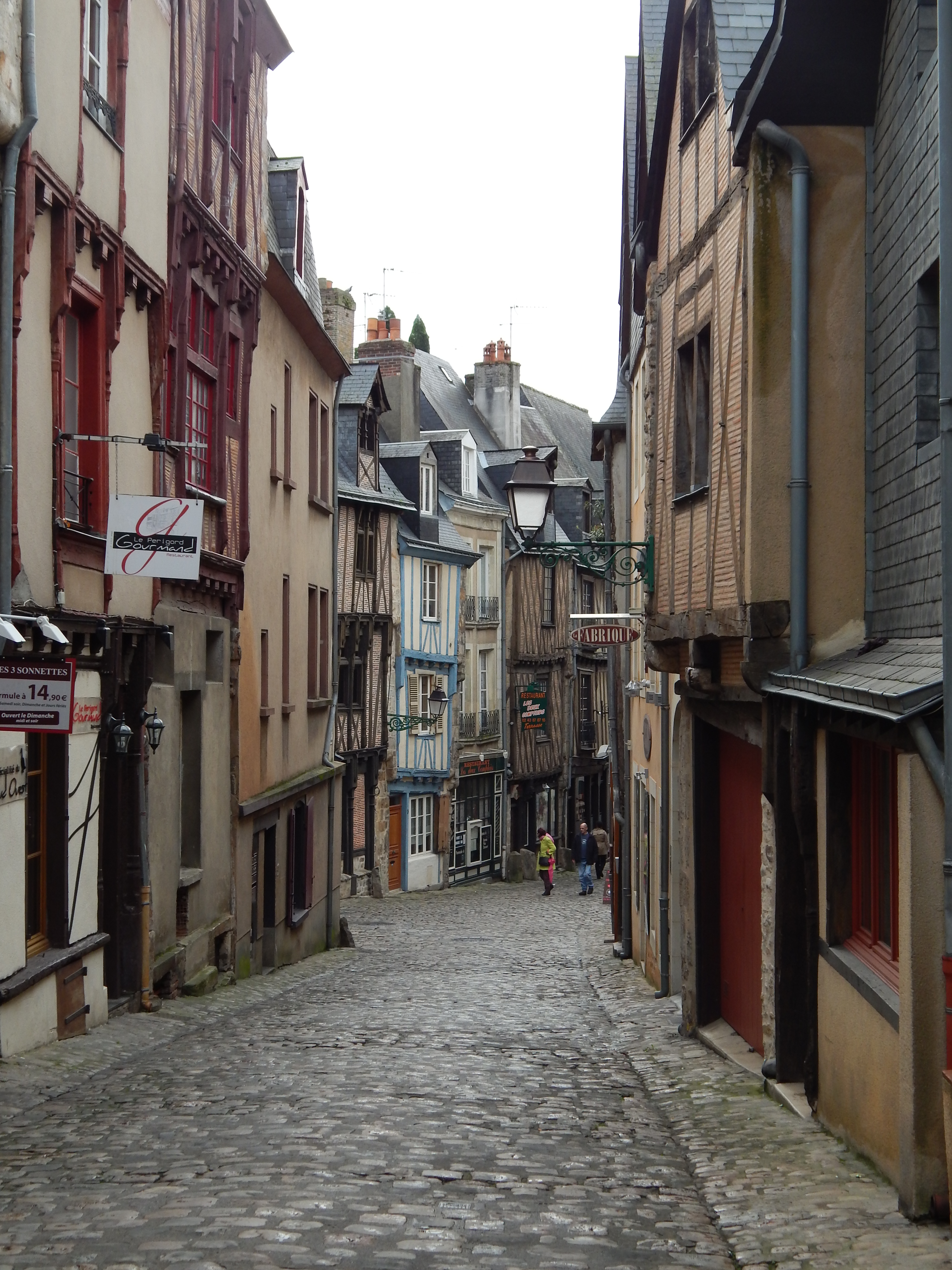
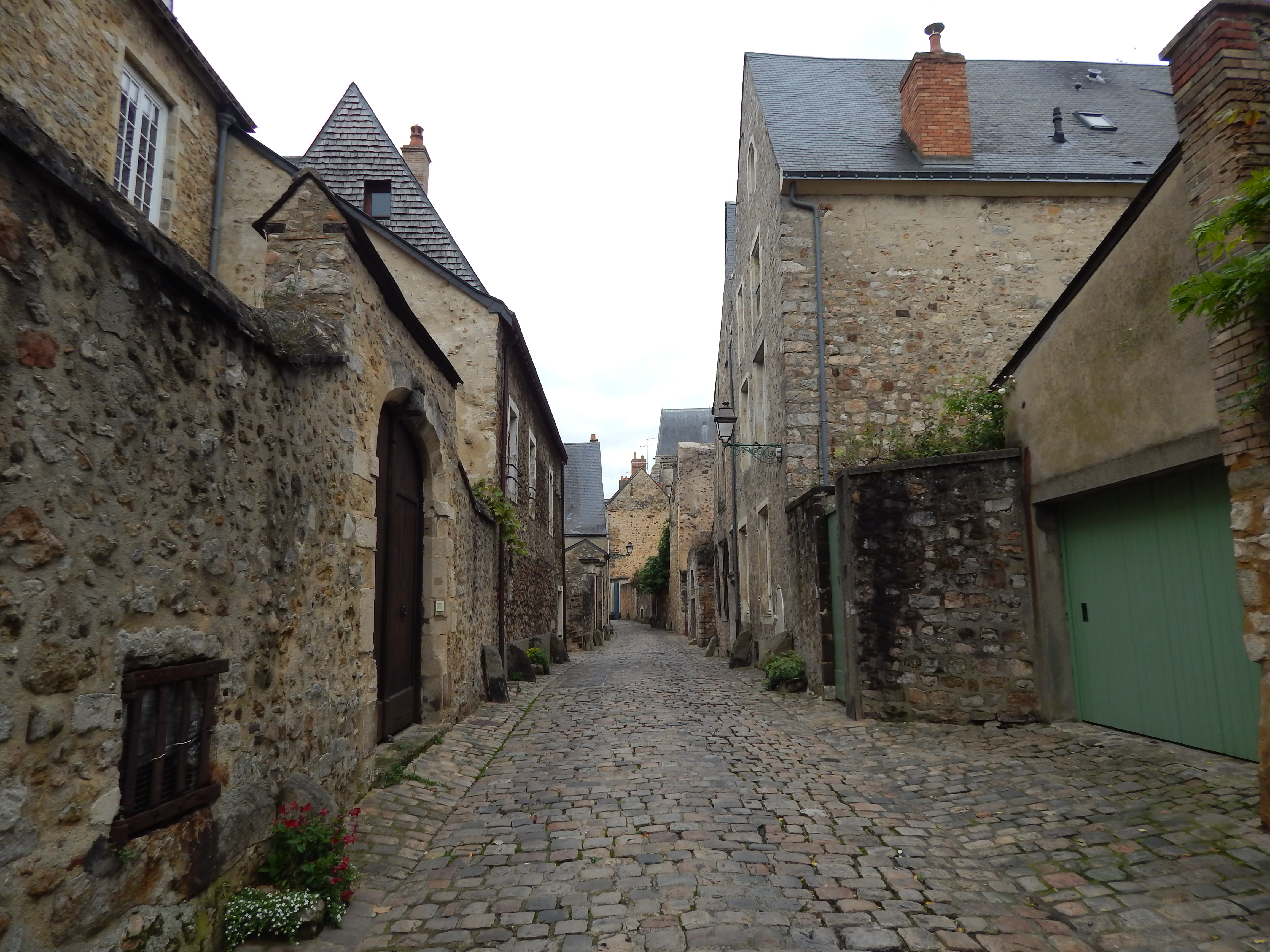
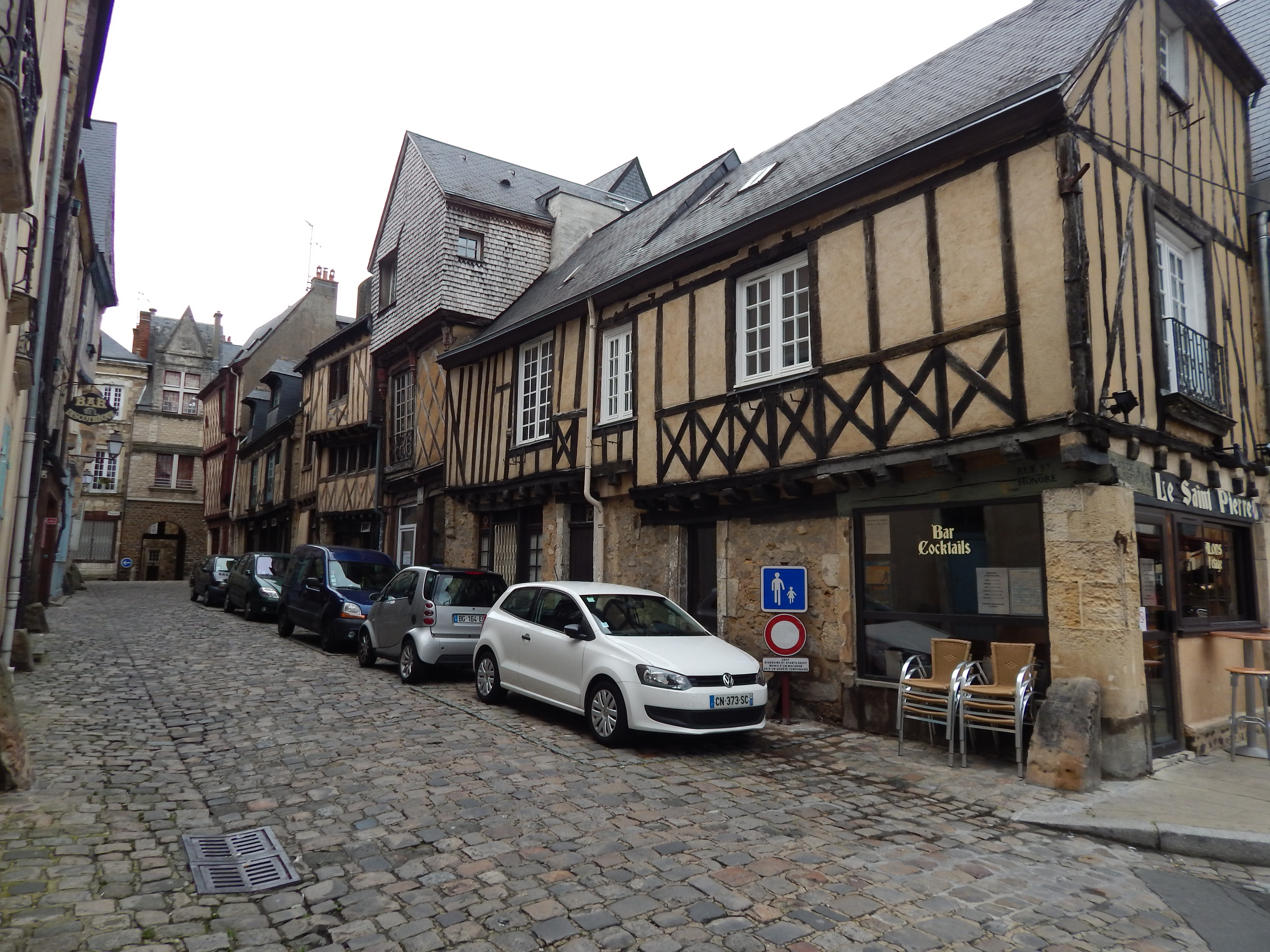
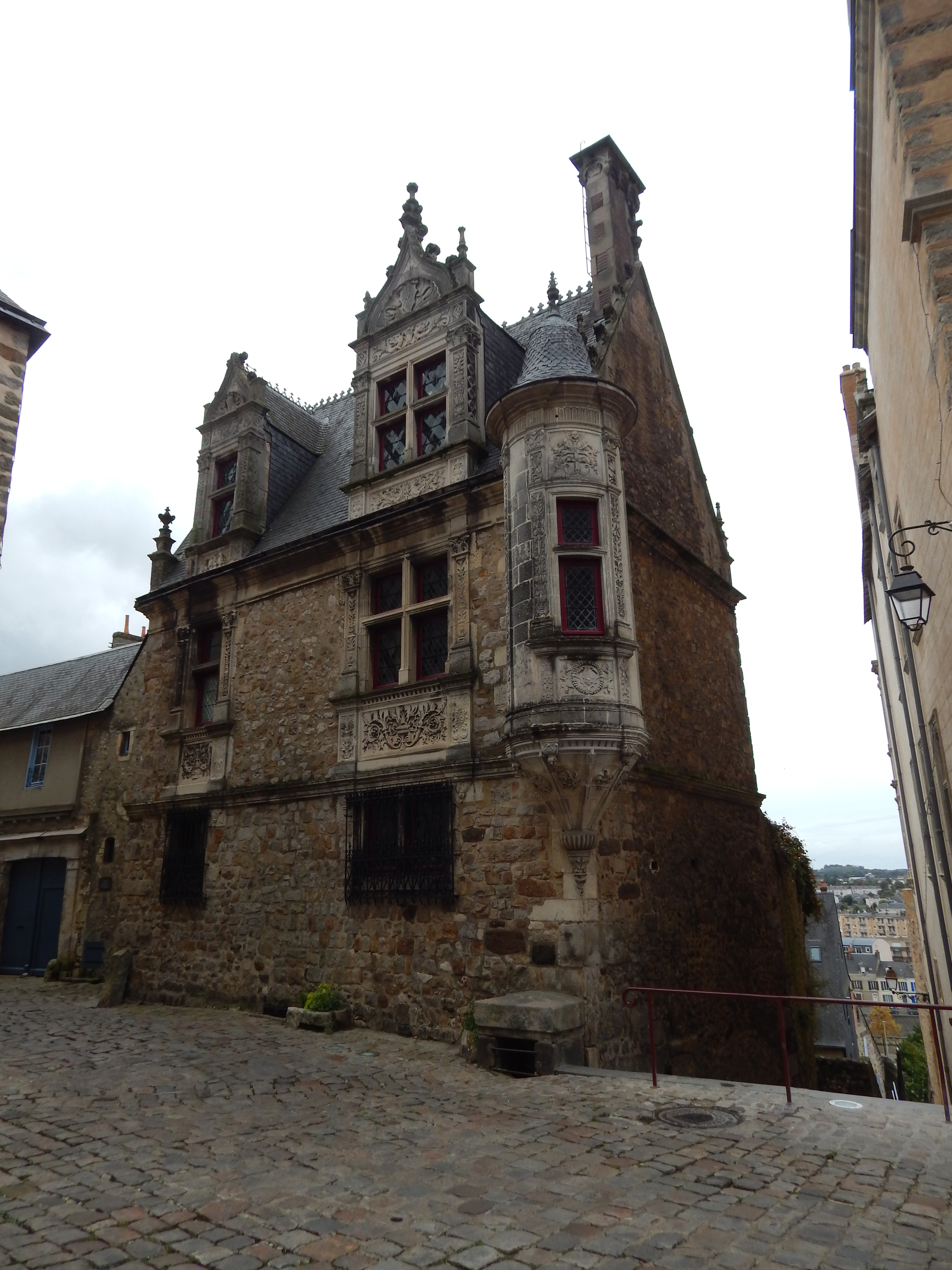
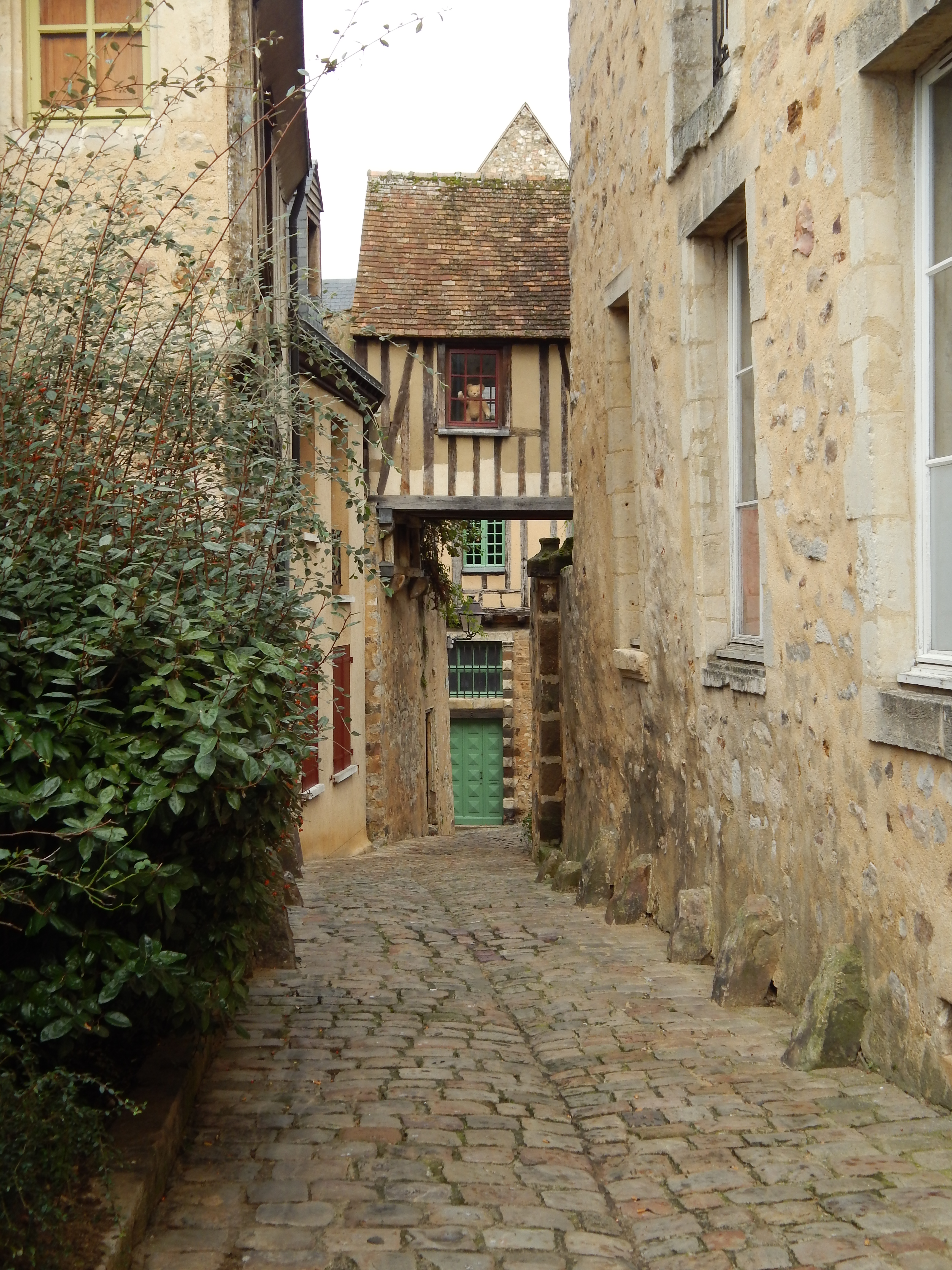
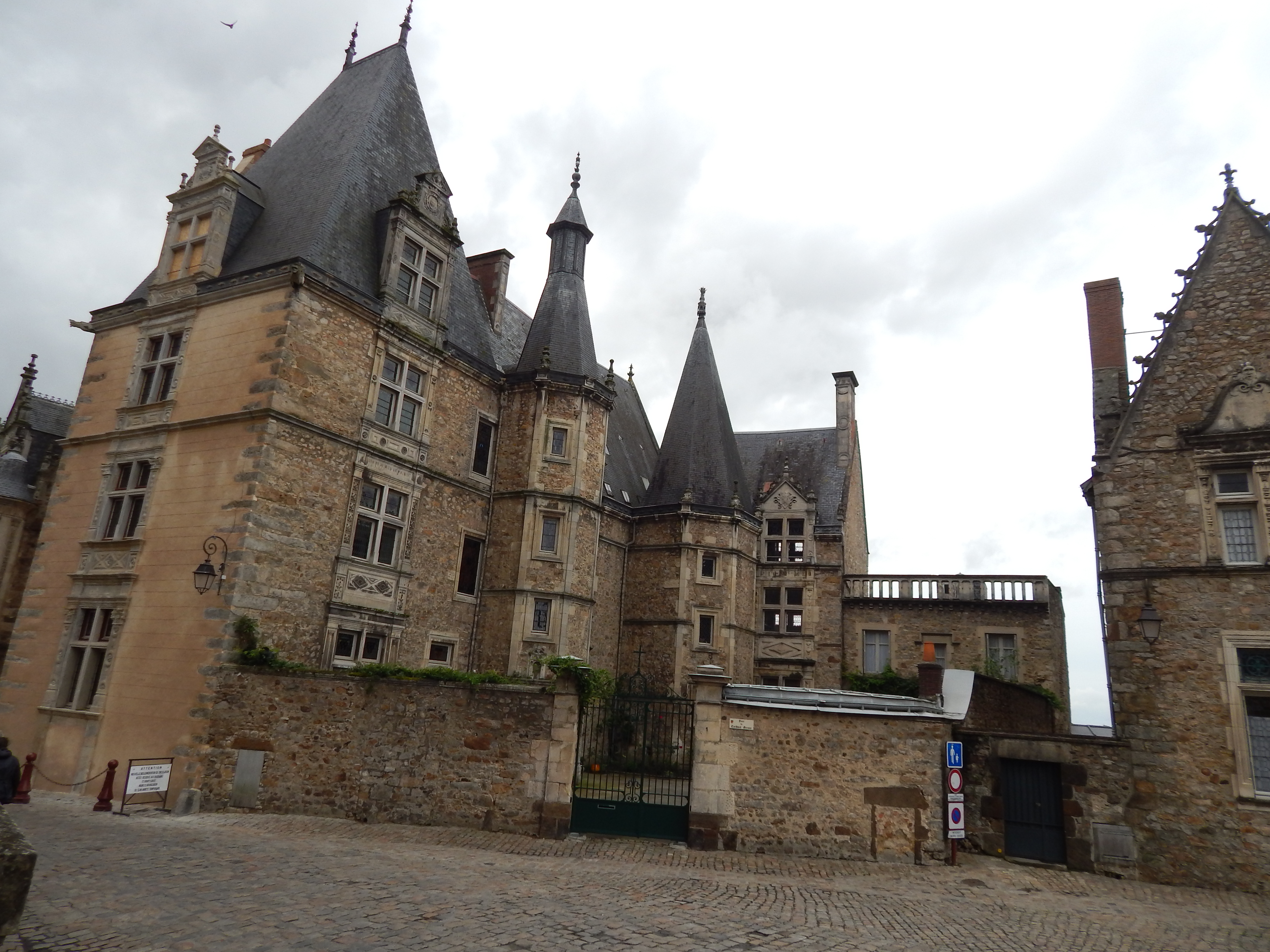
Trying to catch up to today.. Yesterday in Le Mans had quite a variety of sights and subsequently pictures. After the museum at the racetrack I took the tram to the old part of town. In the states, that means somewhere from the turn of the 20th century. In Le Mans it means the turn of the 12th century. This is one of the best preserved medieval towns in France. The City Walls date to the 3rd century, at the end of Roman period in Normandy. Much of the old part of the city is 14th & 15th century. The narrow and winding cobbled streets lined with houses 500 years old are very charming. I love these parts of France.
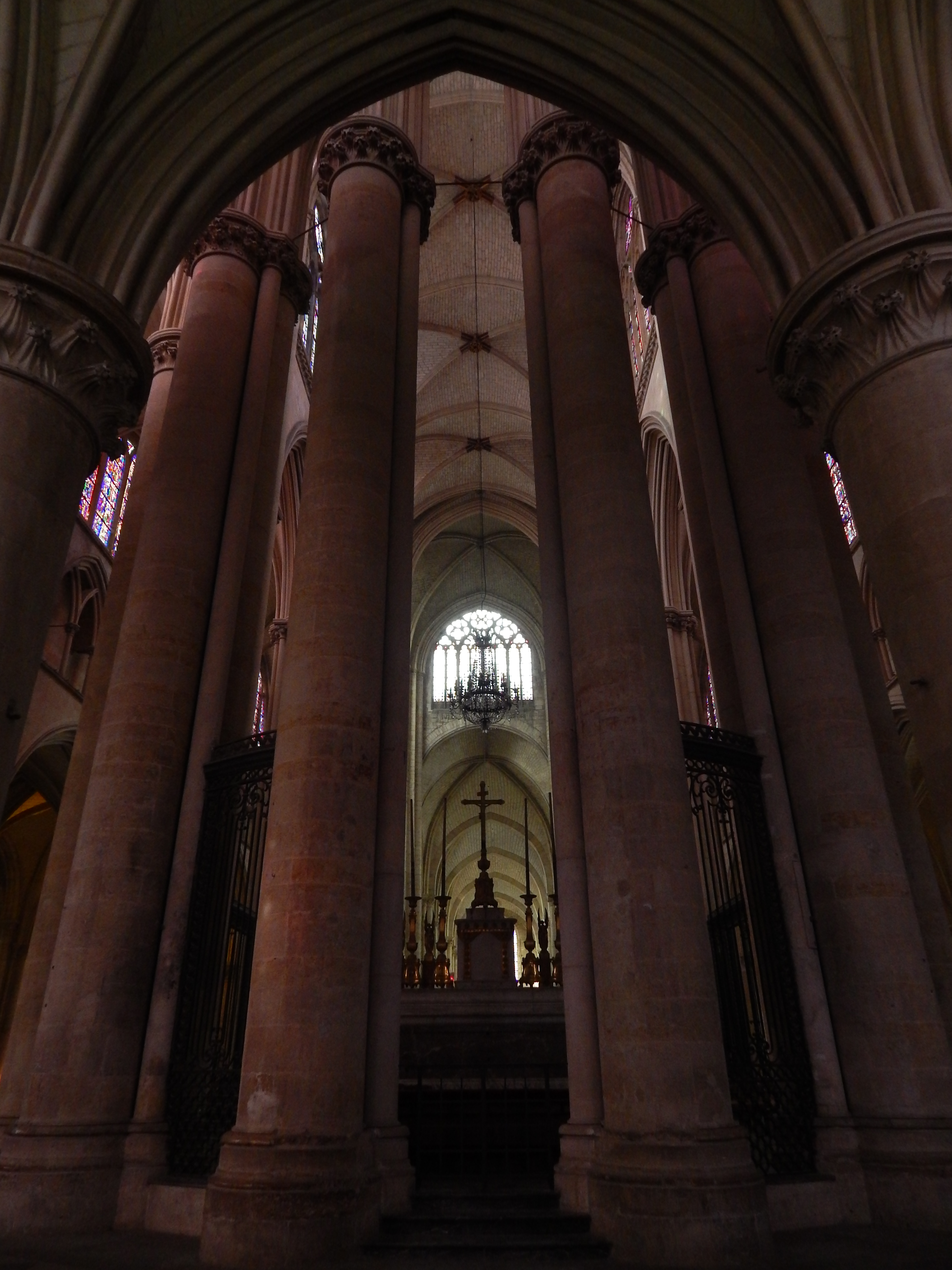
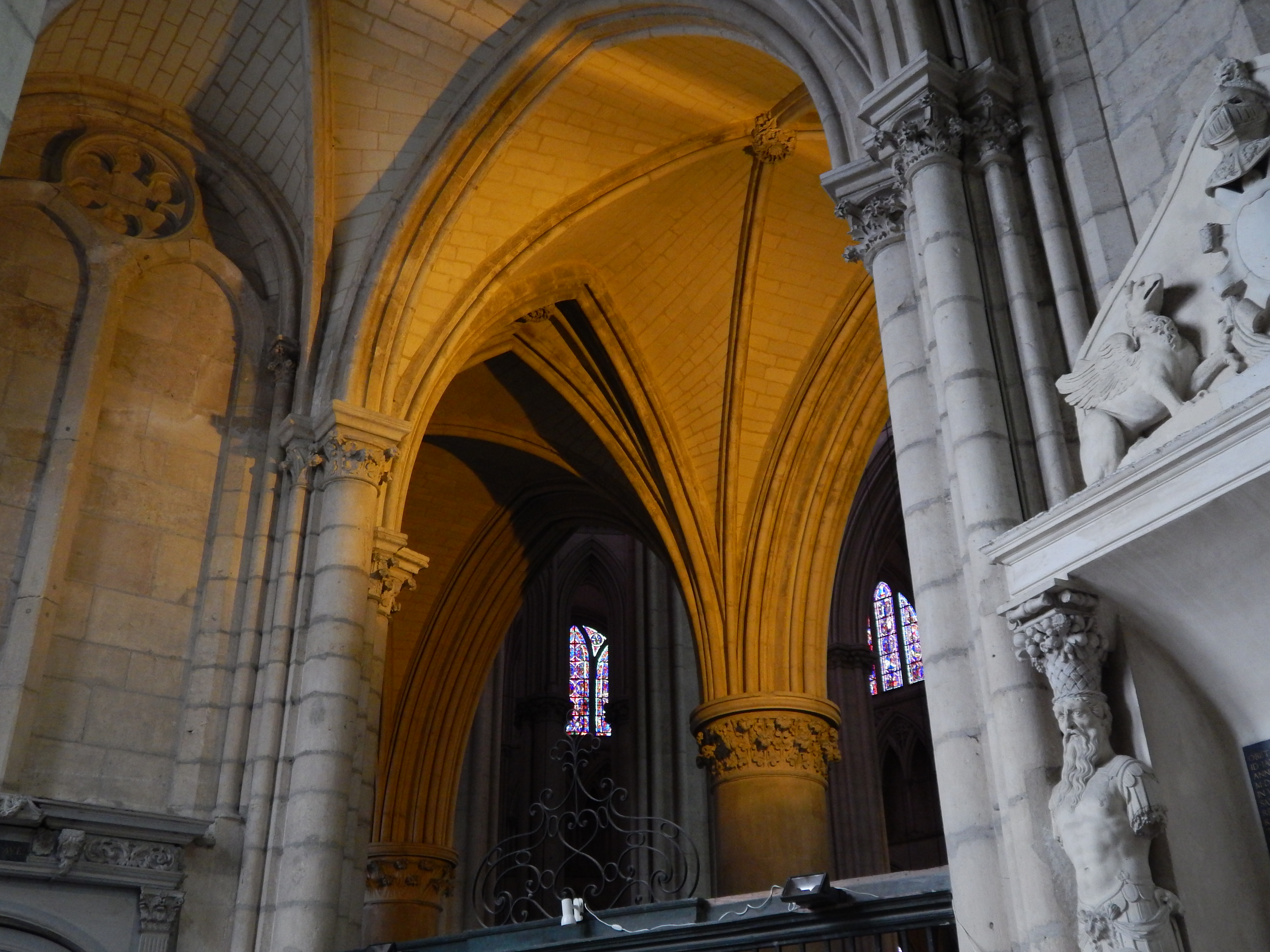
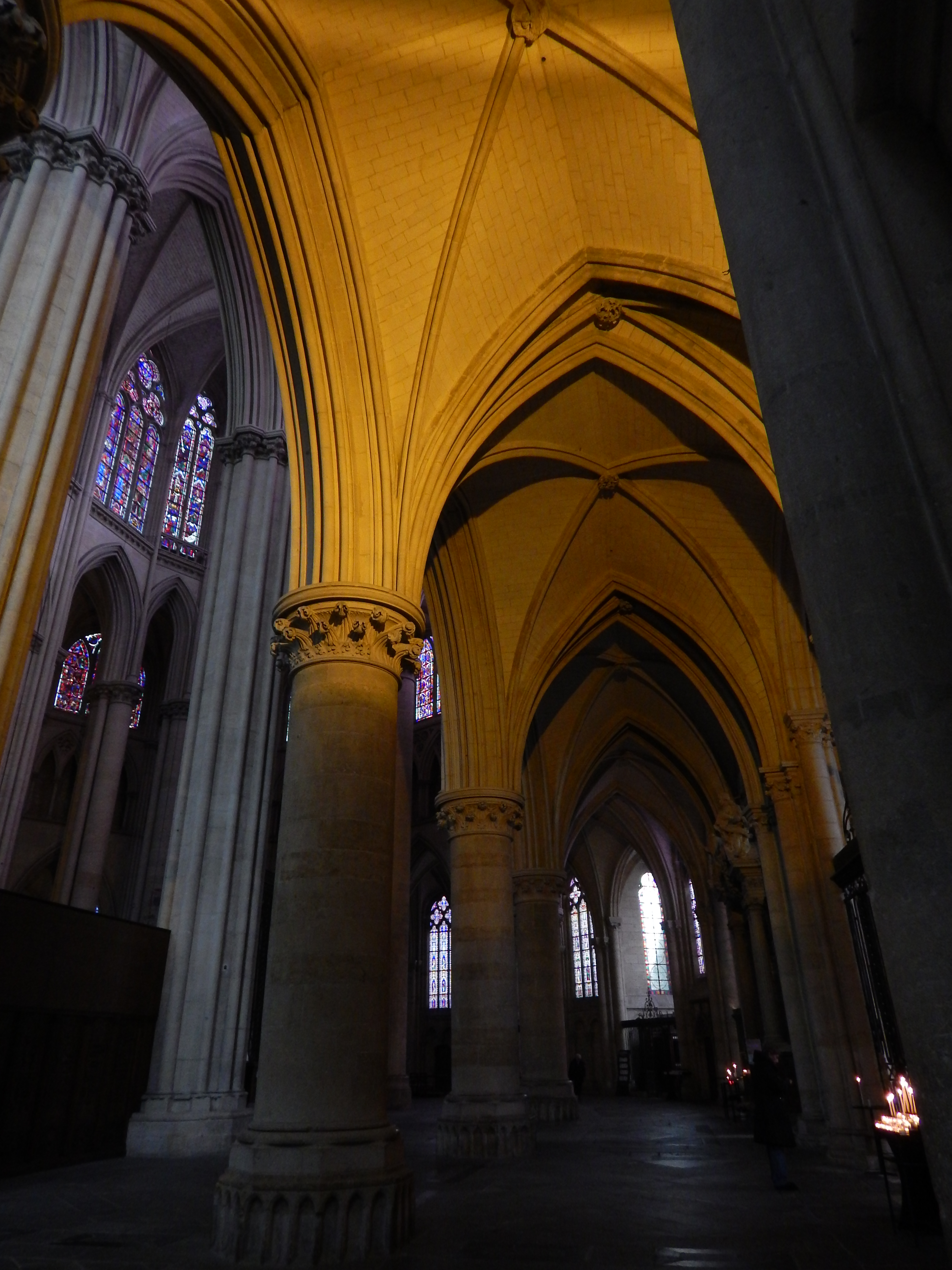
Le Cathedral Saint Julian du Mans is an interesting combination of styles. These monumental churches took generations to build, and this is a perfect example of that. The evolution was to build ever higher with bigger windows. This meant more mass, and the technique was perfected in the high Gothic with pointed arches in the wall perforations and flying buttresses taking the weight of the stone vaulting and roof away from the walls of the building. The nave at St. Julian was completed in the 12th century in the Norman/Romanesque style. 100 years later saw the coming of the Gothic. The transept and apse have the higher vaulting and large windows of the later 13th and 14th century style. This has the interesting effect of the newer areas around the altar and choir – the space for God – feeling more open and more full of light, while the nave – the space for the people – is dimmer. (For a more complete history, please see the Wikipedia page http://en.wikipedia.org/wiki/Le_Mans_Cathedral )
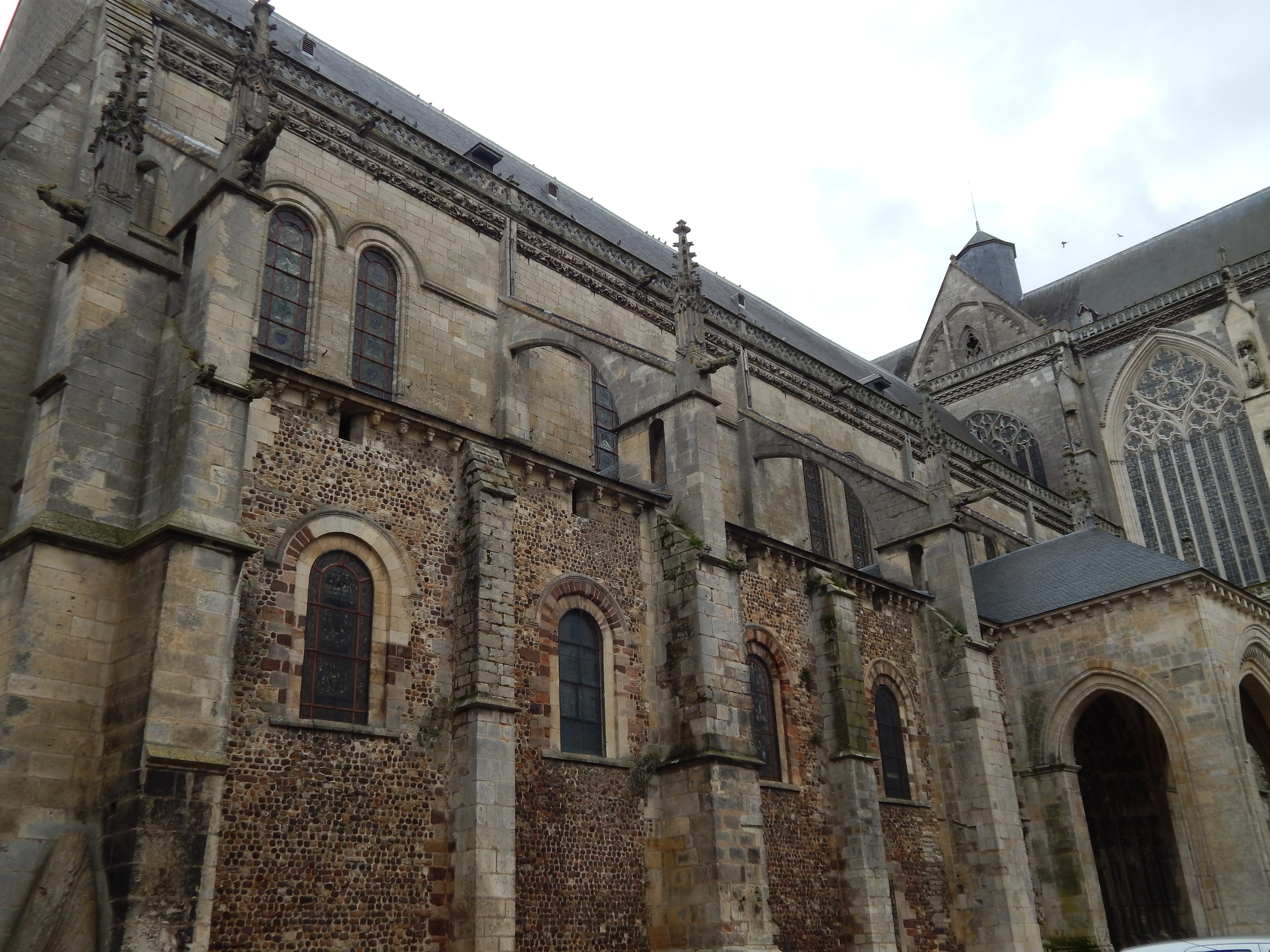
Romanesque nave with early Gothic buttressing added to support stone vault
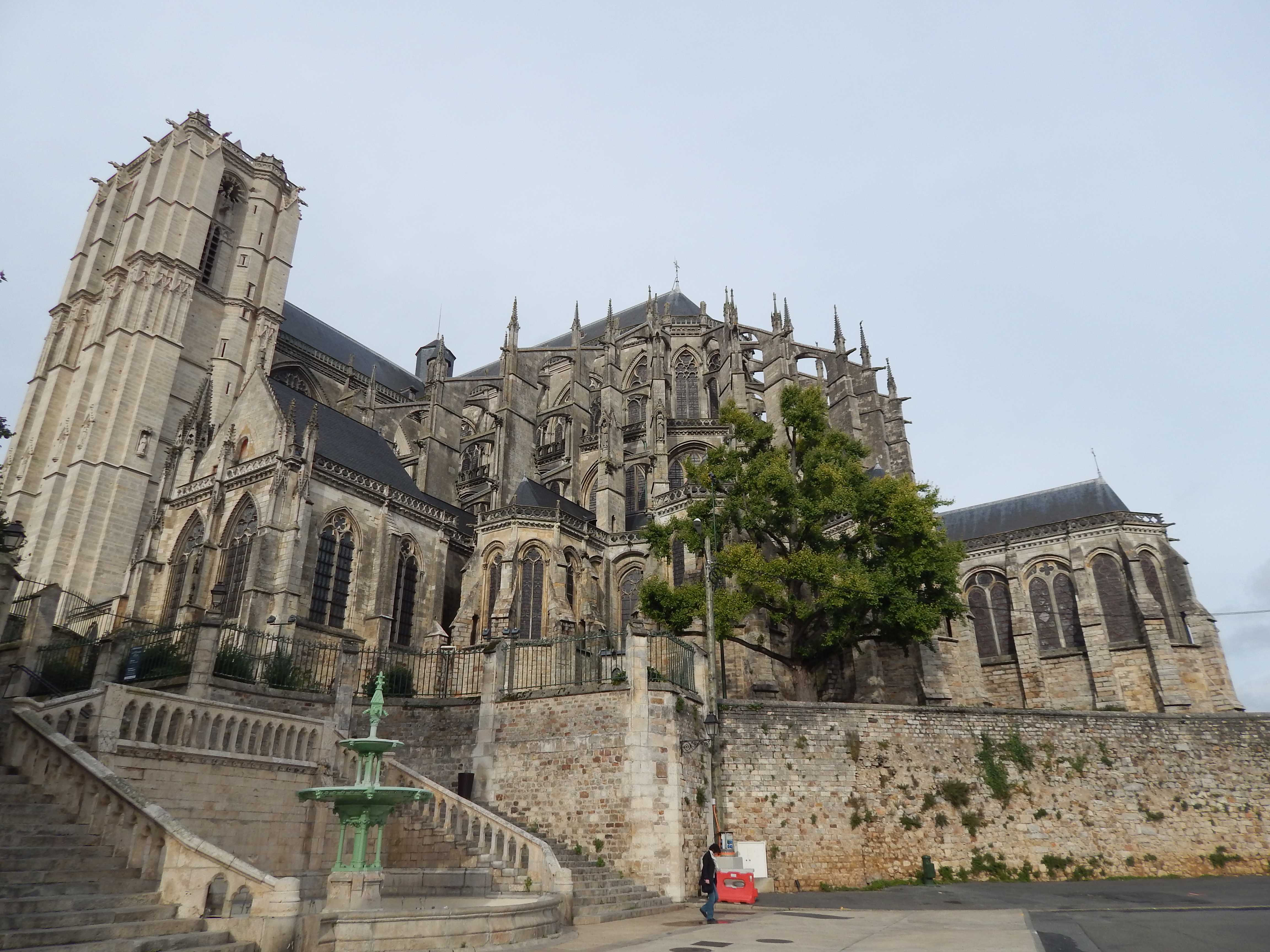
View from outside Old City wall
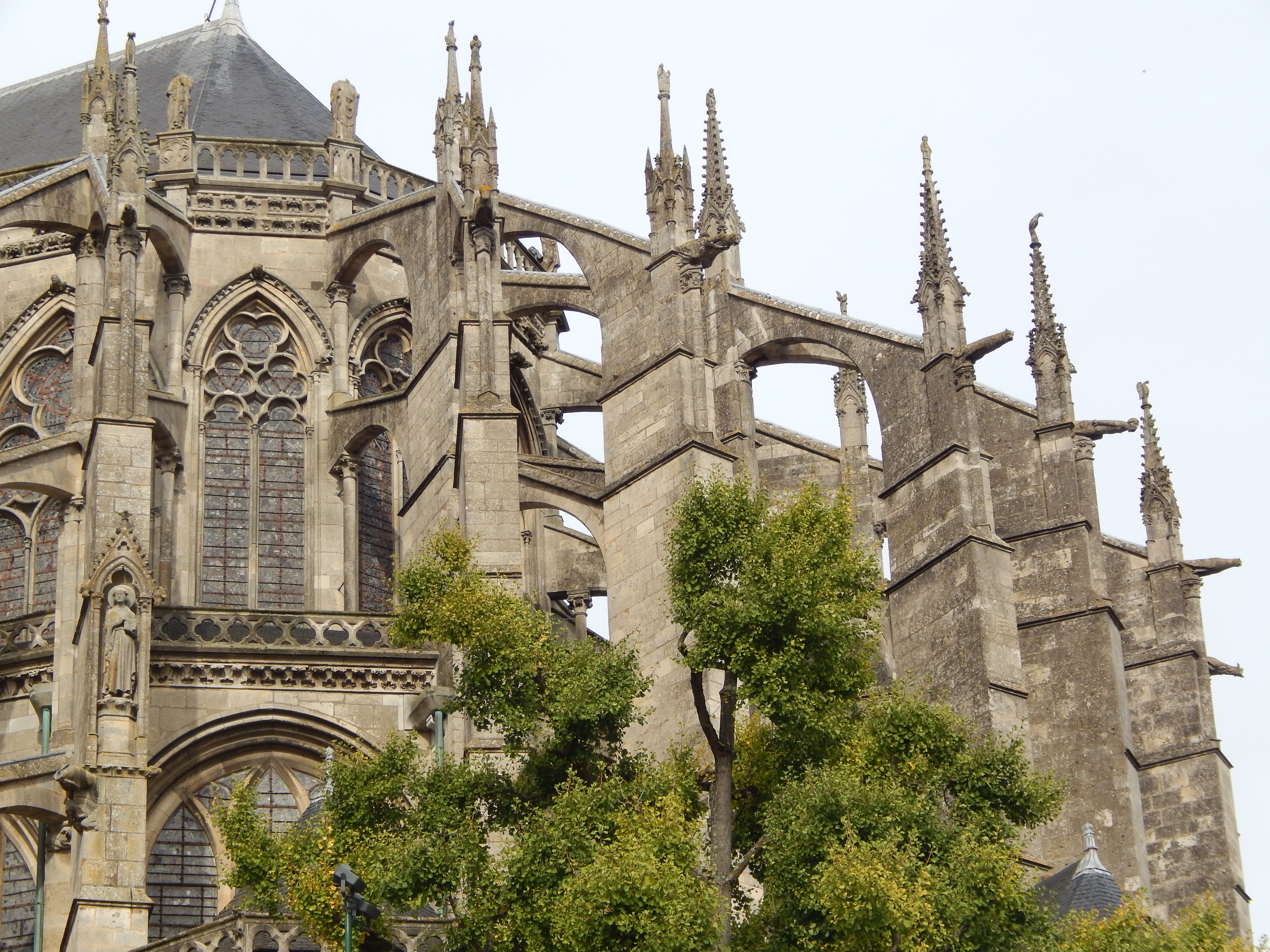
Doubled flying buttresses around apse
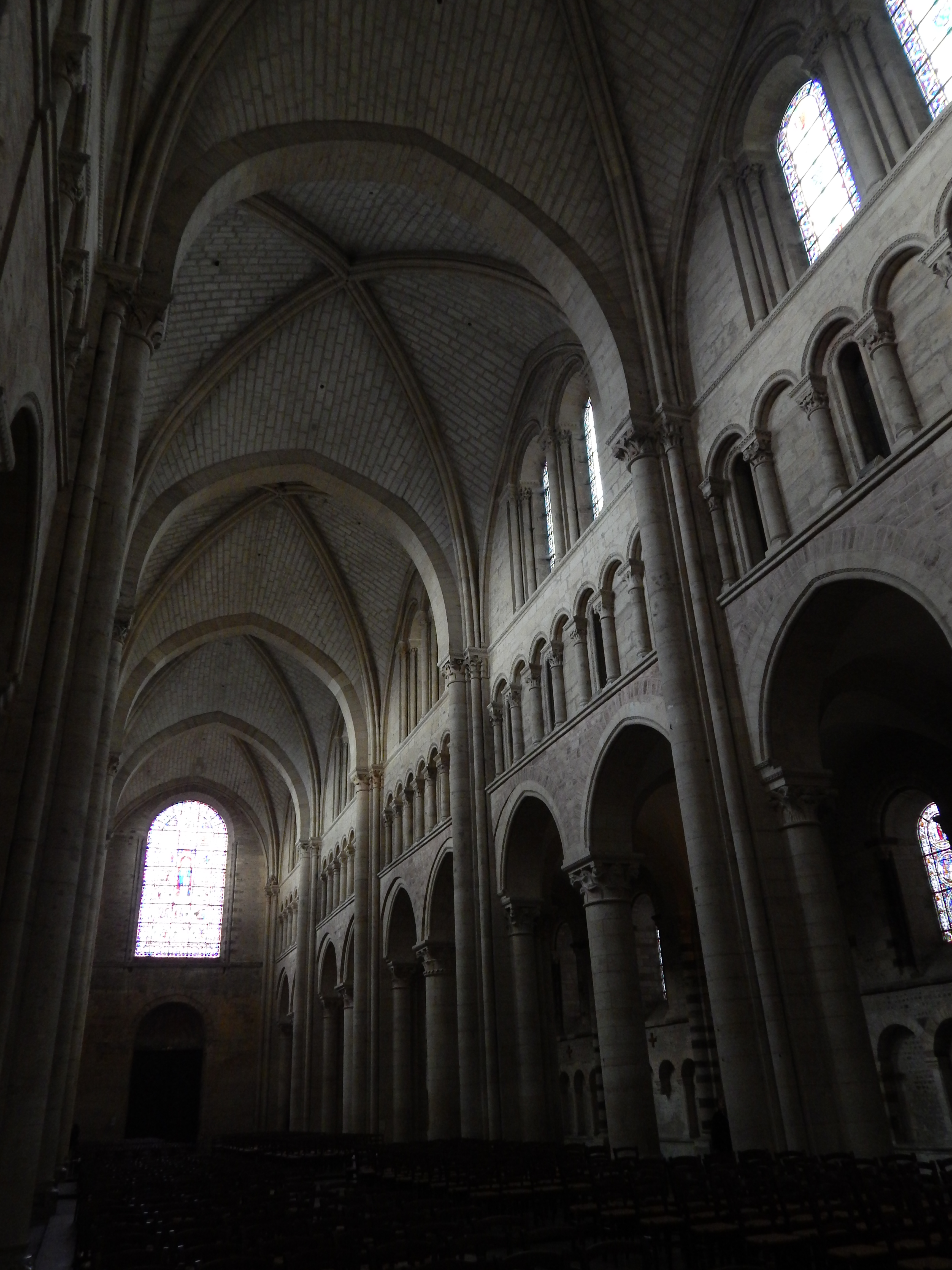
Nave vault
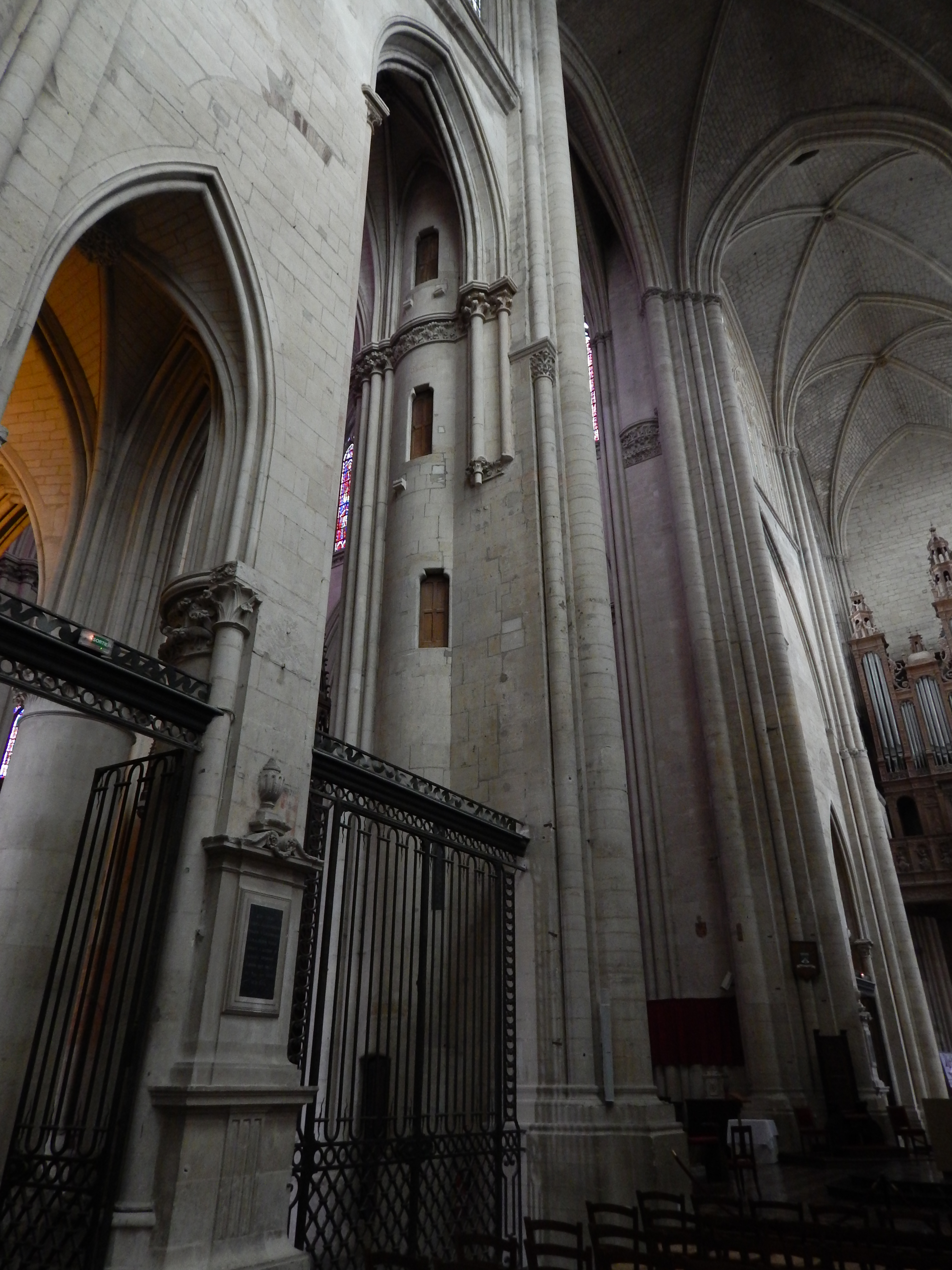
Columns and arches at transept crossing
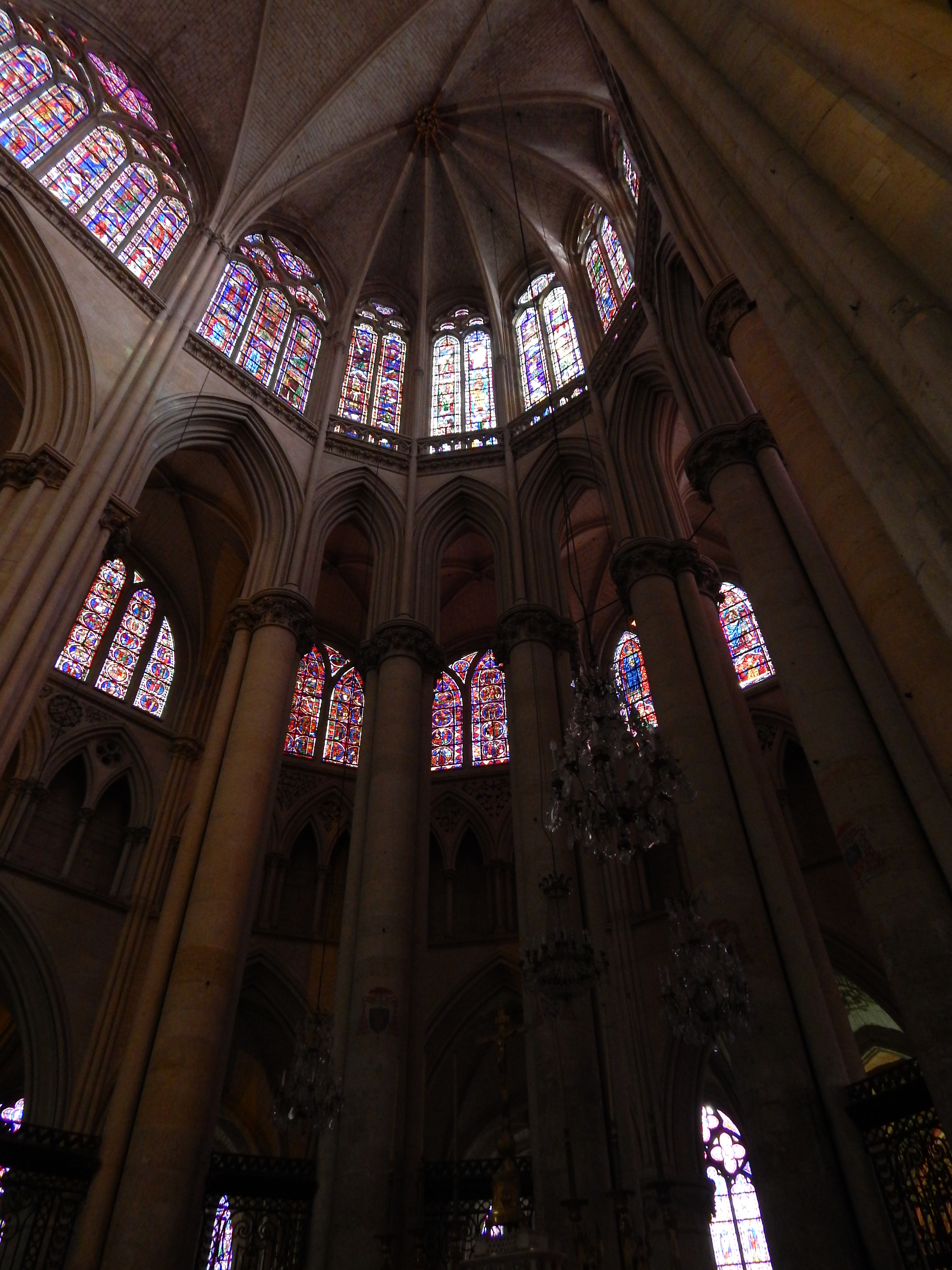
Apse clerestories and vaults
These places amaze me. Not just for the spiritual energy collected within their walls, but just the walls themselves. The beauty of the harmonies of line and proportion – the sacred geometries that are the ancient secrets of the masons who built them. These are massive constructions of countless tons of stone standing firm through the centuries held up by gravity. The form, while embellished with decoration glorifying the almighty and the lives of the saints, is dictated by the function. That function is to support massive weight while allowing light to come in through the glorious windows. Like at Chartres, much of St. Julian’s medieval stained glass has survived. The windows illustrate the lives of the Saints and stories of the scripture for a populace that was illiterate. Prior to Gutenberg’s invention of the press books, and the ability to read them, were something only found in the monasteries. The light they let in, as a result, is full of color, and it’s wonderful.
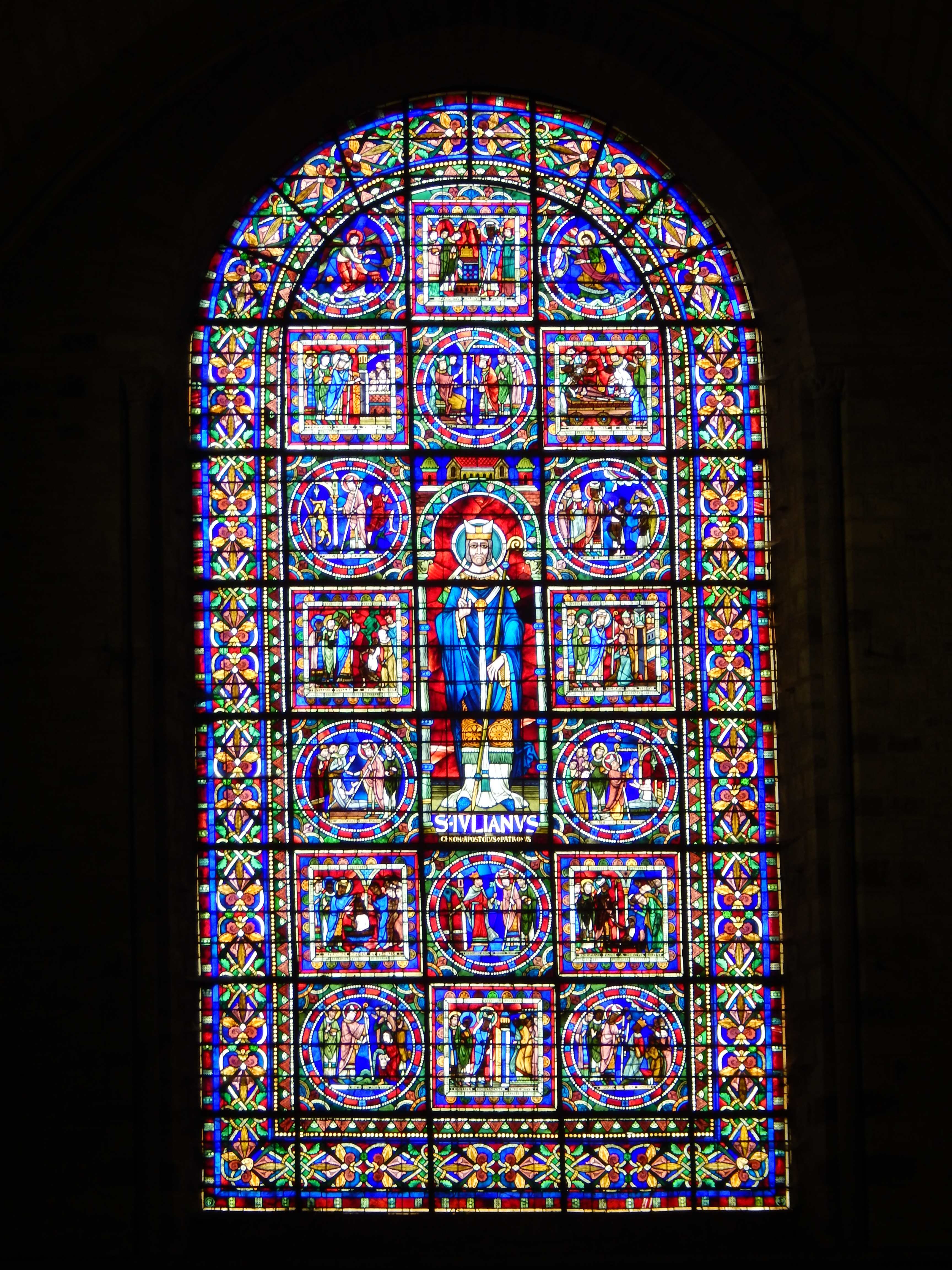
Saint Julian window
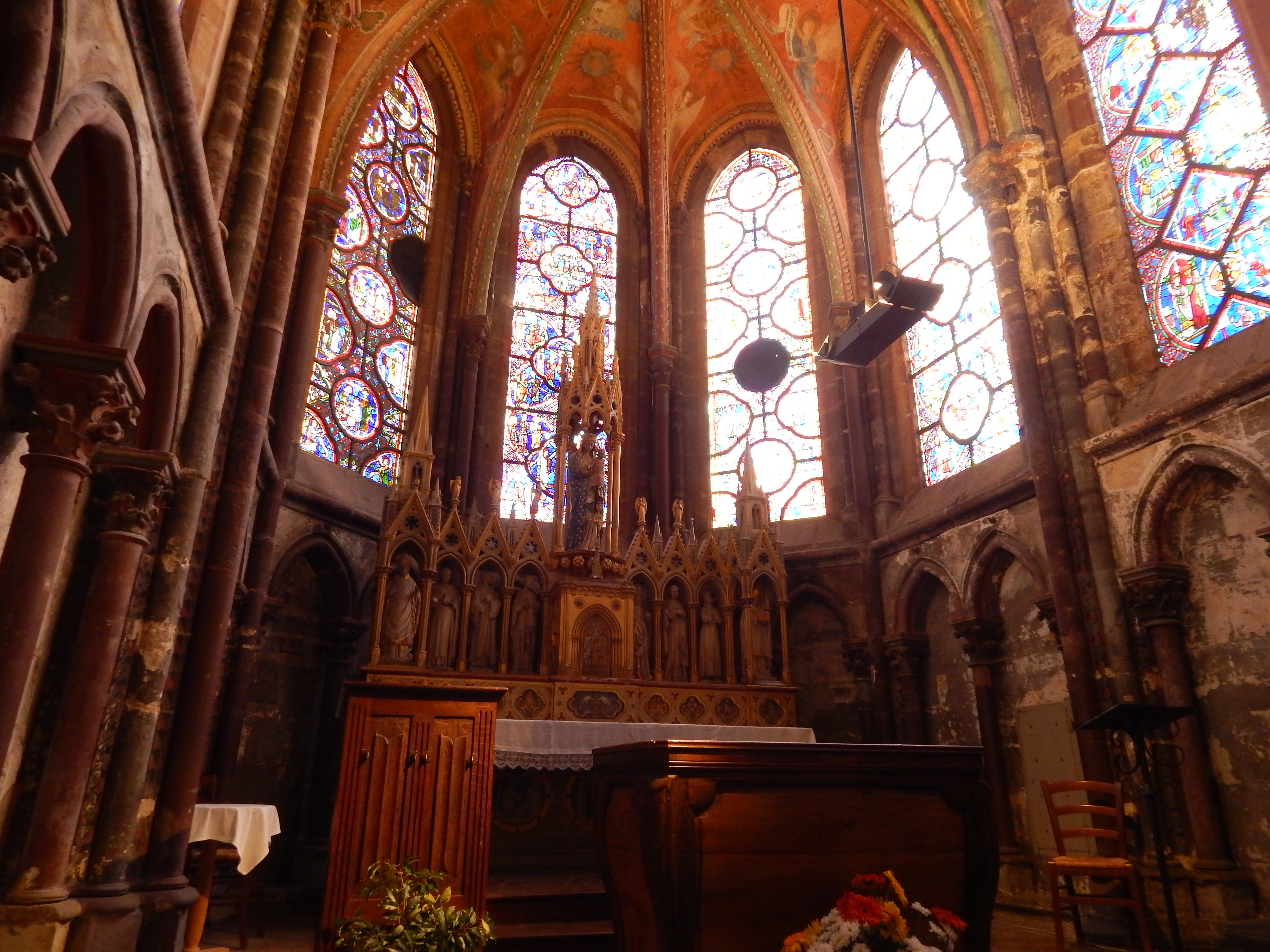
Chapel to the Virgin Mary in apse
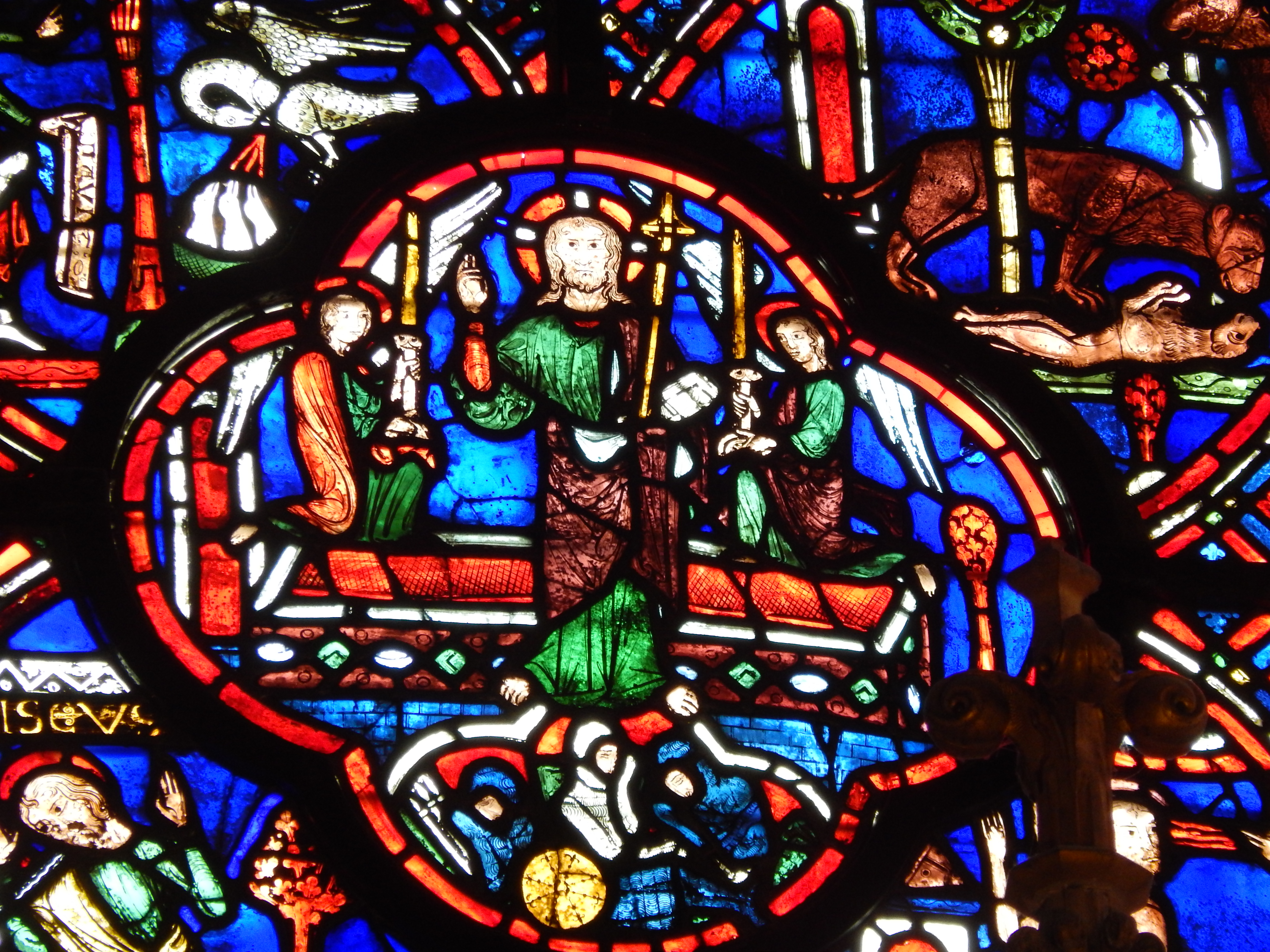
Window detail, Chapel of the Virgin
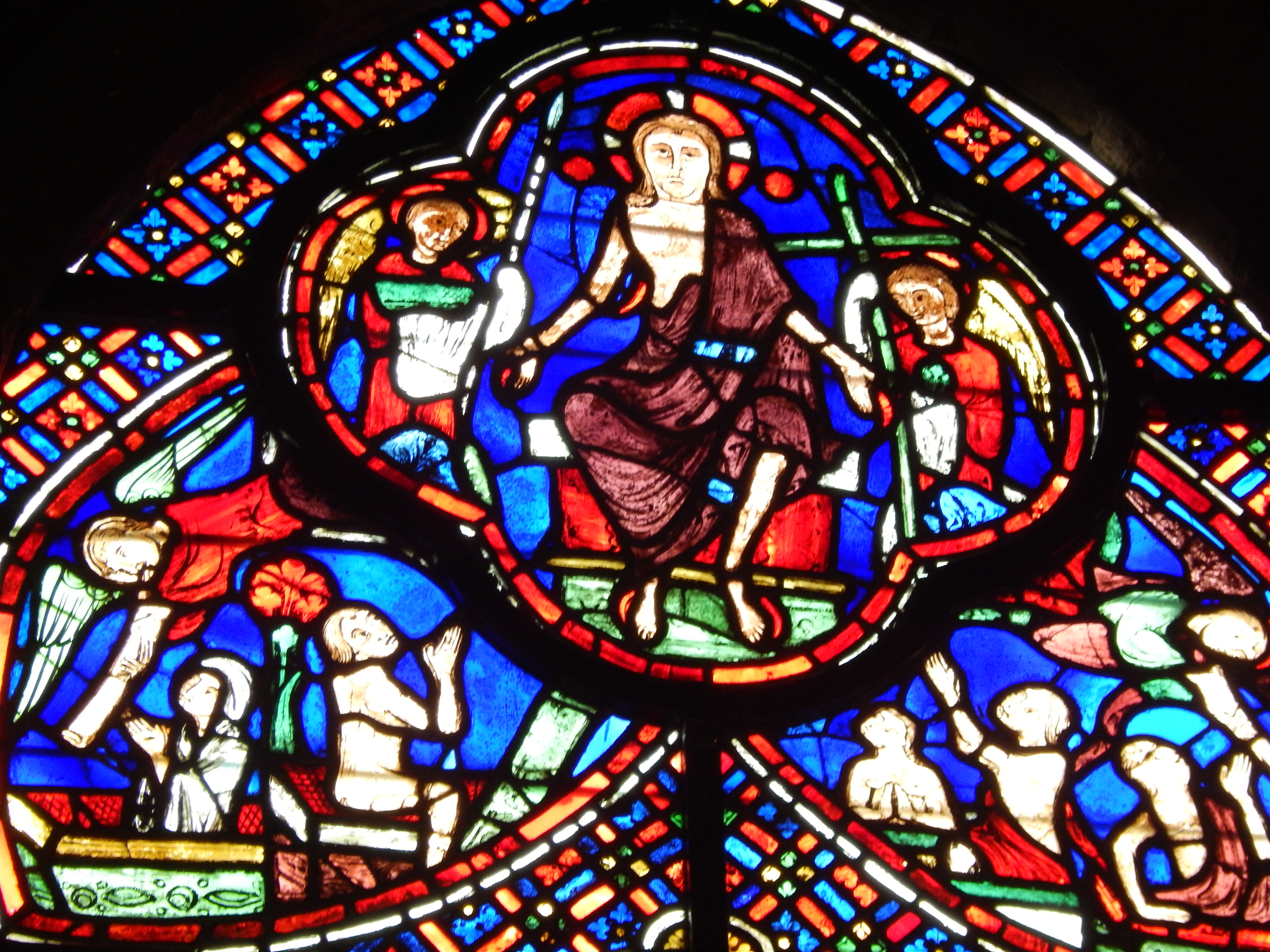
Window detail, Chapel of the Virgin
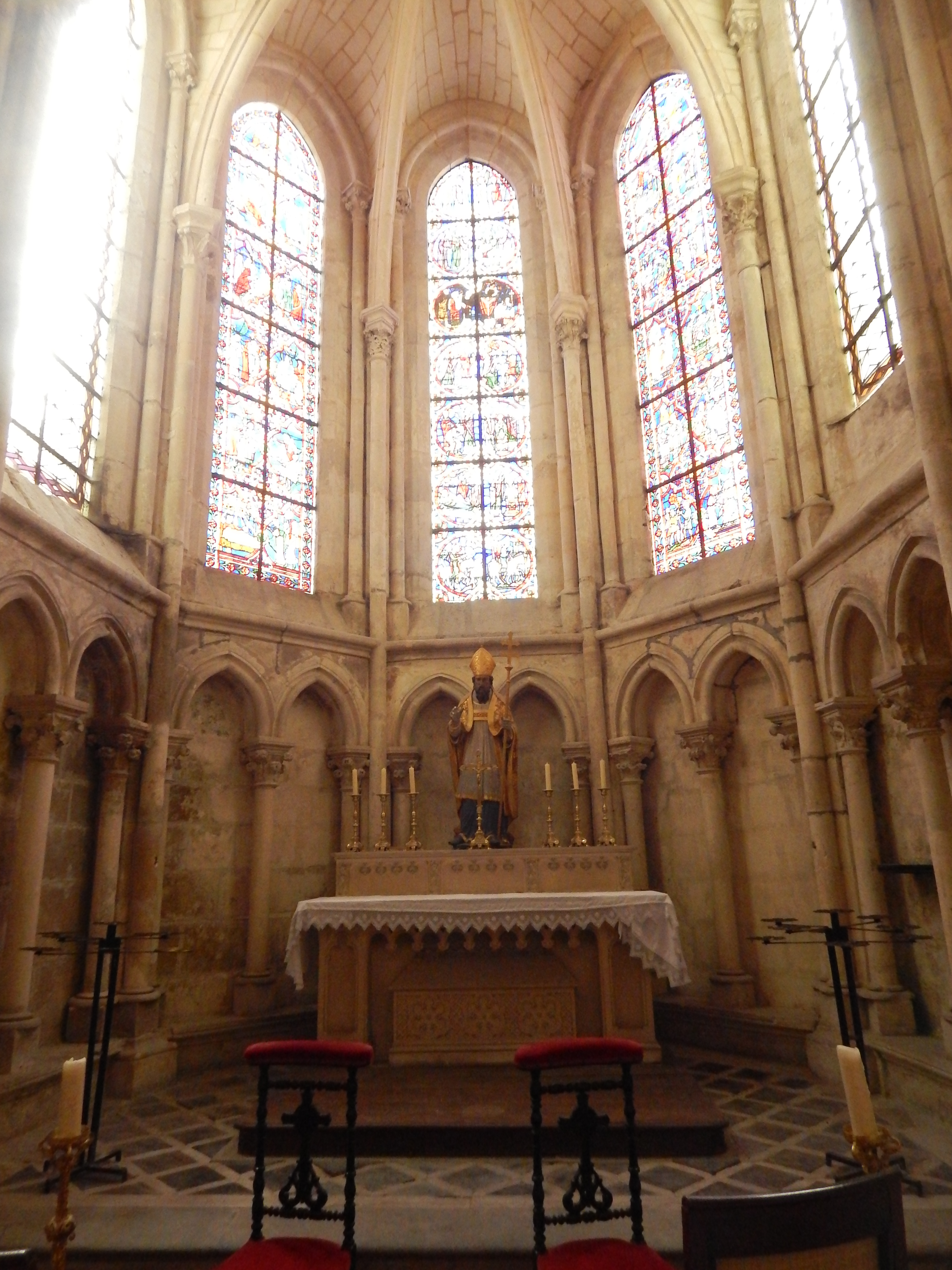
Chapel of Saint Martin
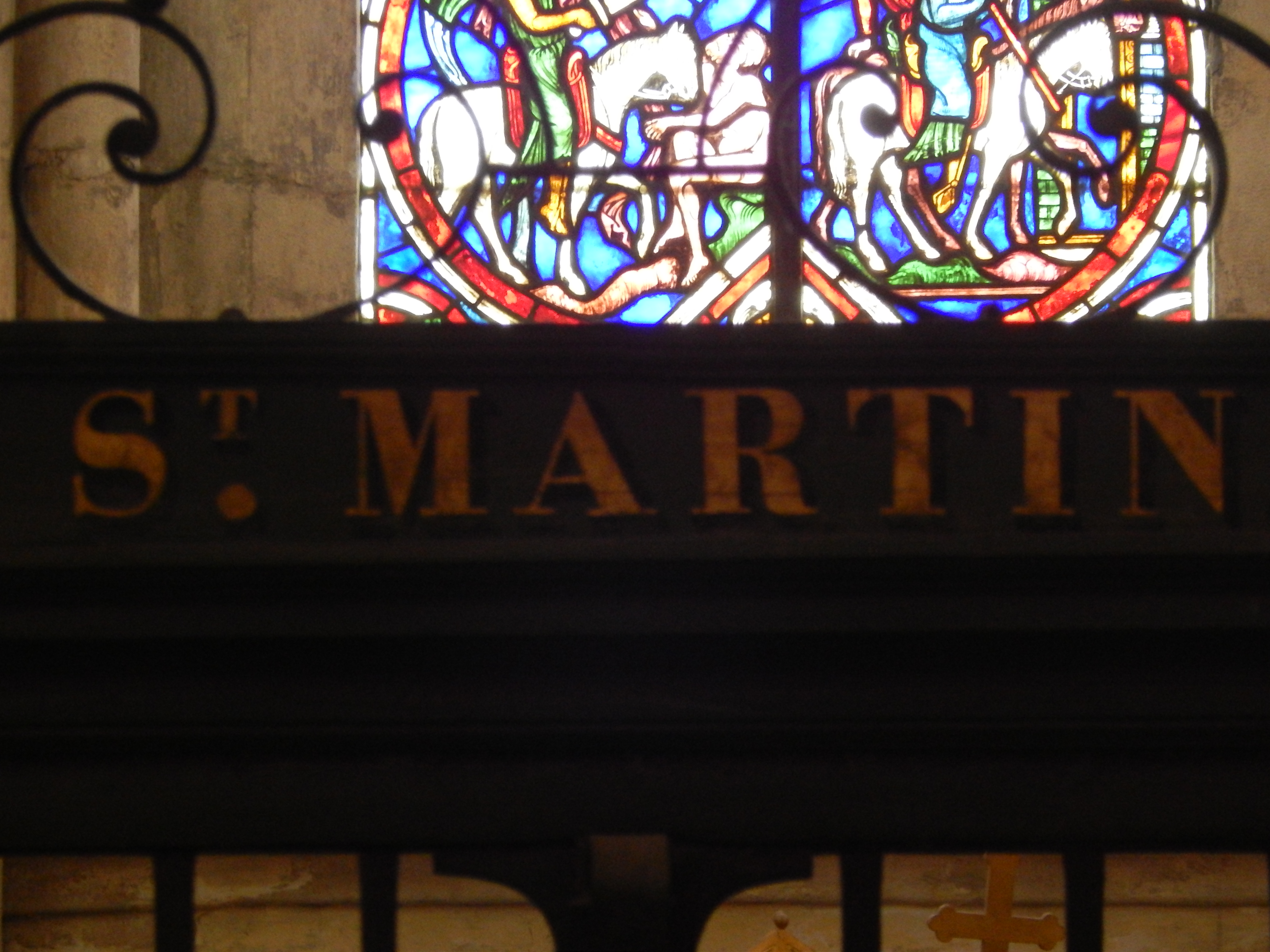
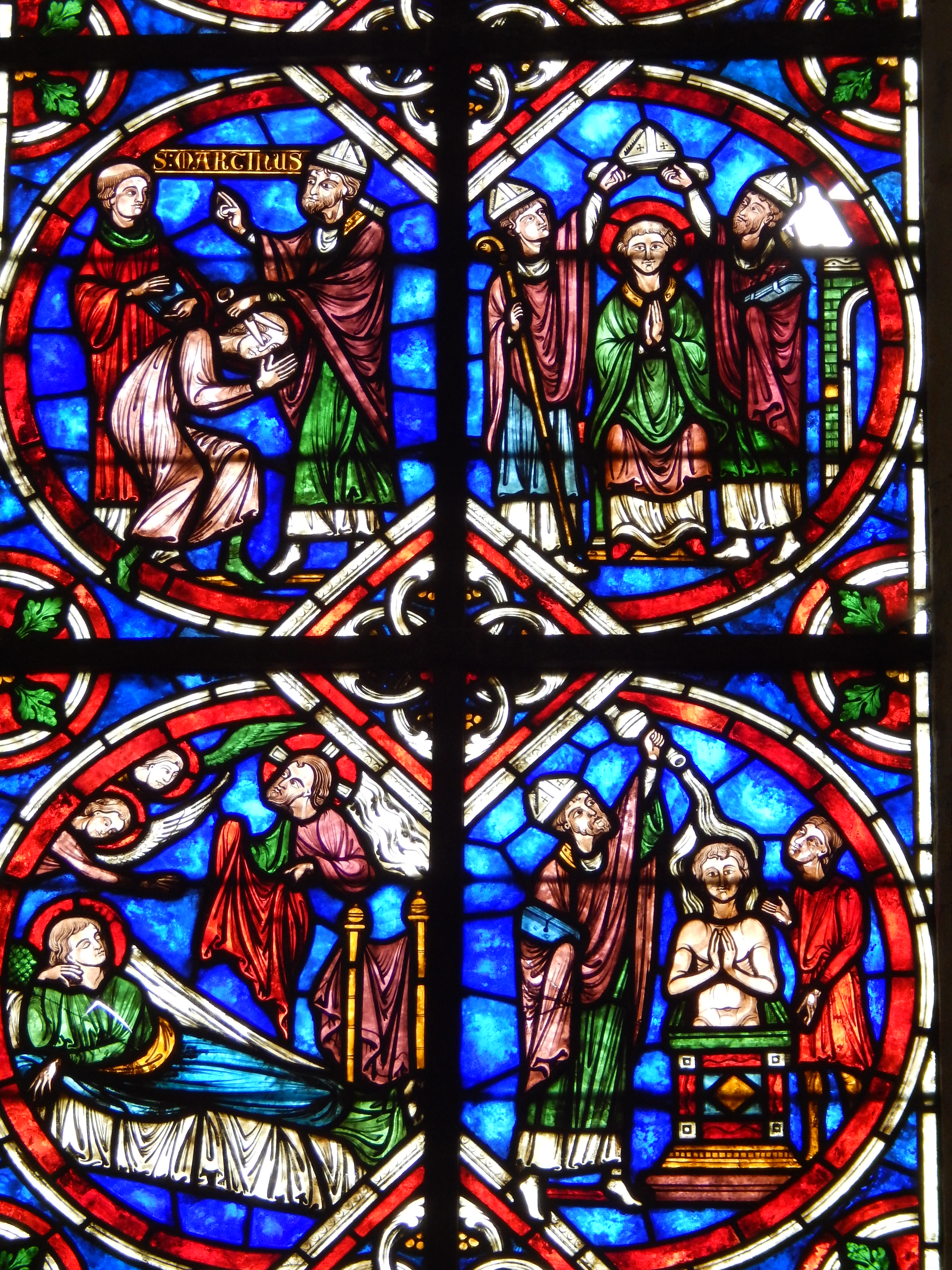
Window detail, Chapel of Saint Martin
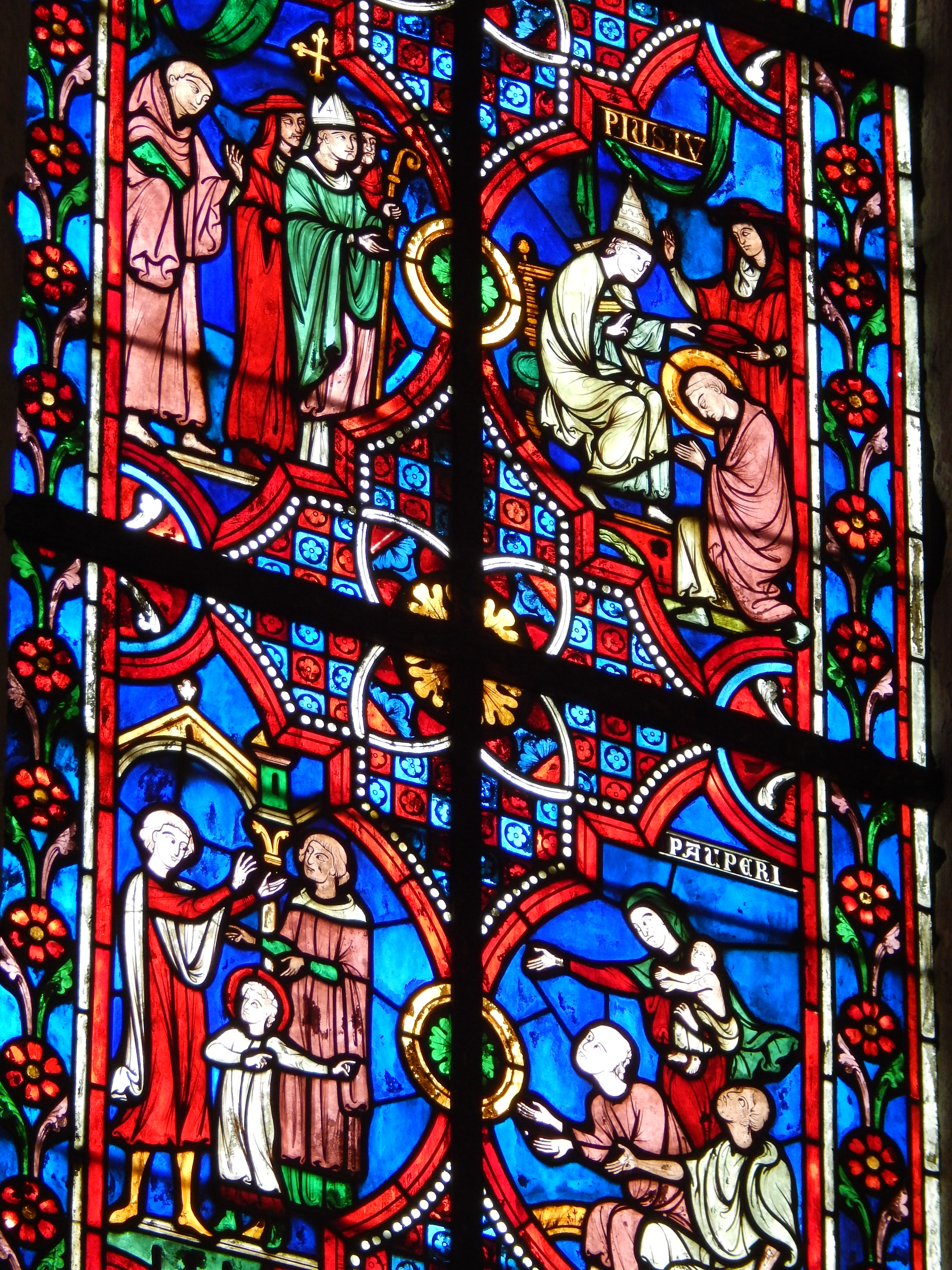
Window detail, Chapel of Saint Martin
Enough of my words. Time to let the pictures do some talking.

 savagemythology