• About

savagemythology

~ Adventures In the World

savagemythology

Category Archives: Uncategorized

Aside

Looking at London

28 Monday Oct 2013

Posted by savagemythology in Uncategorized

≈ 4 Comments

Tags

england, London, London Eye, St. Paul's Cathedral, Tower Bridge, Tower of London, travel, Westminster Abbey

28 October, 2013

Just a photo dump this morning. It’s odd to me that as much as is going on in London, it’s not particularly the most photogenic of cities. Photography is not allowed either in Westminster Abbey or St. Paul’s Cathedral, so I suppose you’ll just have to visit to see for yourself. I will checking out of my hotel in the Paddington Station area of the city to catch the Tube to Victoria Station, where a train will take me to Portsmouth this afternoon. I will have a few hours there before an overnight ferry to Caen in Normandy. I expect that I will take time tonight to reflect a bit more on my experience in London.

For now, the photos. Click to embiggen.

Starting with snaps from the phone camera.

The Tardis

The Tardis

IMAG0816

No sign of the Doctor.  Maybe I should give it a go?

No sign of the Doctor. Maybe I should give it a go?

IMAG0819 IMAG0766 IMAG0769

Totally breaking the rules here.  Issac Newton's monument on the left of the Screen

Totally breaking the rules here. Issac Newton’s monument on the left of the Screen

Painting of the Queen at Westminster Abbey from the Jubilee Celebration

Painting of the Queen at Westminster Abbey from the Jubilee Celebration

IMAG0775 IMAG0777

Inside St. Pauls.  Rules?

Inside St. Pauls. Rules?

Monument to the Fallen American's in WW II behind the high altar, St. Paul's

Monument to the Fallen American’s in WW II behind the high altar, St. Paul’s

Climbing the Dome, St. Paul's

Climbing the Dome, St. Paul’s

View from the top of the Dome, St. Pauls

View from the top of the Dome, St. Pauls

IMAG0786

In a quire seat for Evensong service

In a quire seat for Evensong service

View across the quire

View across the quire

IMAG0794

Always be Batman

Always be Batman

My shadow on St. Paul's

My shadow on St. Paul’s

Tower of London

Tower of London

IMAG0800

Tower Bridge

Tower Bridge

IMAG0801

Medieval gate, ruins of London City wall

Medieval gate, ruins of London City wall

St Martin's in the Fields

St Martin’s in the Fields

Interior, St Martin's in the Fields

Interior, St Martin’s in the Fields

Leaving the evening service at Westminster Abbey

Leaving the evening service at Westminster Abbey

IMAG0813 IMAG0814

And from the camera.

North Door, Westminster Abbey

North Door, Westminster Abbey

DSCN0882 DSCN0883 DSCN0884

West Towers from the Cloister

West Towers from the Cloister

DSCN0887

St Pauls

St Pauls

DSCN0889

Lantern atop St Paul's dome.  The bit with the railing just above the dome is the walkway

Lantern atop St Paul’s dome. The bit with the railing just above the dome is the walkway

Tower and City of London from Tower Bridge

Tower and City of London from Tower Bridge

Tower of London defenses

Tower of London defenses

White Tower

White Tower

13th C gate

13th C gate

DSCN0916

River Thames from Tower Bridge

River Thames from Tower Bridge

The Shard.  Tallest building in Europe.  View from Tower Bridge

The Shard. Tallest building in Europe. View from Tower Bridge

DSCN0910 DSCN0911 DSCN0914

Glass at Westminster Abbey

Glass at Westminster Abbey

DSCN0937 DSCN0941

Cheers!

Aside

I Am Not a Number, I Am A Free Man!

27 Sunday Oct 2013

Posted by savagemythology in Uncategorized

≈ 2 Comments

Tags

Caterham, Caterham 7, Caterham Cars, Colin Chapman, Lotus Seven, Patrick McGoohan

IMAG0749

27 October, 2013

Some of you might know the reference I make in the title of this entry. If not, I suggest you find the original British television series “the Prisoner,” and give it a look. It is a somewhat sci-fi program starring Patrick McGoohan, that features a Lotus 7 in the opening.

My family have had one of the orginal Caterham 7’s since I was barely six years old. It’s my dads, but I have grown into being the chief mechanic and let him drive it now and again. For the fascinating history of this car designed by Colin Chapman and in production for over 55 years, see the Wikipedia – http://en.wikipedia.org/wiki/Lotus_7 . In the early 1970s, Lotus sold the entire rights and production of the car to the main dealer in Caterham, Surry (who was compiling all the components for the kits already), and the Lotus 7 came the Super Seven. The story continues on Wikipedia – http://en.wikipedia.org/wiki/Caterham_Cars . Our chassis was manufactured in 1975, and assembled in the US in winter and spring of 1976. It has a Lotus Twin-Cam engine, and is built to the specification of the original Lotus 7 SS Twin-Cam (only 13 were ever made by Lotus).

Series 3 Super Seven Twin-Cam, my family's car

Series 3 Super Seven Twin-Cam, my family’s car

Caterham have improved the chassis over the years – twice fully re-engineering the whole kit – and while the current Seven looks like the same car, under the skin it is a much superior machine having perhaps a couple of suspension bushings still in common with ours.

I visited the factory in Dartford on Friday to see where these fantastic machines are hand-crafted. This was somewhat akin to a pilgrimage to Mecca for me, having grown up with and driven the old Twin-Cam since I was young.

Click any photo to embiggen.

DSCN0868 IMAG0751 DSCN0869 DSCN0870 DSCN0872 DSCN0873 DSCN0874 DSCN0871 DSCN0879 DSCN0878 DSCN0877 IMAG0752 DSCN0876


Be Seeing You!

Sights Around London Town

25 Friday Oct 2013

Posted by savagemythology in Uncategorized

≈ Leave a comment

Tags

Big Ben, Buckingham Palace, england, London Eye, River Thames, travel, Westminster Abbey

Platform, Paddington Station

Platform, Paddington Station

24 October, 2013

I arrived at London Paddington early this afternoon, and after I got settled into my room, I went for a short six or seven hour stroll to the Thames and the London Eye. I am tired from the long day, and don’t have many words tonight. I will let the pictures say it. I will say that in one of the biggest cities I have ever visited, I am staying in the smallest hotel room I have ever seen!

Class 43 High Speed Locomotives http://en.wikipedia.org/wiki/British_Rail_Class_43_(HST)

Class 43 High Speed Locomotives
http://en.wikipedia.org/wiki/British_Rail_Class_43_(HST)

My tiny hotel room.  I stood in the window sill to get this shot

My tiny hotel room. I stood in the window sill to get this shot

Buckingham Palace

Buckingham Palace

DSCN0762 DSCN0774

Westminster Abbey

Westminster Abbey

IMAG0714 DSCN0791

Big Ben

Big Ben

DSCN0795

Parliament Building and Victoria Tower

Parliament Building and Victoria Tower

DSCN0799 DSCN0846 DSCN0813 DSCN0803 IMAG0723 DSCN0841 DSCN0817 DSCN0821 DSCN0826 DSCN0829 DSCN0833 DSCN0849

Jubilee Bridge & Charing Cross Station

Jubilee Bridge & Charing Cross Station

Trafalgar Square

Trafalgar Square

DSCN0856 DSCN0858

Picadilly Circus

Picadilly Circus

IMAG0737 DSCN0865

Cheers!

Aside

Last of Bath

24 Thursday Oct 2013

Posted by savagemythology in Uncategorized

≈ Leave a comment

Tags

bath, Bath somerset, england, travel

24 October, 2013

Not many words tonight.  I had the morning in Bath before my train to London, and took a few more pics.

IMAG0664 IMAG0669 IMAG0674 IMAG0679 IMAG0678 IMAG0681 IMAG0684

To the Gates of Avalon

24 Thursday Oct 2013

Posted by savagemythology in Uncategorized

≈ 2 Comments

Tags

Chalice Well, england, Glastonbury, Glastonbury Abbey, Glastonbury Tor, travel, Wells Cathedral

IMAG0645

24 October, 2013

I am preparing to leave Bath for London this morning, so a quick post of mostly pictures from yesterday’s pilgrimage to Glastonbury.  As always, click any photo to embiggen.

It was two hours on two busses to make the 27 mile trip. The bus to Wells from Bath was the longest and just around 80 minutes. The route was on side streets through small towns and narrow lanes through the countryside. I have to commend the drivers for their skill piloting the busses down these roads. It certainly takes some stones. I noticed on the ride that in the small villages, all of the houses have names.. I like that, though I don’t think it would work well in America. Maybe if we gave them names such as “Boring” and “Just Like the Rest” or “Same Here.”

I stopped for an hour in Wells, where I changed busses, and went to see the Cathedral. Very ornate and Stunningly beautiful. Unlike most of the Cathedrals in France, in England they didn’t lose their glass in the wars. Wells is famous for the solution of the scissor arch in the crossing that supports the weight of the tower.

Bishop's Gate

Bishop’s Gate

Swans at Bishop's Palace

Swans at Bishop’s Palace

Model of Bishop's Palace.  Bishop's gate lower center.

Model of Bishop’s Palace. Bishop’s gate lower center.

Door and Portcullis

Door and Portcullis

Inner close of Bishop's palace

Inner close of Bishop’s palace

Ruined wall of Great Hall

Ruined wall of Great Hall

West facade, Wells Cathedral

West facade, Wells Cathedral

Nave vault

Nave vault

Scissor arch at crossing to support weight of tower

Scissor arch at crossing to support weight of tower

DSCN0669 DSCN0684 DSCN0685

Organ and Crossing vault.

Organ and Crossing vault.

Quire (apse) vault

Quire (apse) vault

Bishops chair in quire

Bishops chair in quire

Apse chapel

Apse chapel

Apse Chapel center glass

Apse Chapel center glass

DSCN0689

In Glastonbury, I had several objectives. I was looking for something specific for a friend at home, and went straight to finding that. It took relatively little time, I was practically guided to it by divine inspiration. After, my first stop was the ruins of Glastonbury Abbey. Terrifically beautiful, the ruins are the centerpiece of a nearly 40 acre enclosure. It is here that the Legend says King Arthur and Guinevere are buried. The tomb is 500 years gone, but a marker stands in its place.

DSCN0691 DSCN0695 DSCN0703 DSCN0705 DSCN0708 DSCN0709 DSCN0711 DSCN0714 DSCN0720 DSCN0724 DSCN0730 DSCN0731

On my way to climb Glastonbury Tor, I stopped at the Chalice Well Gardens for a brief moment of prayer and meditation, and wash the gift for my friend in the waters of this holy spring.  The summit of the Tor is just under 600 feet above sea level, and offers a wonderful view of the surrounding countryside. The tower remains from the 14th century St. Michaels church. Excavation has shown that this hill has been sacred ground since before the Romans. Legends say that here atop the Tor is where the Gateway to Avalon is located.  Meditation here next to the ancient tower revealed to me a secret, however — Avalon lies within.

Vesica pool at the lowest point of the gardens

Vesica pool at the lowest point of the gardens

The Gardens of Arthur's Bath.  There is a pool here for immersion in the holy spring water.

The Gardens of Arthur’s Bath. There is a pool here for immersion in the holy spring water.

Lion's head spout and Holy Thorn

Lion’s head spout and Holy Thorn

Lion's Head Spout.  These waters are safe to drink, and here I washed my gift in the sacred healing water.

Lion’s Head Spout. These waters are safe to drink, and here I washed my gift in the sacred healing water.

The Chalice Well.

The Chalice Well.

The Tor and St Michael's Tower from the Chalice Well Gardens

The Tor and St Michael’s Tower from the Chalice Well Gardens

Climbing the Tor

Climbing the Tor

View from atop the Tor

View from atop the Tor

St Michael's Tower

St Michael’s Tower

DSCN0750 IMAG0653

What an amazing day. My entire time in Bath and Glastonbury has been fantastic, and filled with the presence of the spirit. Time to be moving on, however. Into the heart of the urban beast and an afternoon filled with new adventures.

Cheers!

Soaking in the Sacred Spaces

22 Tuesday Oct 2013

Posted by savagemythology in Uncategorized

≈ 2 Comments

Tags

Abbey Church, bath abbey, Bath somerset, england, Gothic architecture, roman baths, travel

22 October, 2013

DSCN0619

I woke this morning to the falcon’s song. There is a family of Peregrines that live on the tower of Saint John’s Church across the street from my hotel. At home these birds are rare and their nesting areas are carefully protected. Here they dine freely on the towns population of feral pigeons, eliminating up to twelve a day.

DSCN0527

I find it somewhat ironic that while I am not a religious man in the dogmatic sense – my faith is based on a personal relationship with the Creator while on this spiritual journey of life – I find myself drawn to the magnificent Cathedrals, Abbeys and ancient houses of worship. Perhaps it is the energy of hundred of years of the faithful that draws me to these places. It is certainly something more than the sacred geometry of the architecture alone that moves me to visit and take in the grandeur of the buildings and the presence of the numinous.

I started with St. Johns. The church is a beautiful example of the Victorian era Gothic Revival. The spire towers over the nave which is built in the early Gothic style. The vault is low supported by heavy columns and arches with small windows in the walls. Despite its relative simplicity compared to the High Gothic of the Abbey Church, the interior is lovely and not nearly as heavily trafficked. The holy space of the apse is behind a beautiful brass altar screen, and is flanked by two smaller chapels – The Sacred Heart, and The Virgin Mary. I took a long moment of quiet, and lit a candle for someone dear to me half a world away.

(Click on any image to embiggen) 

IMAG0623

DSCN0522

DSCN0523IMAG0622


The Abbey Church – actually just a parish church, this was never the seat of a Bishop, and the Monastery is long gone – left me in complete awe. I have fine examples of all the Gothic periods in France, but none seemed so airy and full of light as this. The huge windows are framed by gracefully thin columns that are made possible by the flying buttresses outside taking a large portion of the weight of the vault away from the walls. There is also the butter cream color of the stone native to the Bath area that makes this feel like one of the lightest of the Gothic Spaces. The walls and floors are lined with monuments to the dead spanning over 400 years. It is estimated that the remains of more than six thousand people are interred here. Again, I took a quiet moment with the universe and Creator before leaving.

DSCN0528 DSCN0532 DSCN0533 DSCN0544 DSCN0557 DSCN0531 DSCN0534 DSCN0597 DSCN0560 DSCN0550 DSCN0549 DSCN0547 DSCN0541 DSCN0536 DSCN0535 DSCN0552 DSCN0556 DSCN0558 DSCN0585 DSCN0583 DSCN0593 DSCN0590 DSCN0581 DSCN0579 DSCN0577 DSCN0567 DSCN0537


The final stop on today’s tour of sacred space was the Roman Baths. This is one of the best preserved bath houses in the world, and the only hot spring in Britain. The spring was a holy site before the Romans arrived, and they carried on with a temple to the Goddess Minerva closely associated with the healing mineral rich geothermal waters. The medieval monastery and Abbey Church were later constructed on the grounds of the temple and baths. The floor levels of the ancient baths are several meters below the present day street. A fascinating museum winds down through the history of Bath as a sacred Roman destination before revealing the excavated structures of the baths themselves.

DSCN0599 DSCN0601 DSCN0611 DSCN0604 DSCN0617


Again, after dinner (more on that in a moment) I took a long walk back to my hotel along the River Avon, marveling at this towns astounding beauty at night.

DSCN0640 DSCN0629 DSCN0627_edited


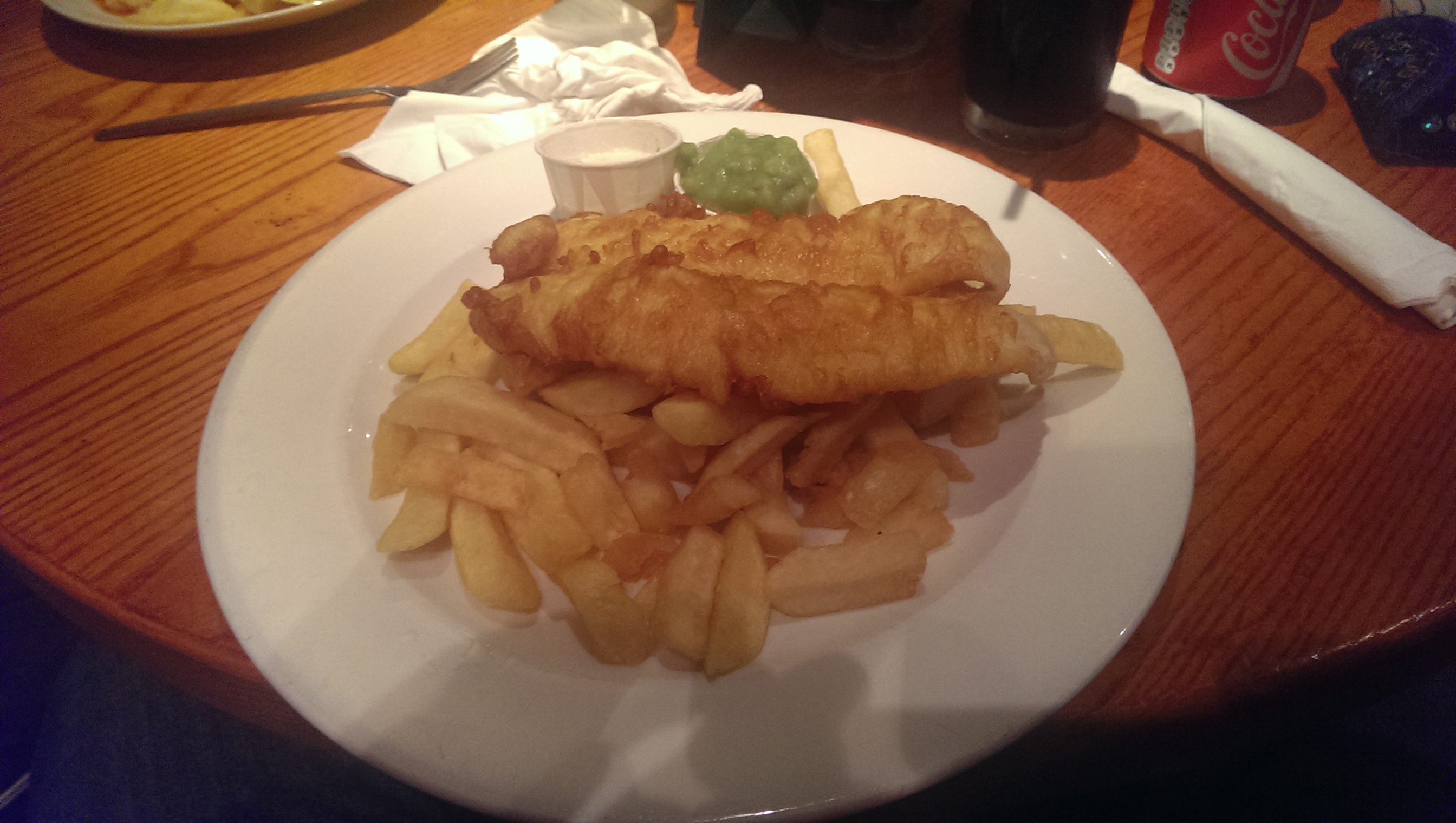
Dinner was at a Fish and Chips house purported to be one the five best in the South West Region of England. Another Yank came in shortly after me, and I asked him where he was from. I was stunned when he said he too was a Boulder native. So crazy to be half way around the world and meet someone from my hometown! For the record, the F&C was good, but not the best I’ve ever had.

IMAG0631 IMAG0630


Cheers!

IMAG0628

Bath Night

21 Monday Oct 2013

Posted by savagemythology in Uncategorized

≈ 1 Comment

Tags

bath, bath abbey, england, somerset, travel

IMAG061121 October, 2013

First night in Bath, and I can say with certainty that my friend Bill, who is a world traveler himself, is absolutely correct – this town is not to be missed. The lovely, narrow and widing are streets lined with gorgeous Georgian architecture. The Thermae Bath Spa (http://www.thermaebathspa.com/ ) is not to be missed. It is well worth the price for two hours in the pools and steam baths. The town also seems to be filled with beautiful women. Dare I say I may be one of the better looking men in town at the moment, however I seem to be the only one in the amazingly romantic city who is not in love. But I am here nonetheless, and loving it.

IMAG0597

The High Gothic Abbey (http://en.wikipedia.org/wiki/Bath_Abbey ) is the focal point of town, while the Victorian Gothic Styled Saint John’s Catholic Church stands nearby as something of a counterpoint to the Abbey (http://en.wikipedia.org/wiki/St_John’s_Church,_Bath). I plan to visit them both tomorrow and will have more about them in a subsequent entry.

DSCN0497 DSCN0496 DSCN0491 DSCN0490

The point tonight is pictures, both on arrival, and from tonight, as both of these buildings, along with much of the town center are brilliantly lit. So, enough words then, and enough of the daytime pics, on with the shots in the dark.

DSCN0500 DSCN0516 DSCN0501 DSCN0506 DSCN0503 DSCN0509 DSCN0514 DSCN0519

A parting shot in keeping with the theme of ending these posts with a picture of food.  I ate at the Bath Brewery tonight (recommended by the desk staff at the Spa, though not more than 6 months old), and they had a steak on the menu called “Denver.”  Of course I had to order it.

IMAG0601

Cheers!

Aside

Bound for Bath

21 Monday Oct 2013

Posted by savagemythology in Uncategorized

≈ Leave a comment

Tags

edinburgh, glasgow, scotland, travel

Rainbow over Anniesland, Glasgow

Rainbow over Anniesland, Glasgow

21 October, 2013

I had planned to take the time on the train to Brighton to write about my experience in Glasgow, however my mind is a bit preoccupied with a booking error I made when purchasing the tickets for today’s journey. The Euro calendar starts on Monday rather than Sunday as the calendars in the States tend to. As such, I ticked the second day of the week, thinking that was Monday as I am used to. Turns out that was Tuesday. The Train Manager pointed this out to me on inspecting my ticked as we left Glasgow this morning. He said typically I should have to purchase fare to the journey today. Being an American tourist in First Class who doesn’t travel regularly, he allowed me to stay on without purchasing an additional ticket. He suggested I talk to the Ticket office in Birmingham and see if they might be able to sort out my problem. It remains a very possibility, and even likelihood that I will have to purchase a new ticket for the remainder of my trip to Bristol and Bath. We shall see. More, as they say, will be revealed.

My train from Glasgow to Birmingham

My train from Glasgow to Birmingham

Virgin, First Class

Virgin, First Class

Welsh countryside from the train

Welsh countryside from the train

My reflections on Glasgow are all good. A nice city with very friendly people. I didn’t get around as much as I will in other cities in the forthcoming weeks, but the purpose of my stay was not predominantly tourism. It was wonderful to reconnect an old friend. After reconnecting online nearly twelve years after we were in college together, we have been through quite a lot together via emails, online chat and phone calls here and there when she was in Hawai’i. Five years ago we saw each other for an hour while she was on a layover in Denver as she was on her way to Scotland. So the last week has been filled with stories and catching up, and for me some measure of rest before heading out on my months journey through England and France.

There’s not much ground to cover, or any particular thesis to this post, just to wrap up my time in Glasgow as I am on a four hours journey to Birmingham.

130+ steps in this pic

130+ steps in this pic

IMAG0567

Edinburgh Castle at night.

Edinburgh at night

Edinburgh at night

Cheers!

On the train from Edinburgh to Glasgow

On the train from Edinburgh to Glasgow

A Stirling Day

20 Sunday Oct 2013

Posted by savagemythology in Uncategorized

≈ 3 Comments

Tags

Cambuskenneth Abbey, castle, scotland, Stirling, Stirling Castle, travel

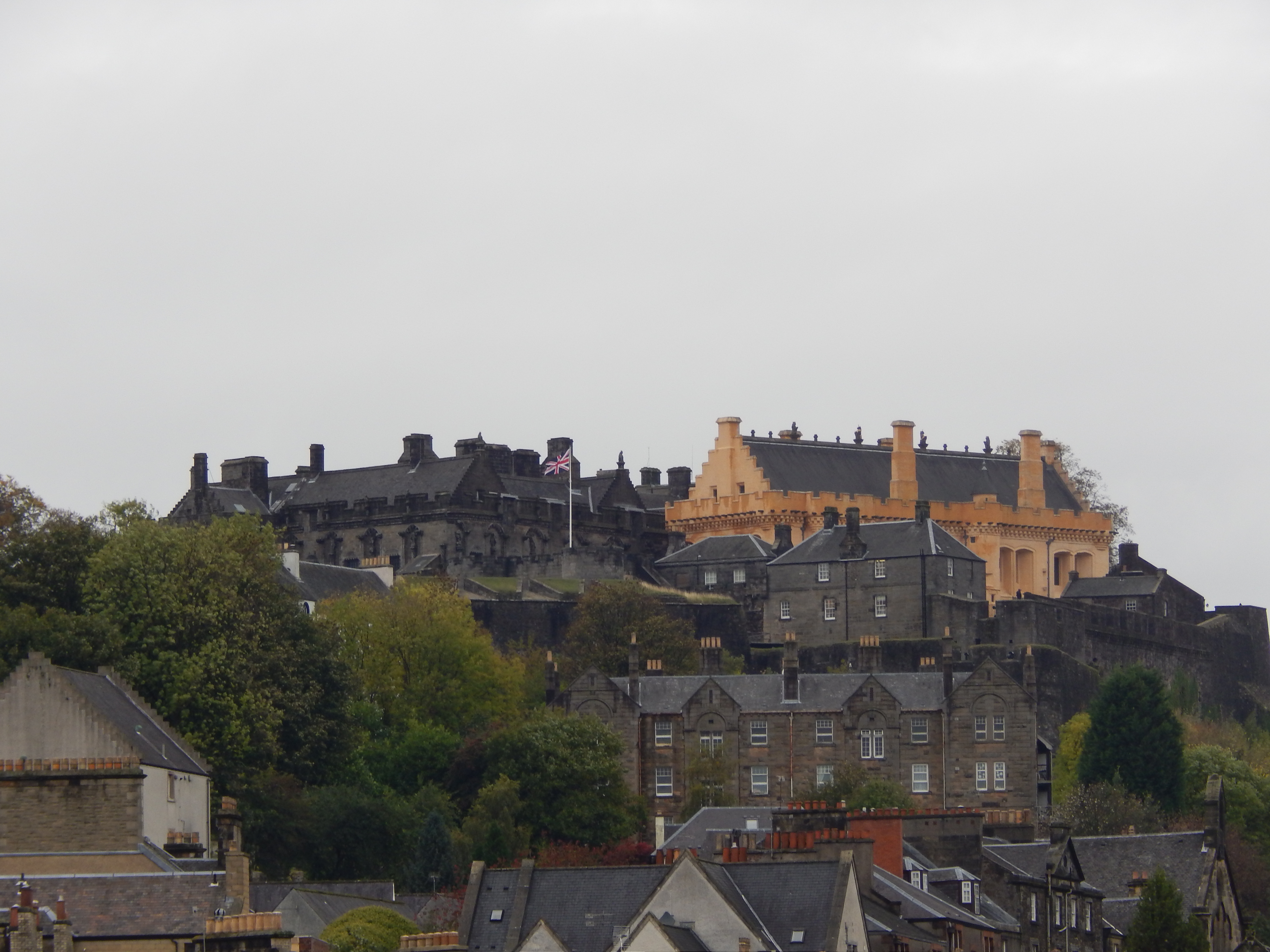
Stirling Castle

Stirling Castle

20 October, 2013

Last full day in Glasgow today. Time to get the kit sorted into the ruck and prepare to head south to Bath tomorrow morning. It will be six hours on three different trains to get there. I will change at Birmingham and Bristol. I plan to stay in bath for three nights, allowing ample time to experience the natural hot water available there as well as make a day trip to the nearby town of Glastonbury.

The last three days I have gotten back into the tourist mode a bit more, taking a day trip to Stirling on Friday, and taking a last-minute decision to spend Saturday at a conference in Edinburgh. I have thoroughly enjoyed my time here in Glasgow visiting my friend who I haven’t seen for many years. My thoughts on Glasgow will be the subject of a separate post to follow, however.

On to Stirling, then.
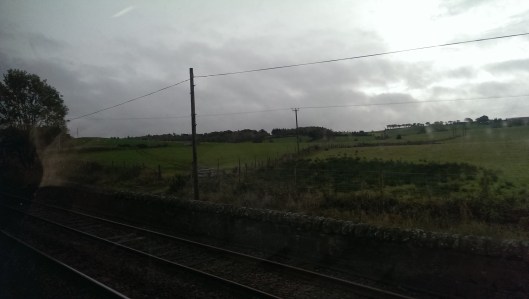
IMAG0524

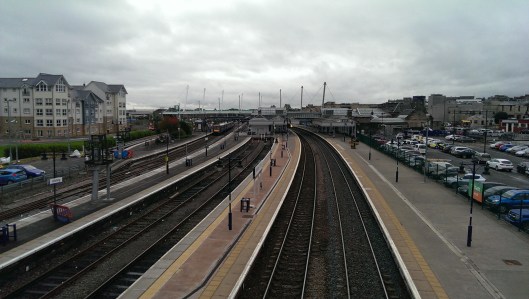
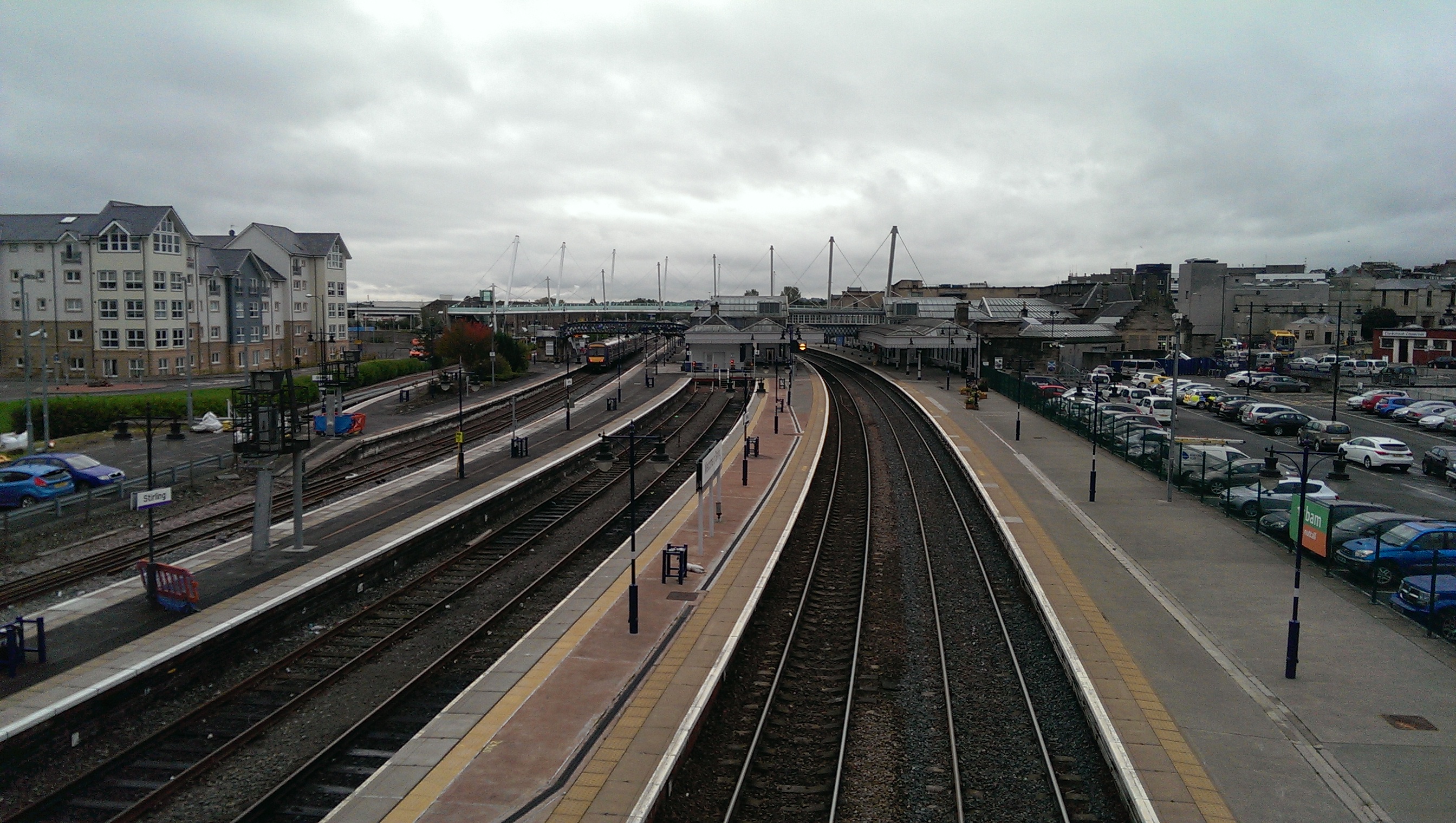
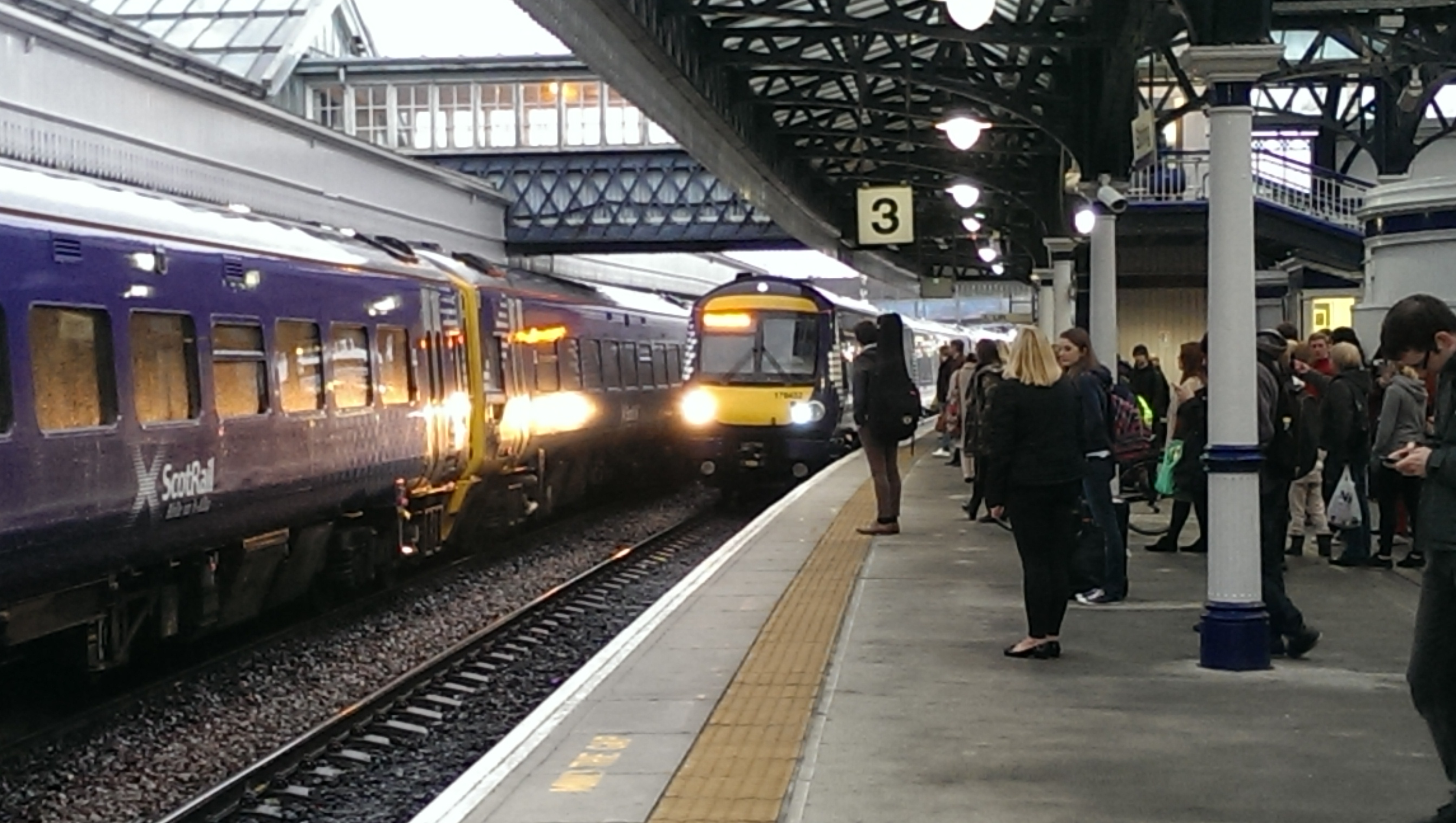
Stirling Station

Stirling Station

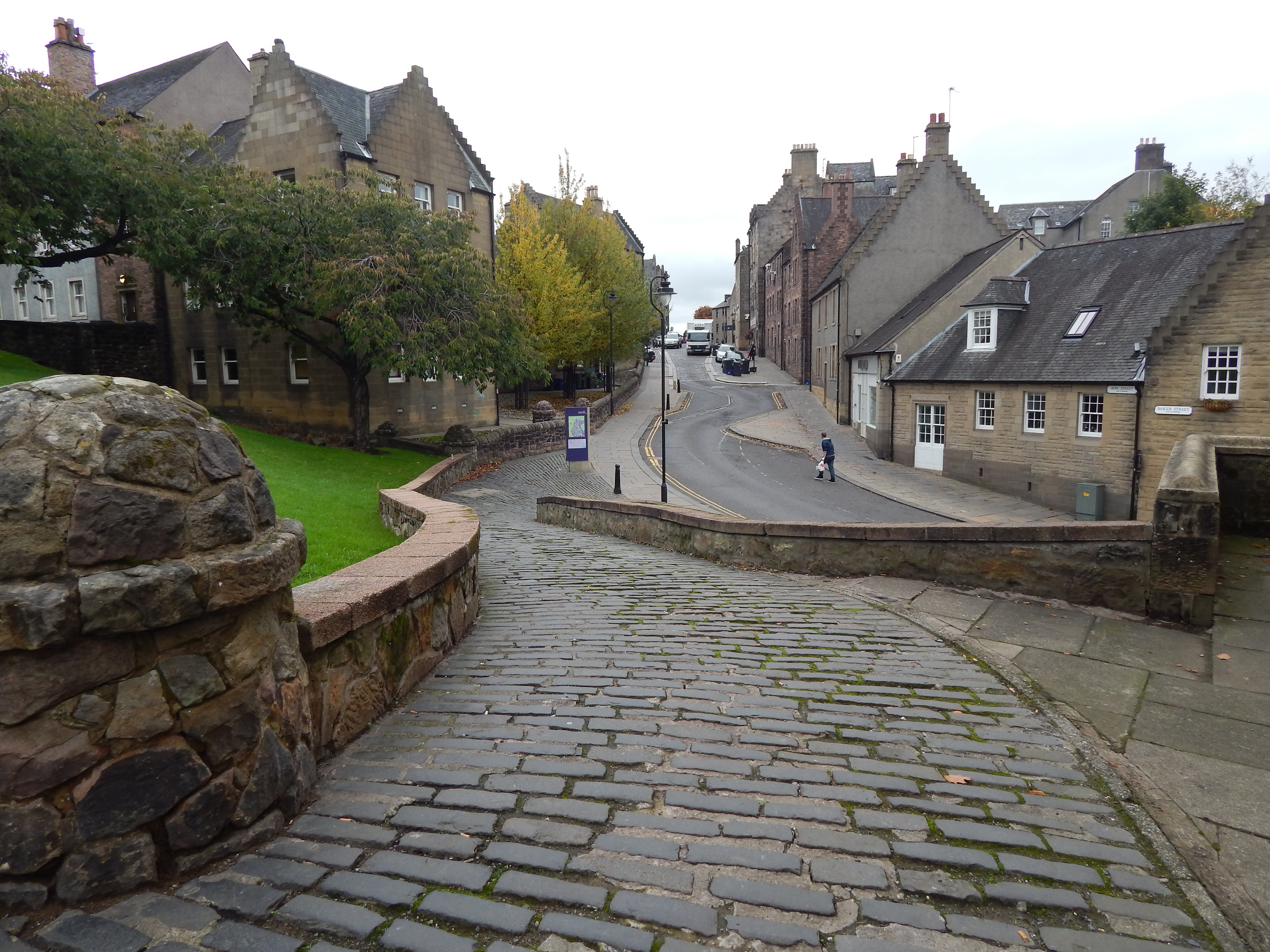
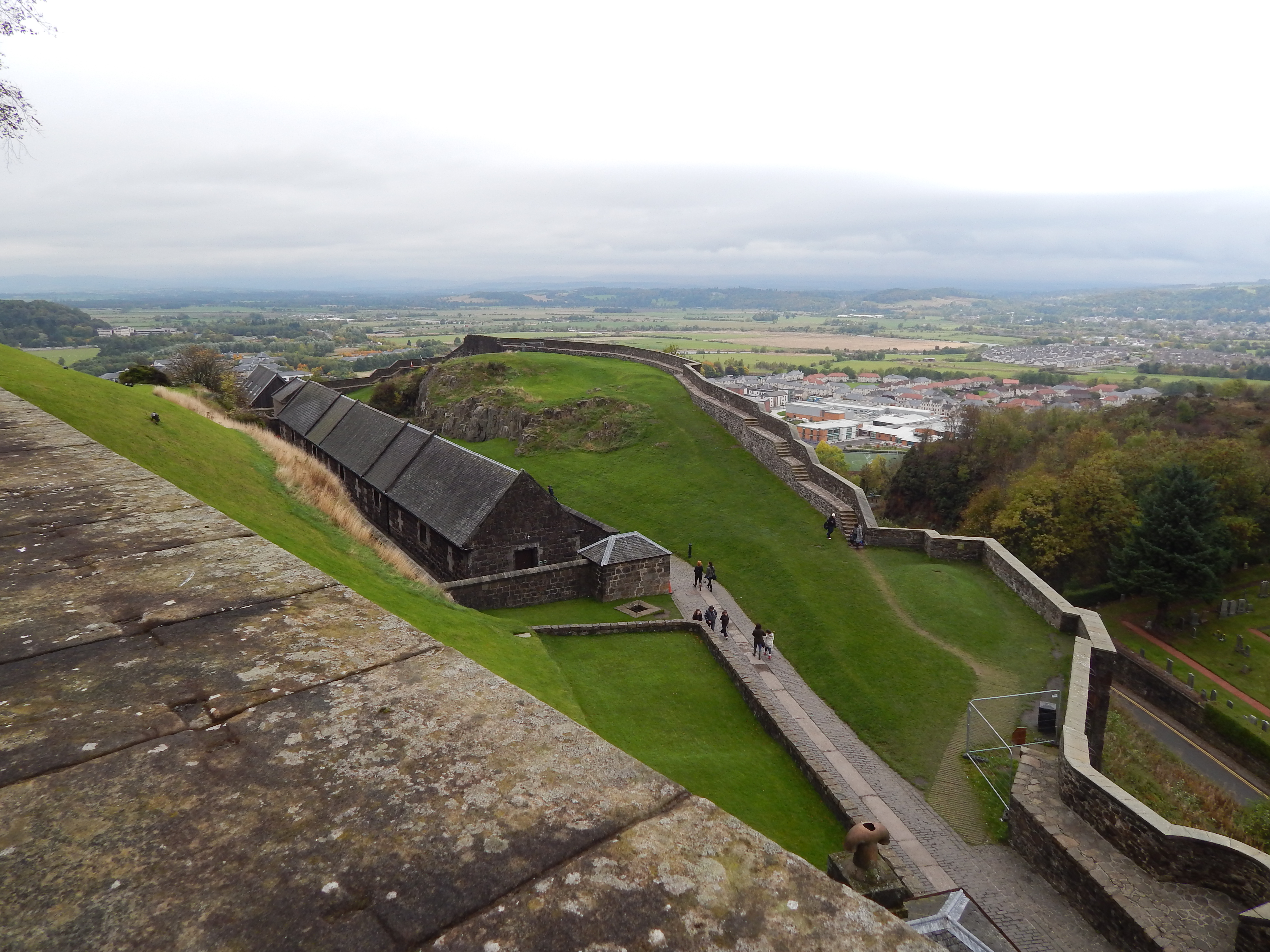
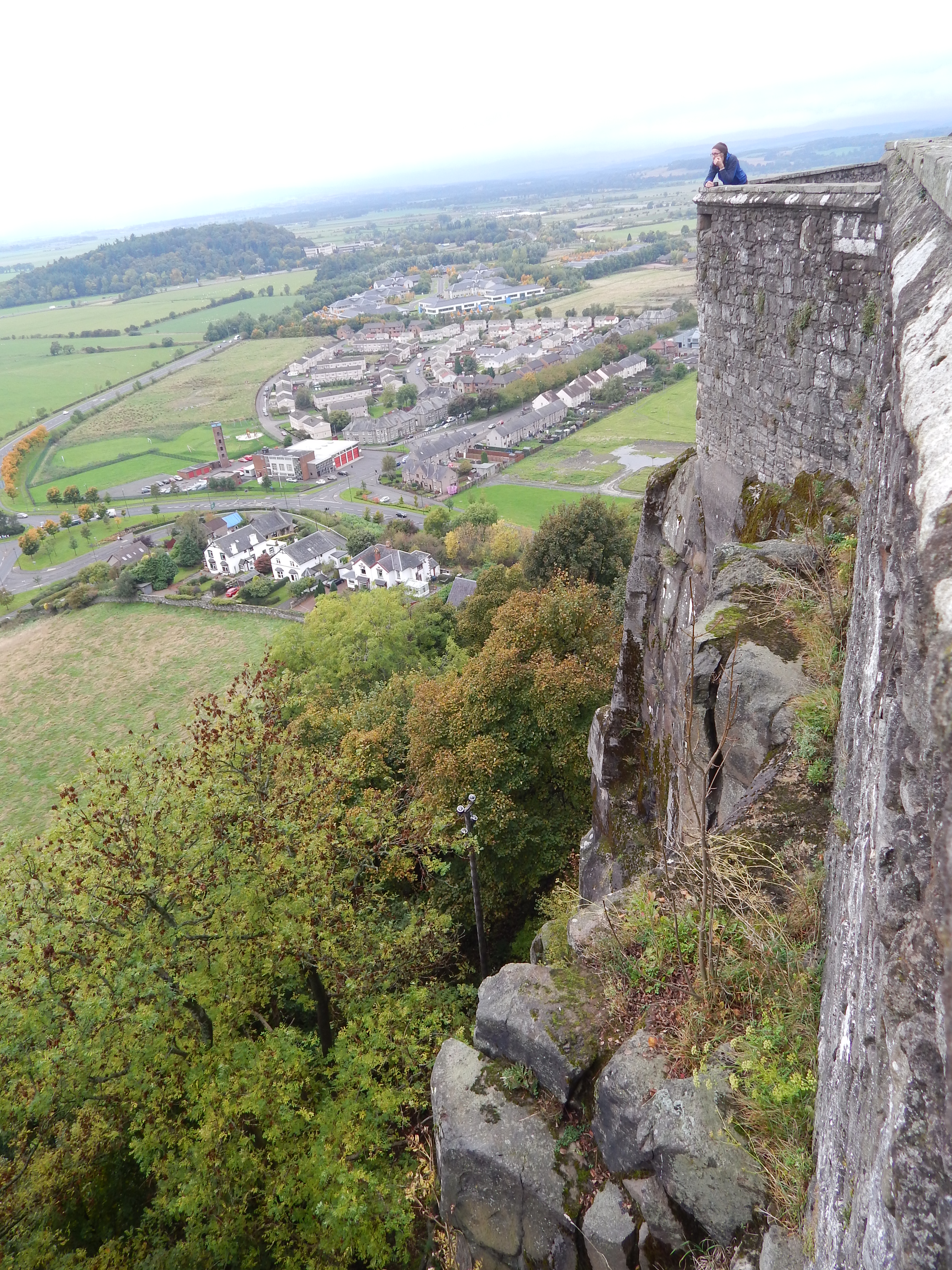
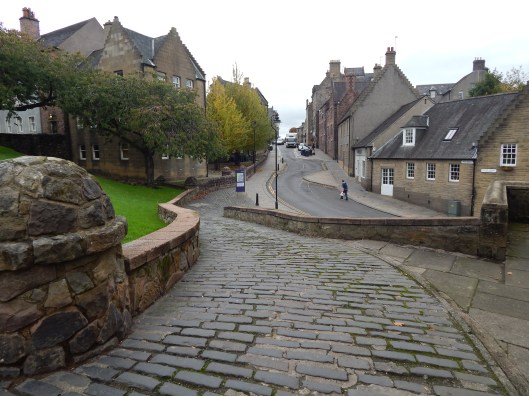
I was up early Friday to catch a train to Stirling. The town is important in Scottish history as the gateway to the Highlands. The town at the foothills of the mountains of northern Scotland has been settled since the stone age. The bridge over the River Forth was the furthest downstream crossing below the highlands until the 1930s. The rocky crag (an intrusion of basaltic volcanic rock shaped by subsequent glacial flow) where the castle sits atop the town is thought to have been used as a strategic defensive position since the bronze-age. Stirling Castle itself dates to the 12th century, with the oldest structures remaining dating to the late 14th century. The old town is quite charming, built on the east side of Castle Hill with streets lined with buildings getting progressively older as the streets near the church and castle.
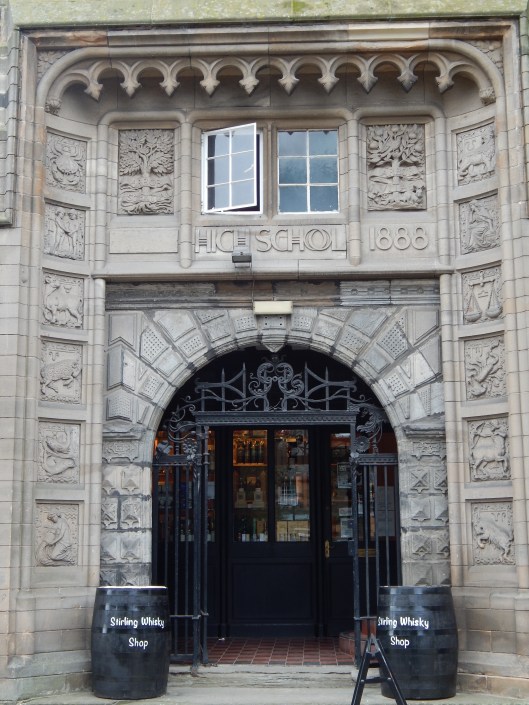
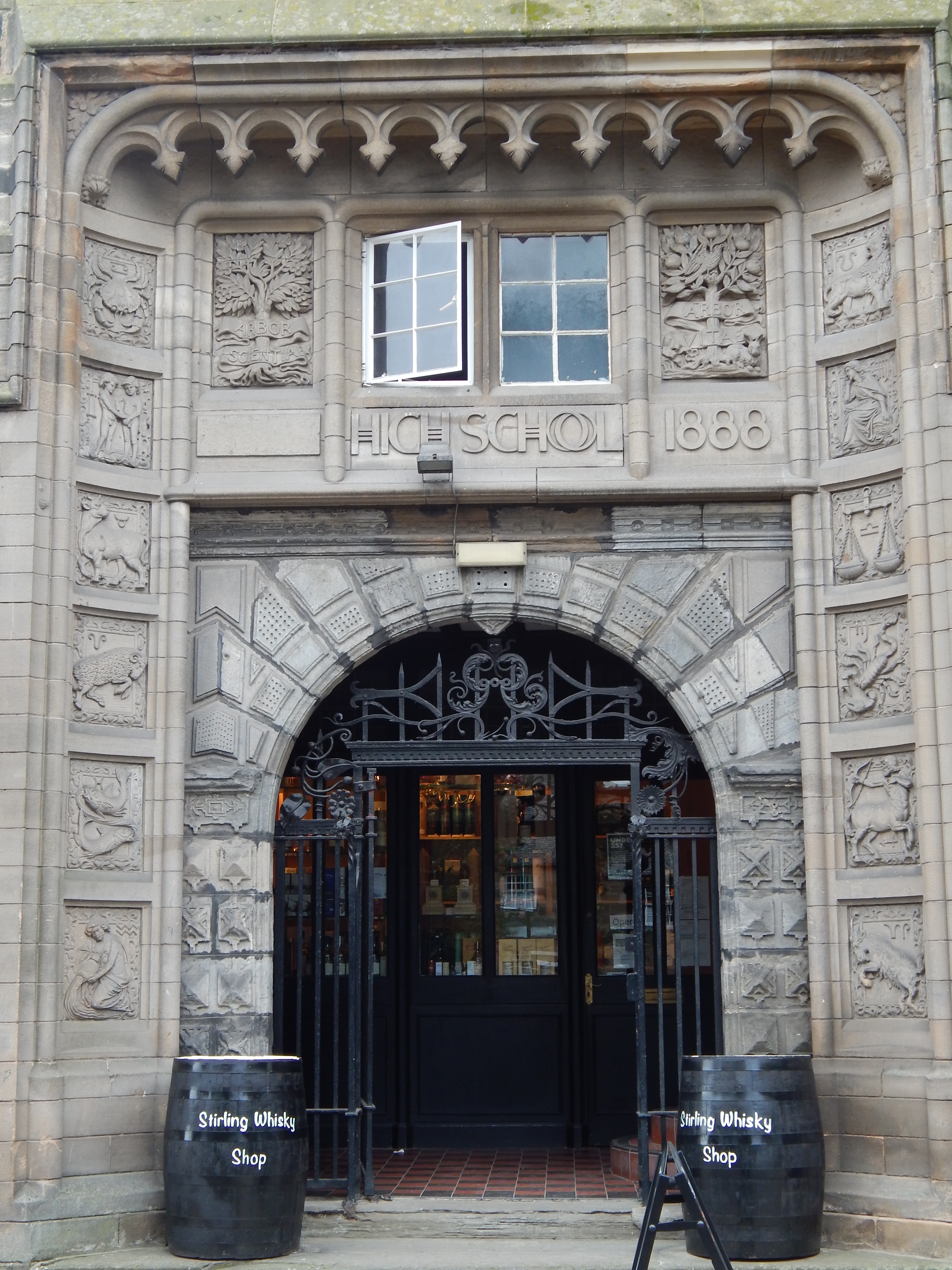
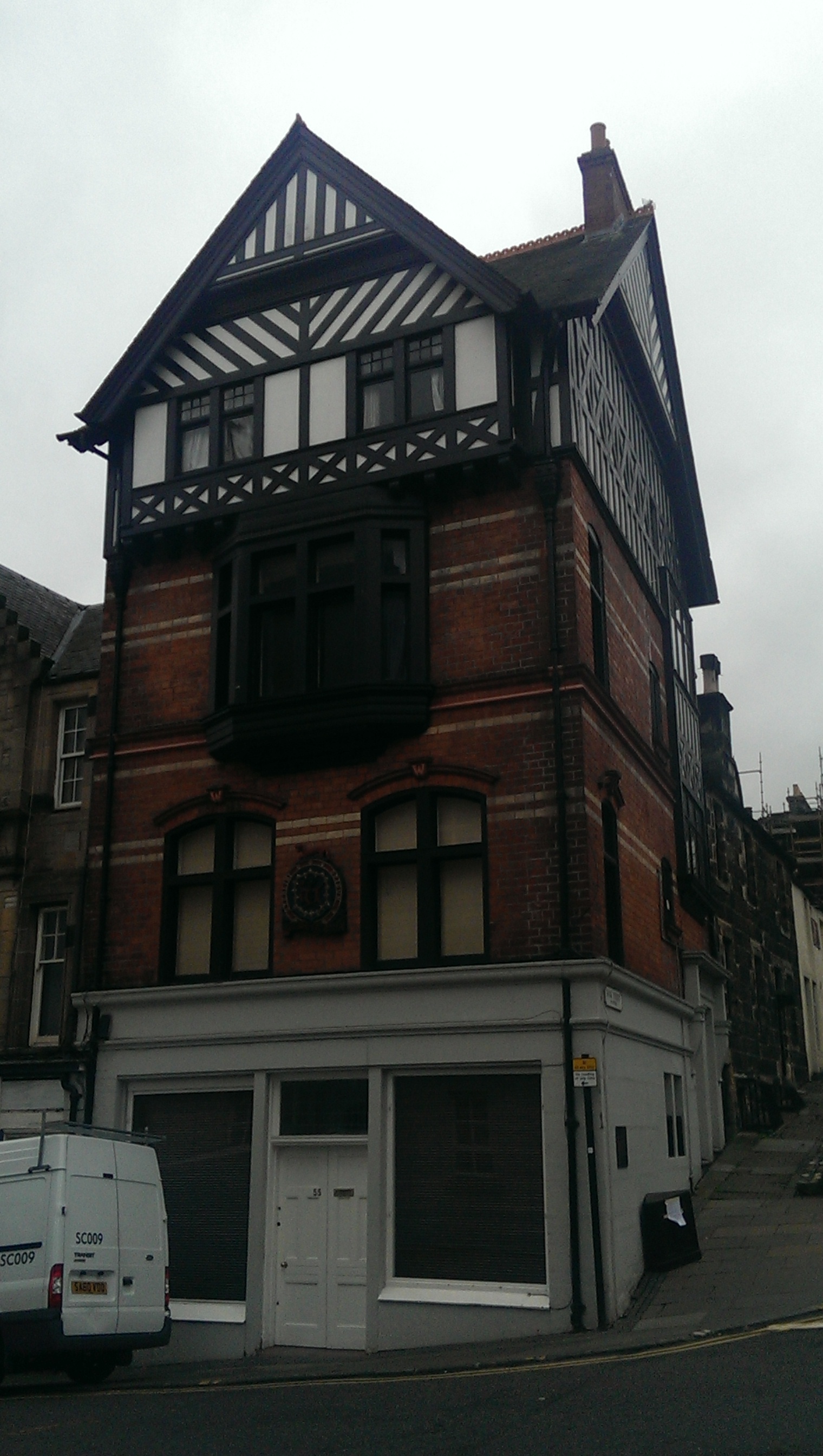
16th century portal on late 19th century building.  Carvings around the door are the signs of the zodiac.

16th century portal on late 19th century building. Carvings around the door are the signs of the zodiac.
DSCN0400

IMAG0534

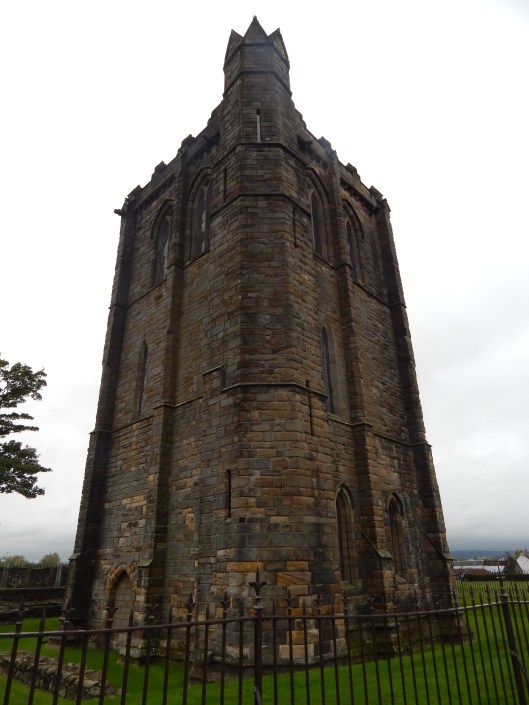
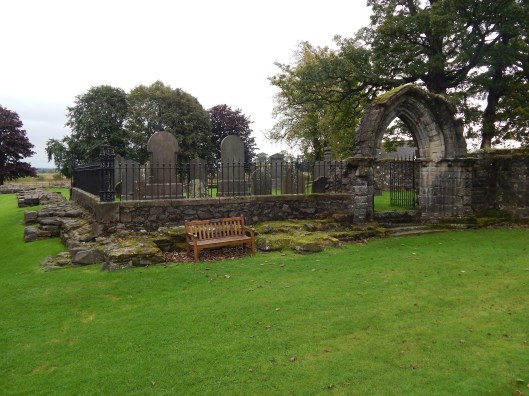
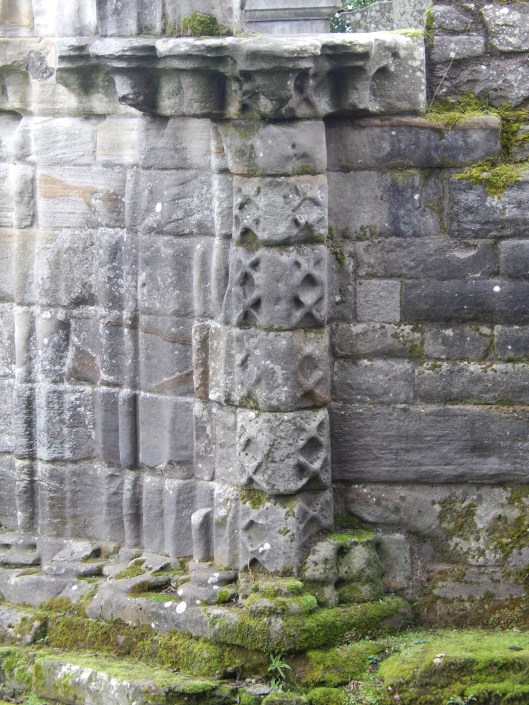
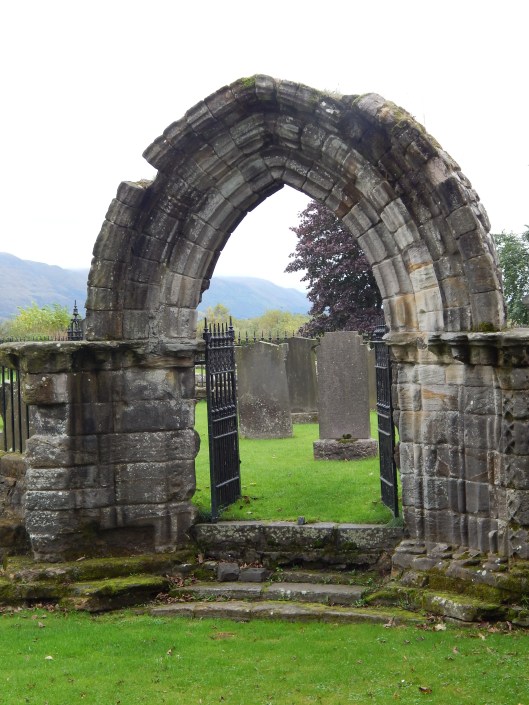
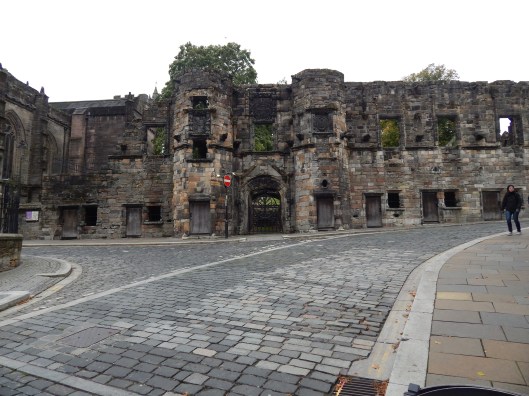
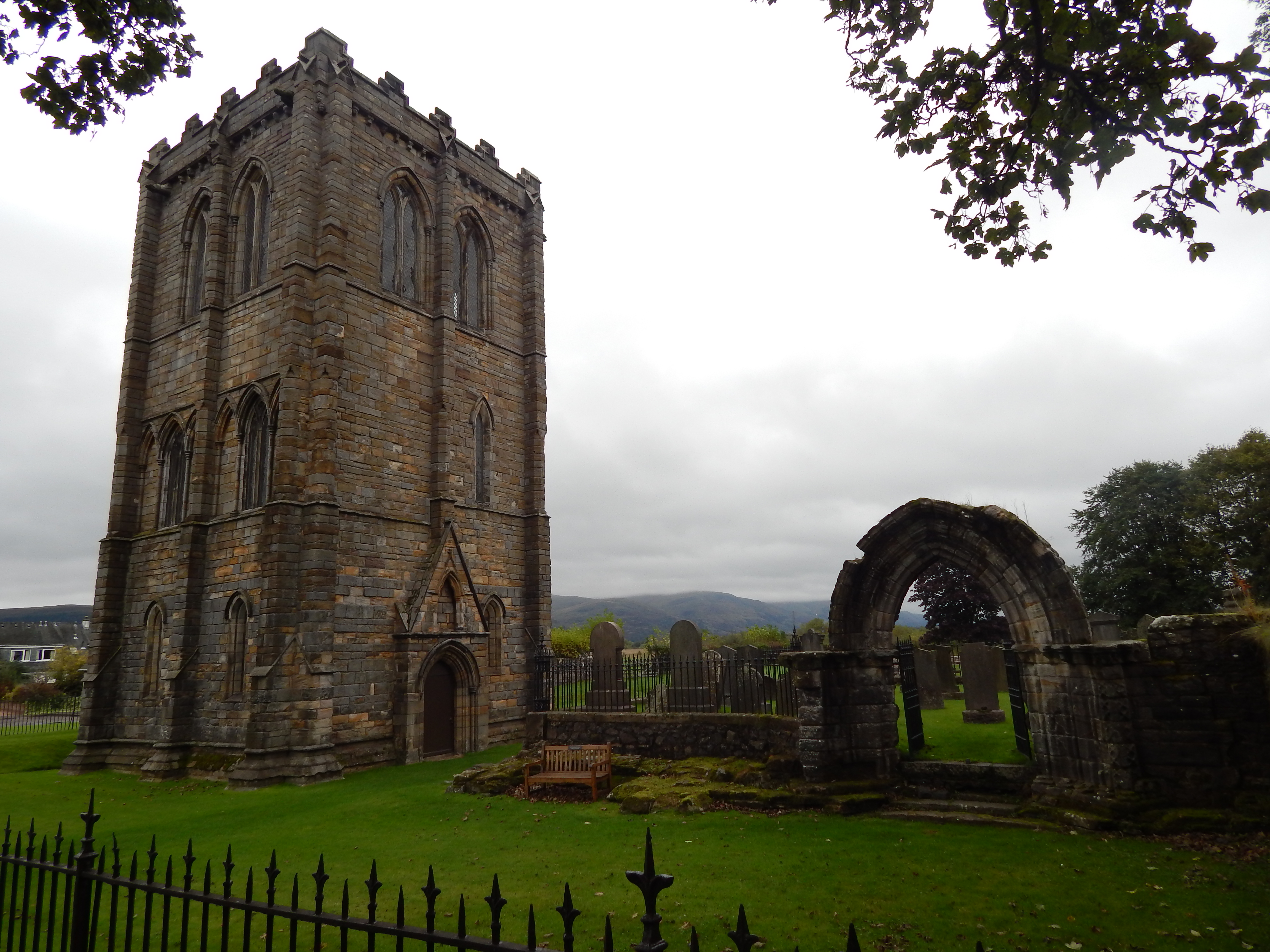
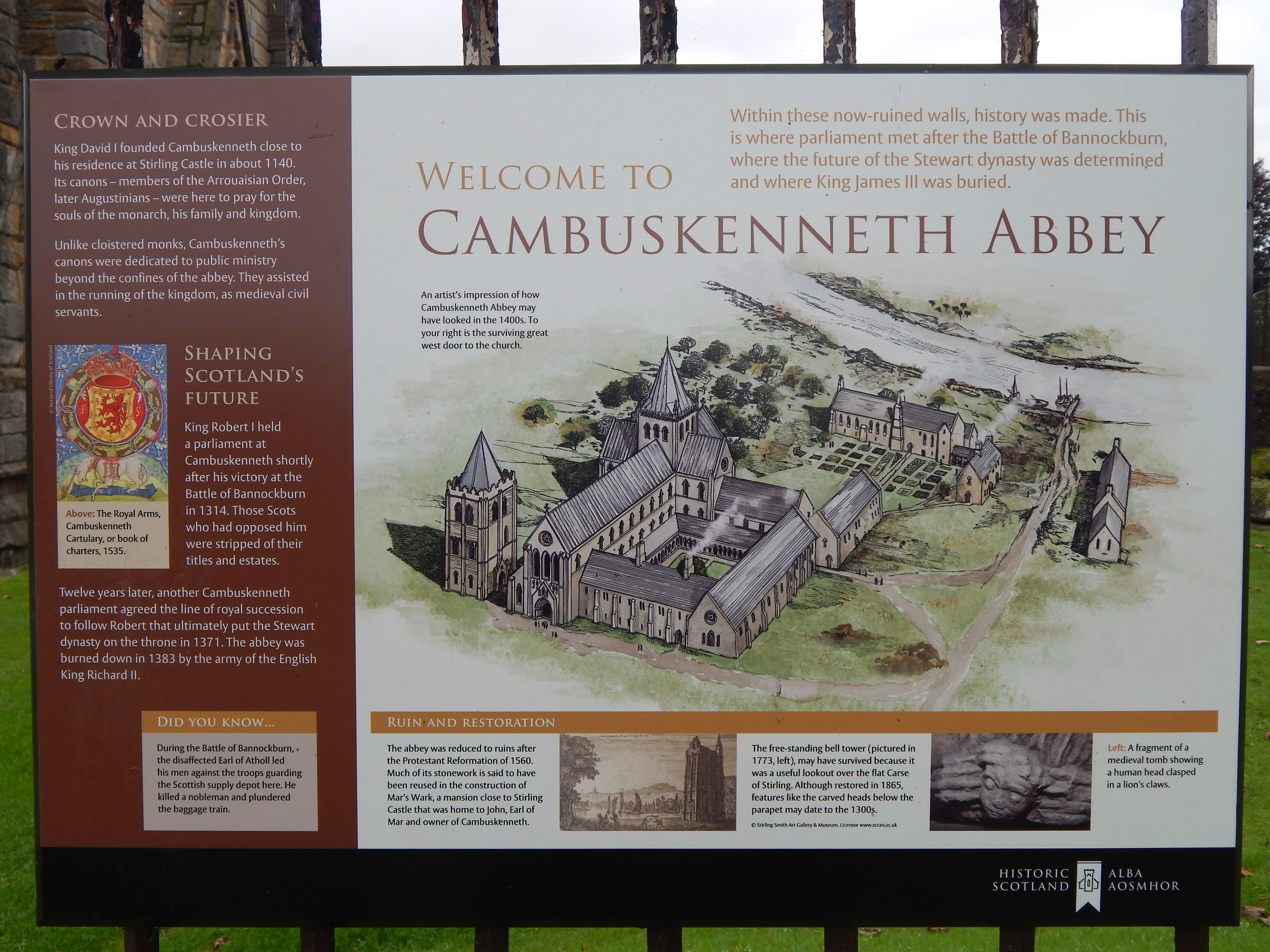
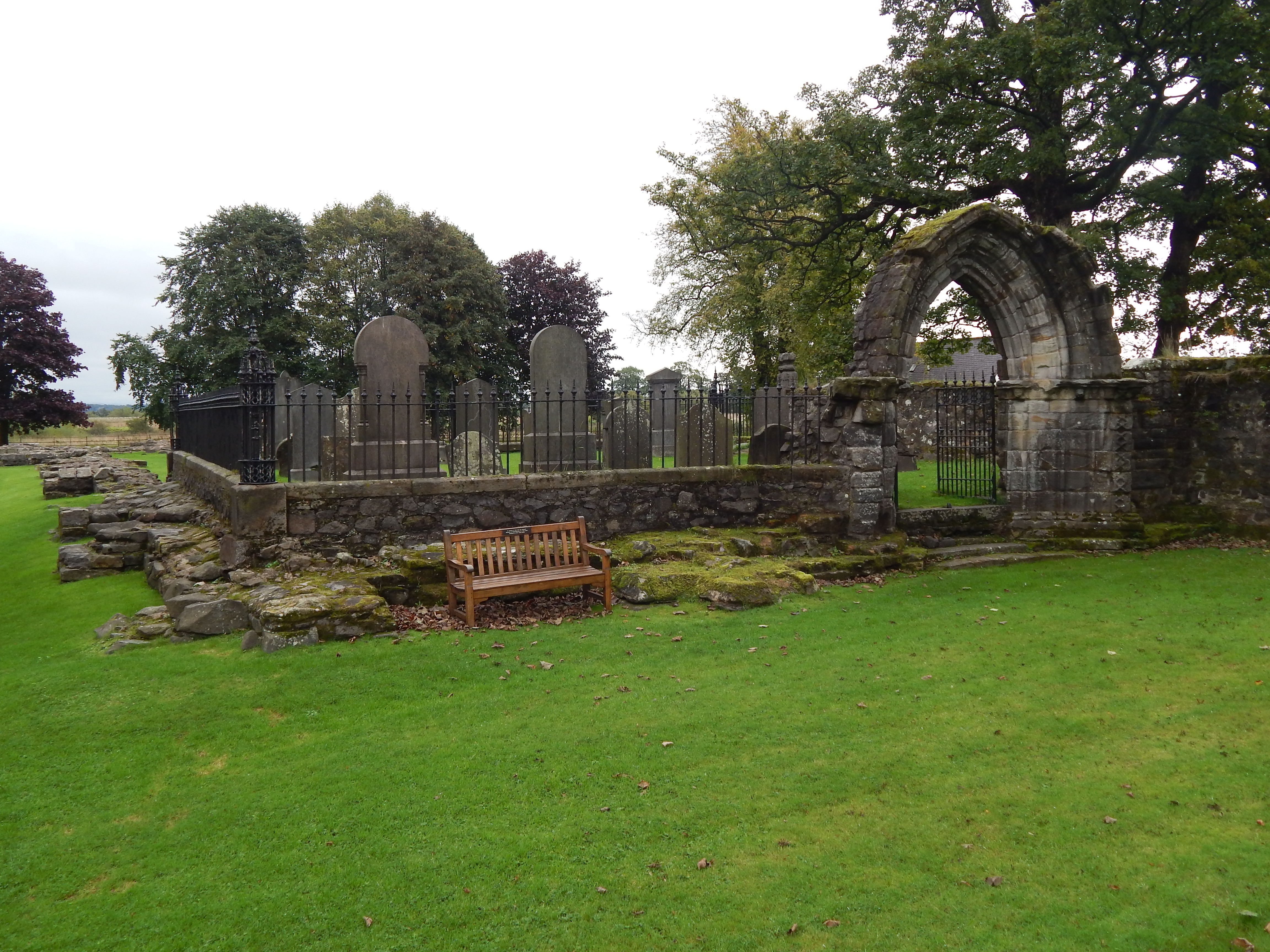
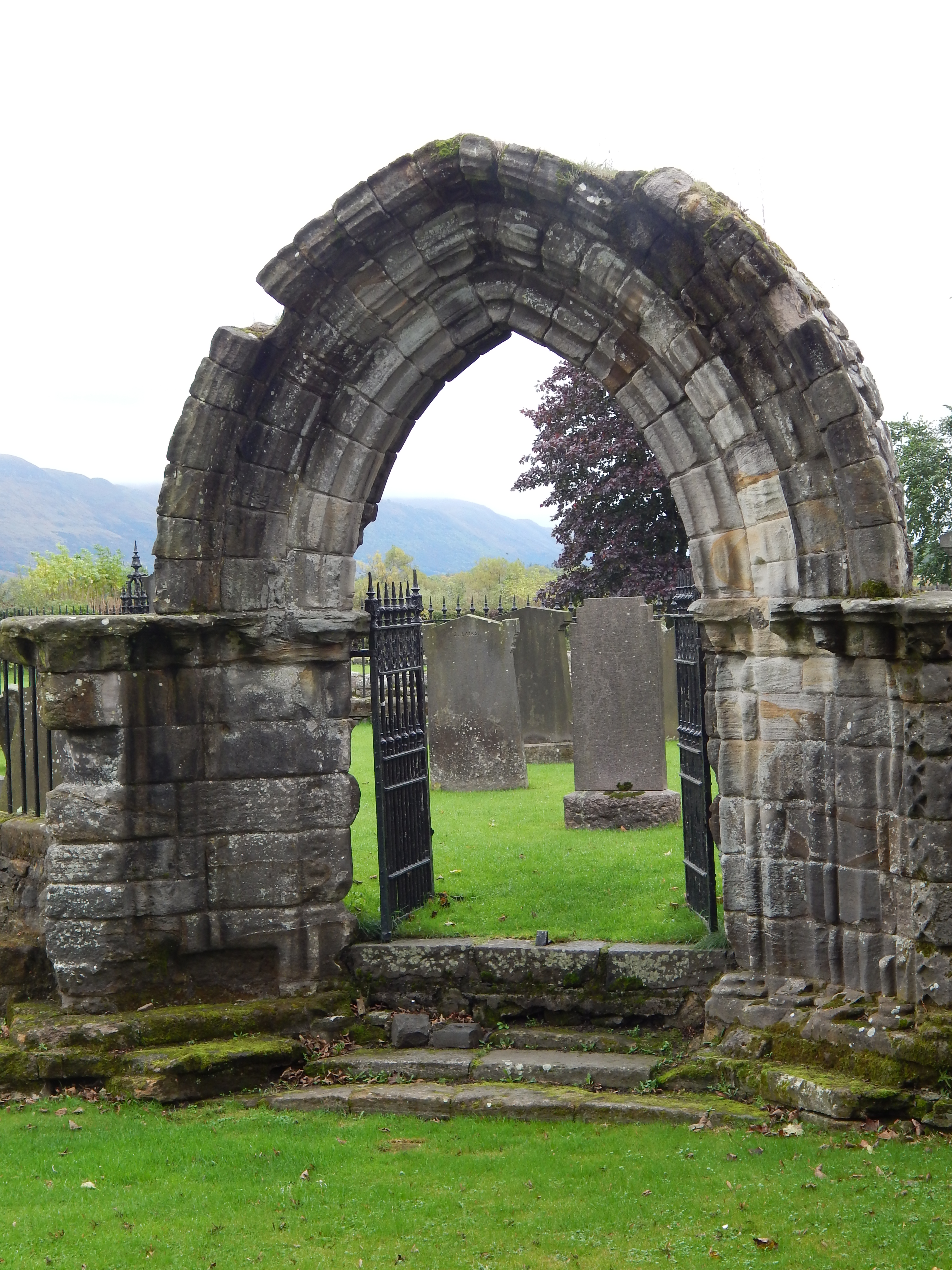
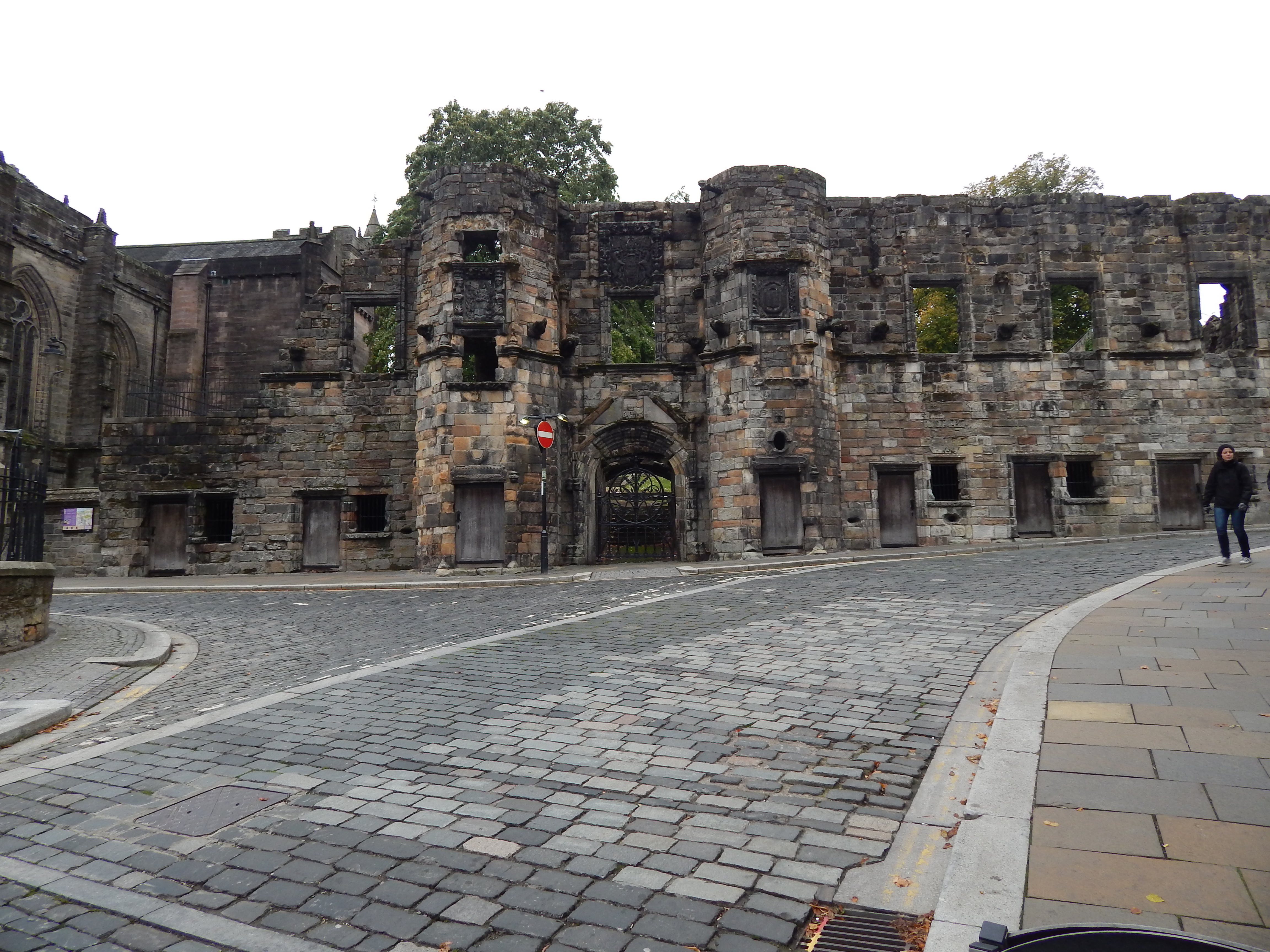
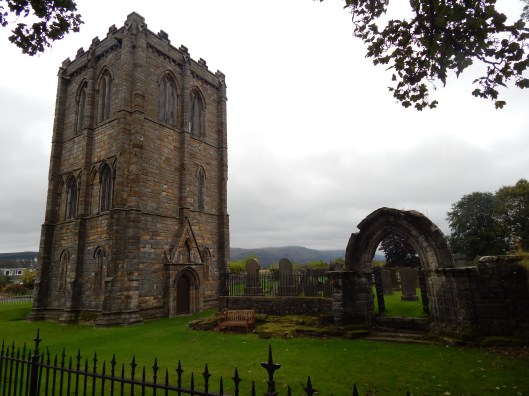
Before climbing the hill to spend the afternoon at the castle, I walked to the once separate village of Cambuskenneth, a mile to the east. Here are the ruins of an Abbey founded in the 12th century that fell into disuse following the 16th century Scottish Reformation. After he was killed at the nearby Battle of Sauchie, King James III was buried at the Abbey. There is a monument commissioned by Queen Victoria in the 19th century atop the tomb of the fallen monarch. It is also thought that one William Wallace’s arms was buried here after his brutal execution in London.  All that remains today are the 13th century bell tower and western doorway of the abbey church. After the destruction of the church in the 15th century, the stone was used by John Erksine, First Earl of Mar, Governor of Stirling Castle, in the construction of his renaissance palace, Mar’s Wark, the ruins of which stand near the Church of the Holy Rood on Castle Hill.
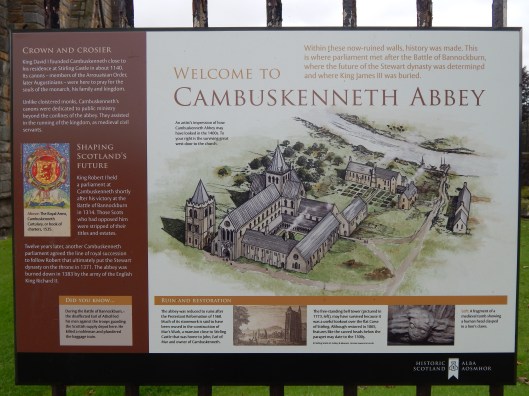
DSCN0381

DSCN0376

DSCN0380 DSCN0378 DSCN0387 DSCN0382

Mar's Wark, built of stone from the abbey church.

Mar’s Wark, built of stone from the abbey church.

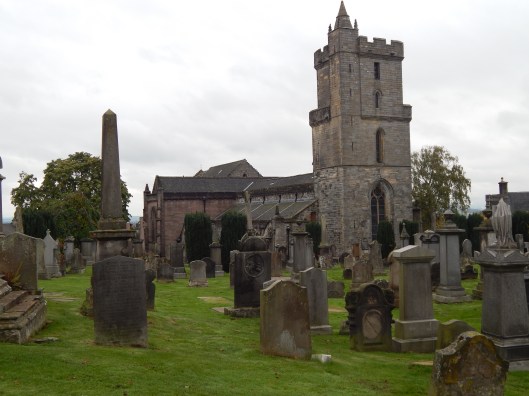
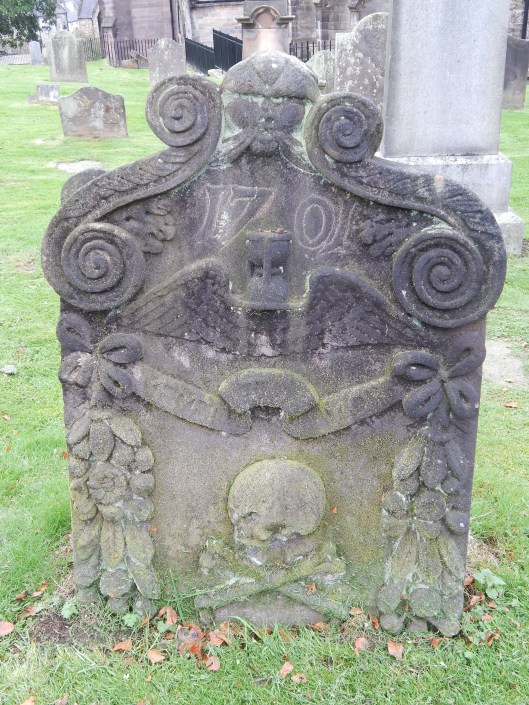
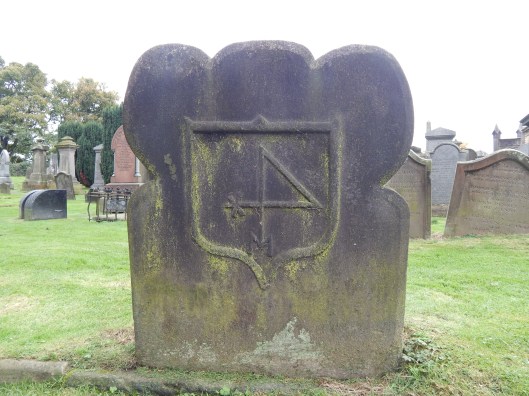
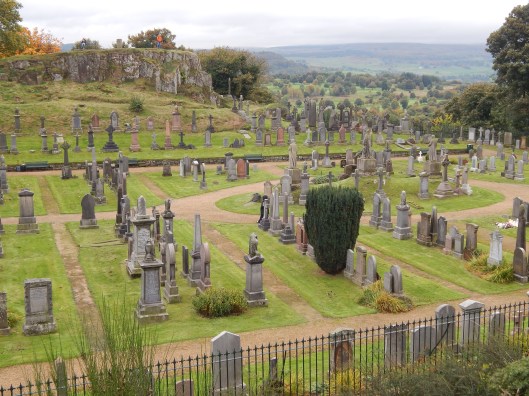
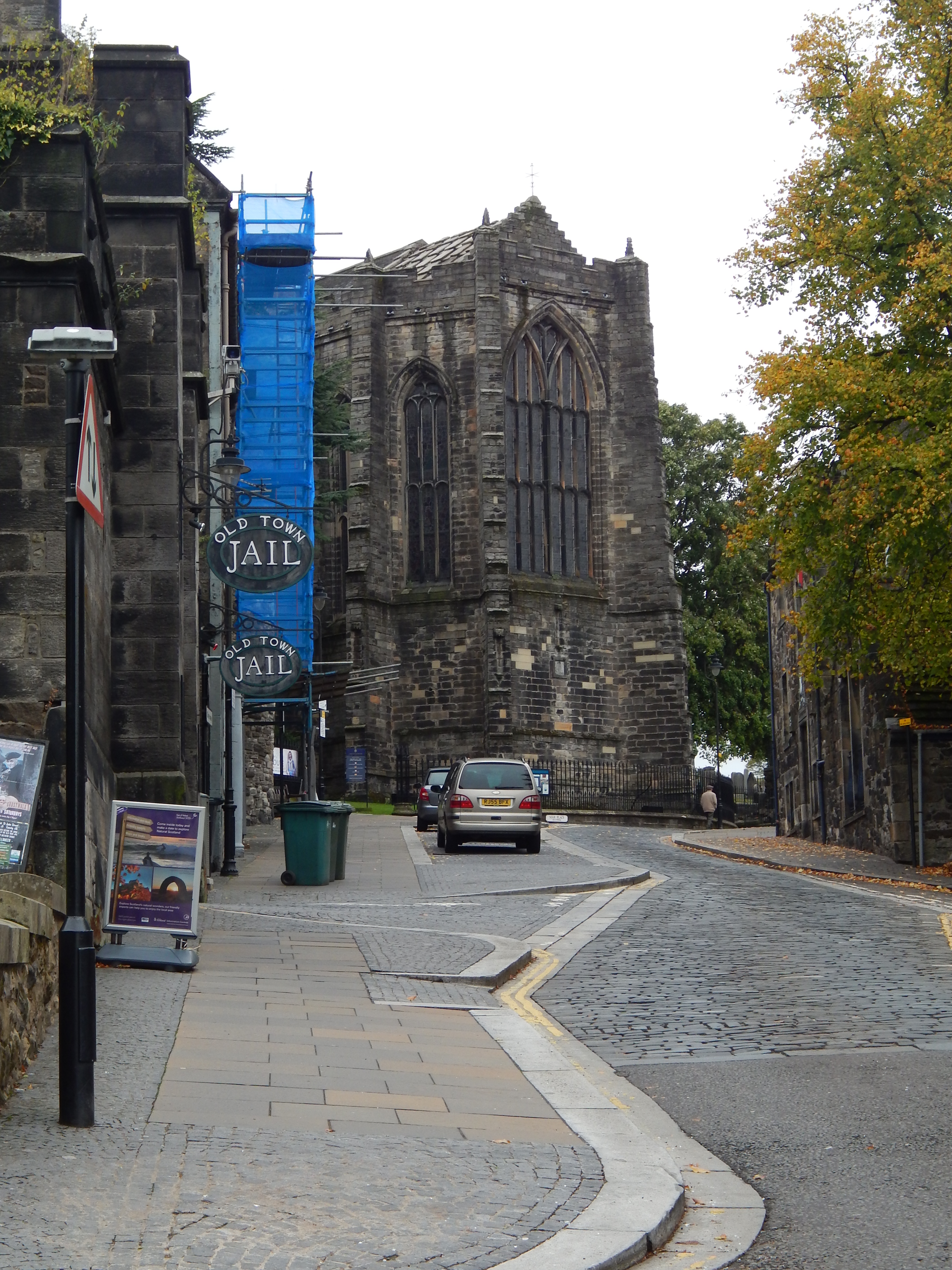
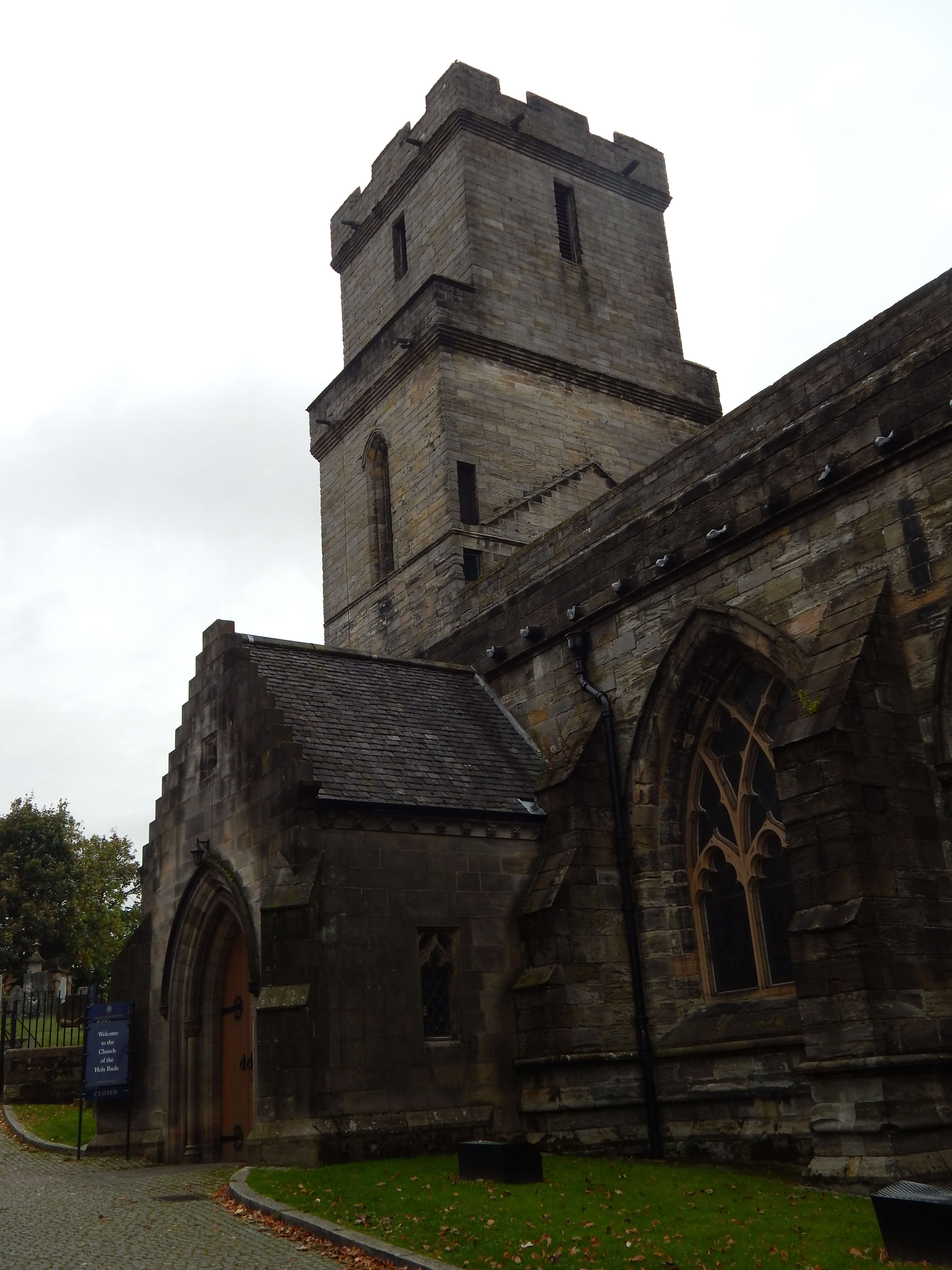
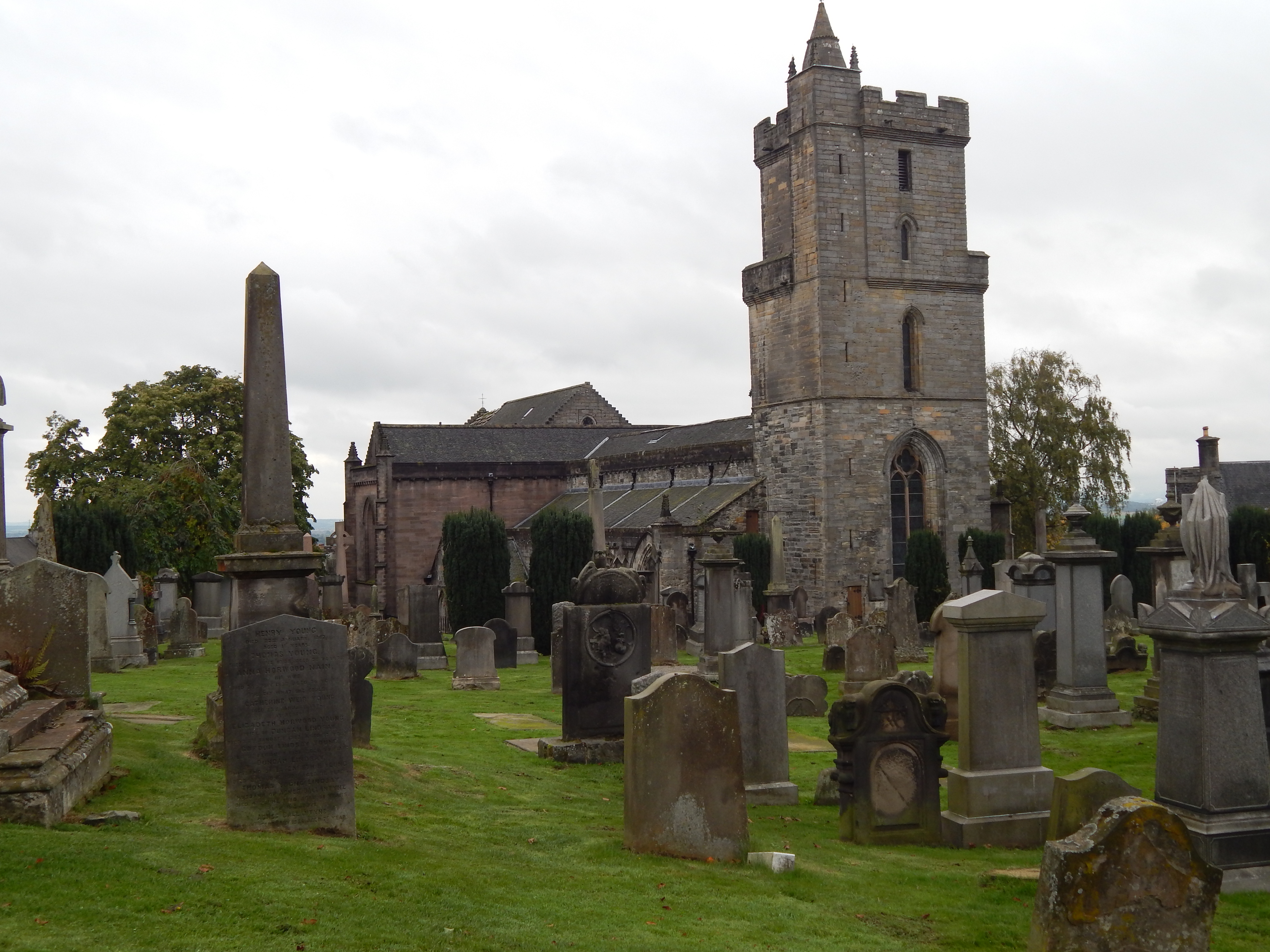
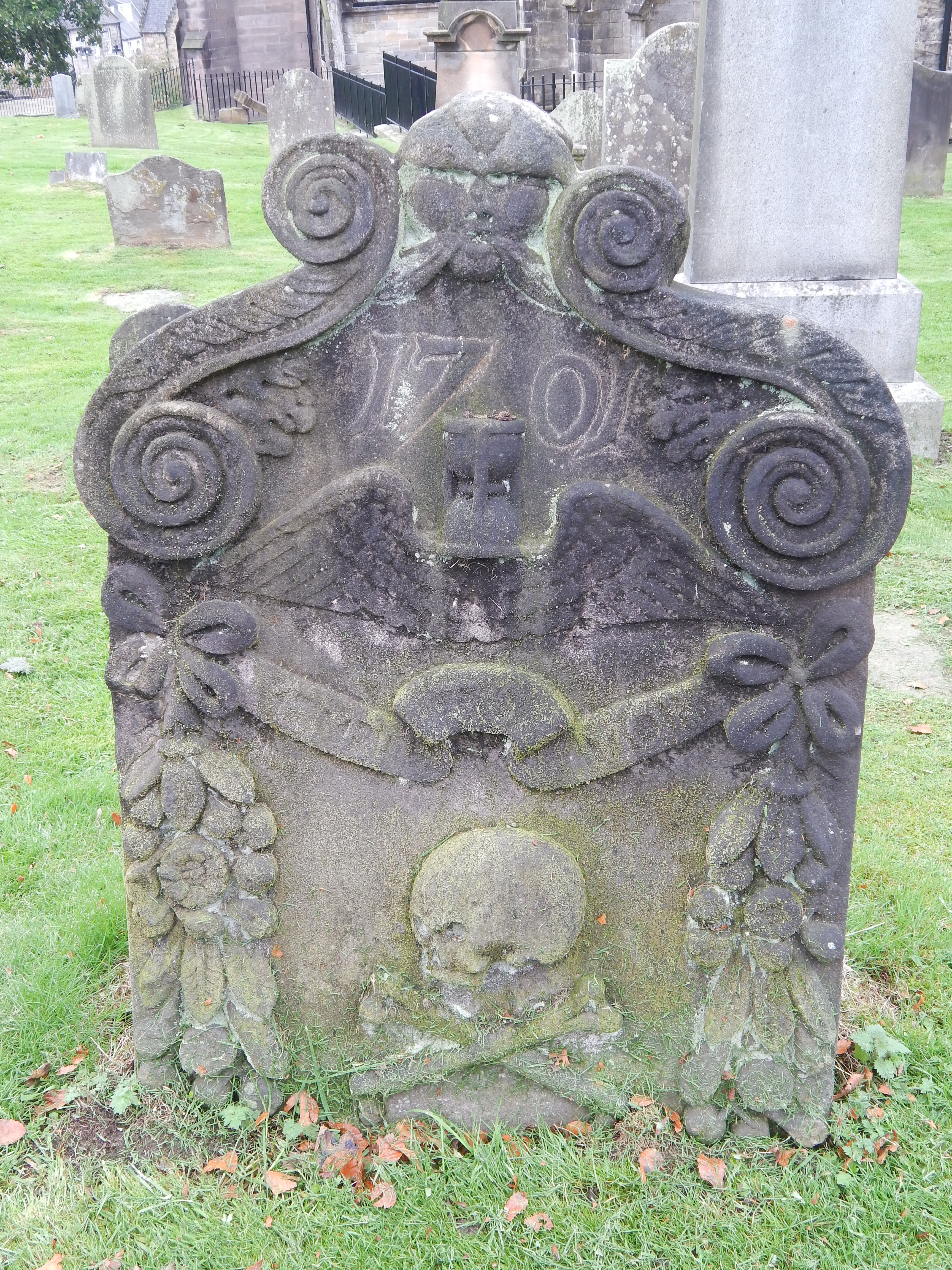
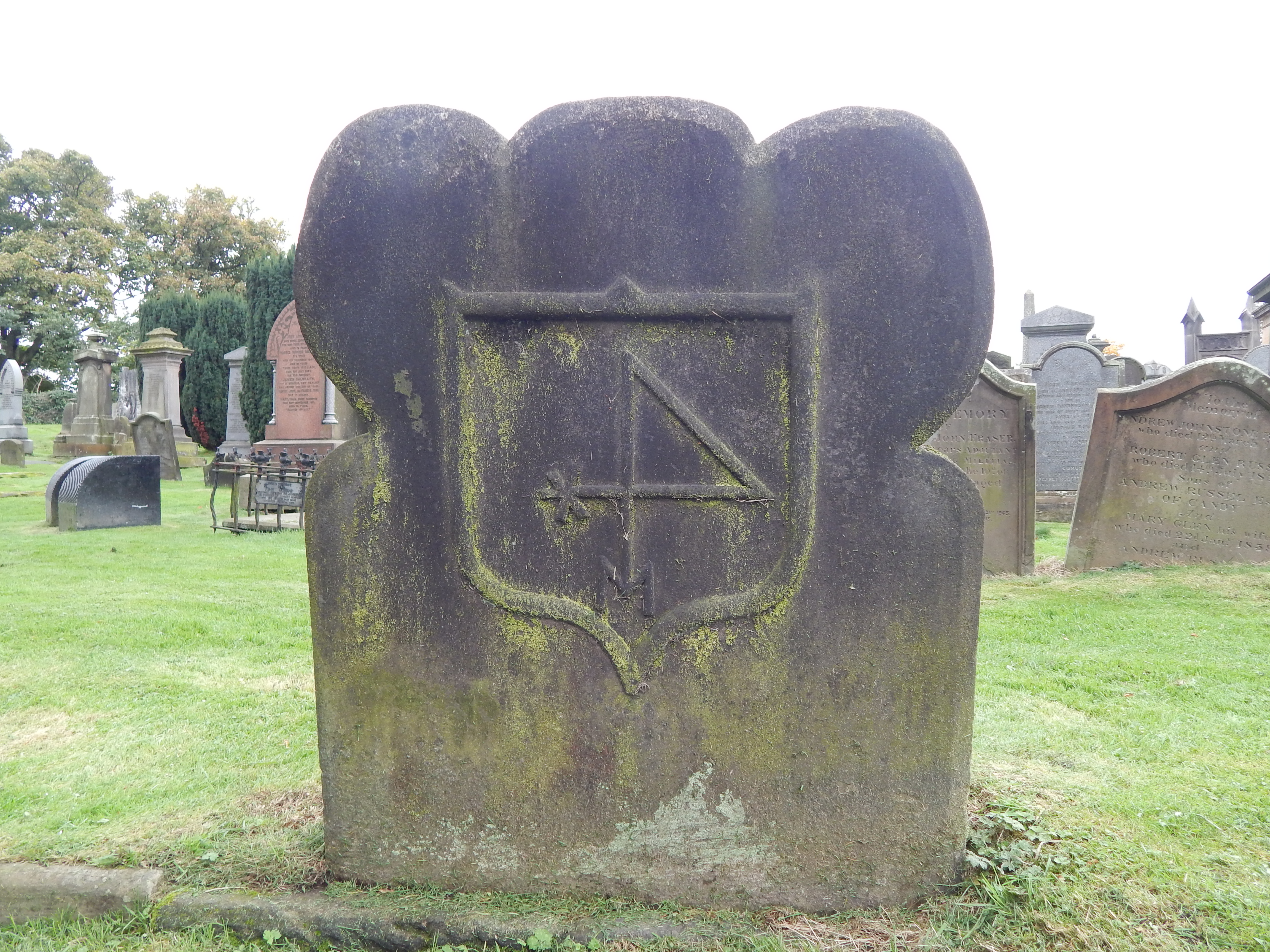
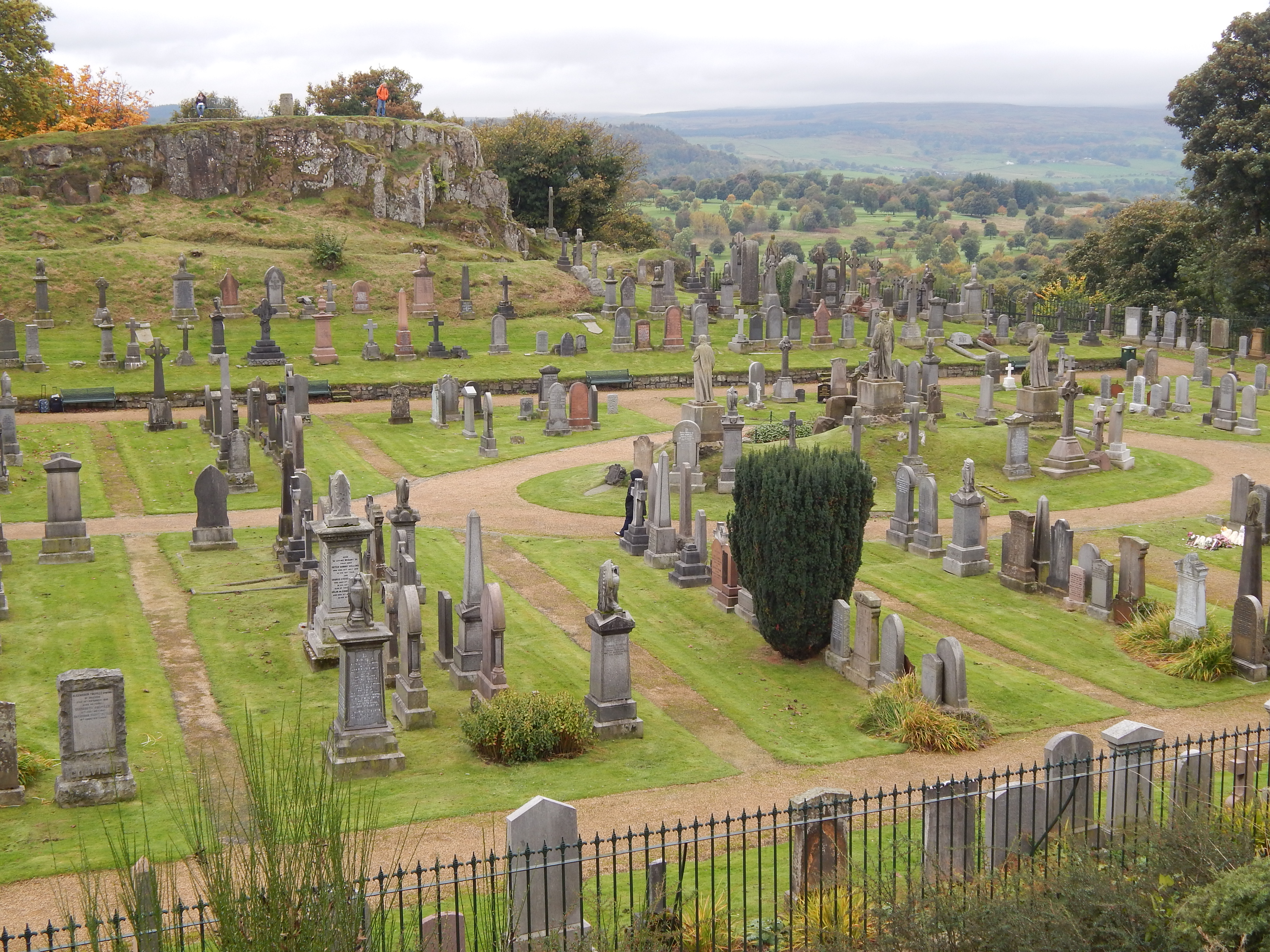
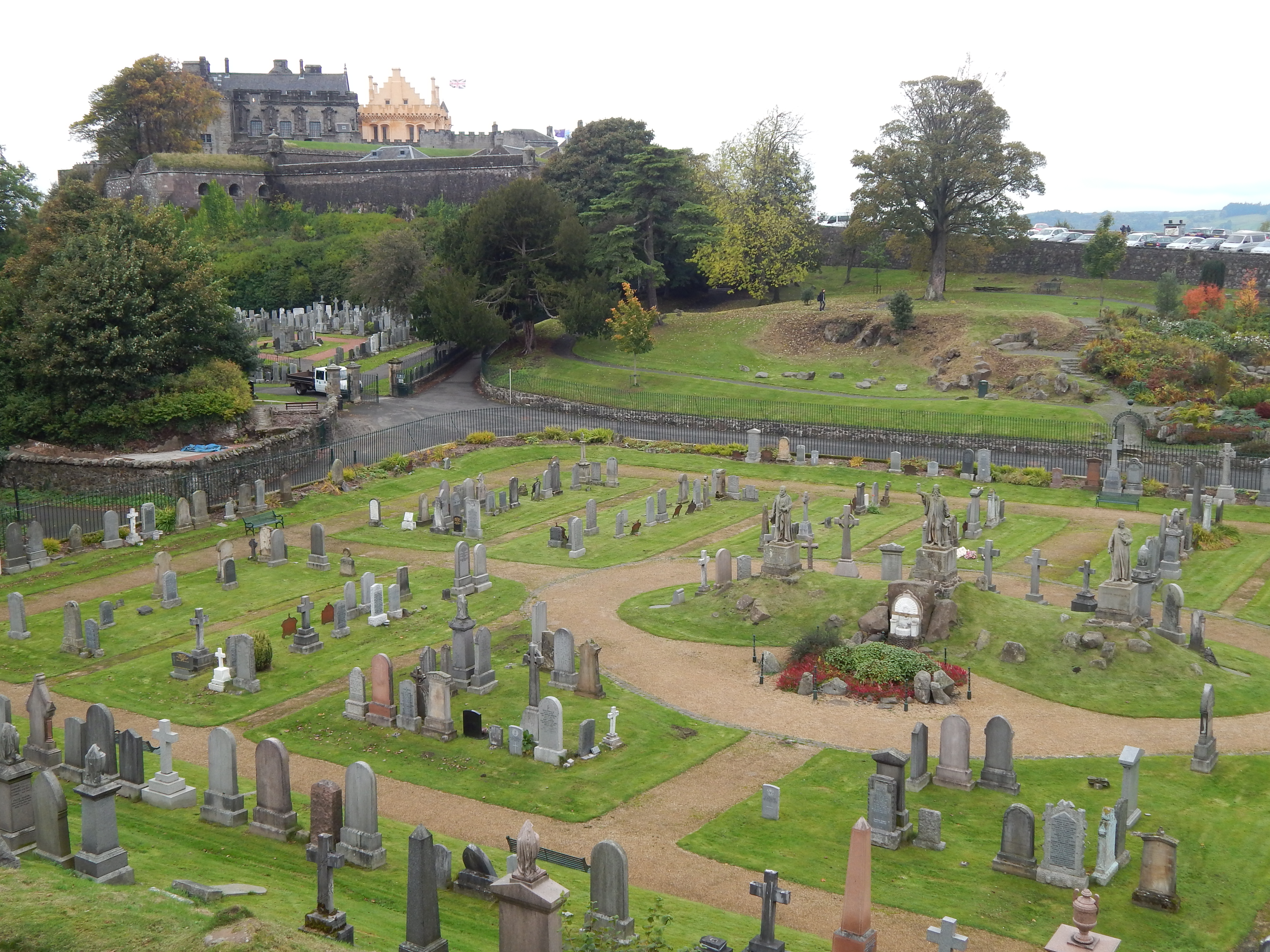
Many of the historic monuments are not open past September. As was the case with the abbey ruins, the Church of the Holy Rood was closed for the season. Really, that just gives me another reason to come back to Scotland in the summertime. The church dates to the middle to late Gothic period (15th-16th century), and is, in the English style, heavier and not as lofty as the Continental buildings of the same period. There is an extensive churchyard with graves dating to the 17th century, probably earlier. The earliest date I found was 1701, though many stones are long since deteriorated past the point of knowing what was inscribed on them. The space between the Church and the Castle, and then the land on the north side of the Castle is a sprawling graveyard with monuments primarily dating from the late 19th century to the modern-day.
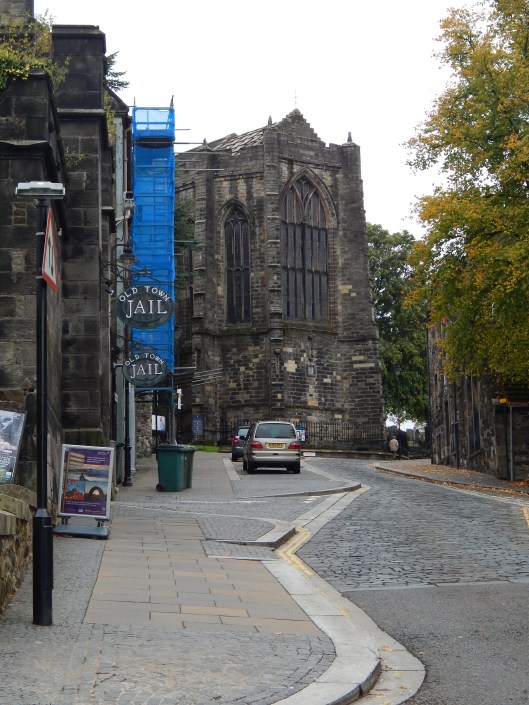
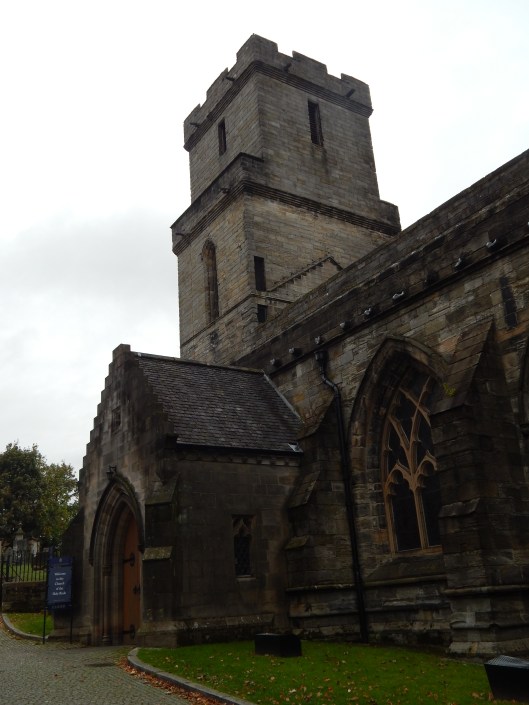
DSCN0402

DSCN0405

DSCN0411

DSCN0409

DSCN0408

DSCN0416

DSCN0412

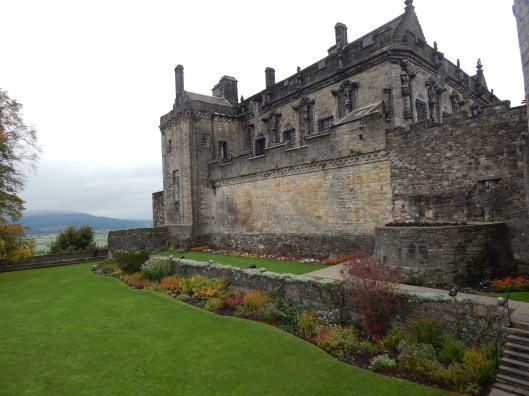
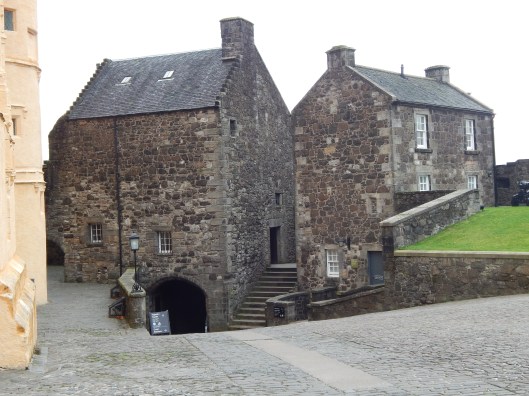
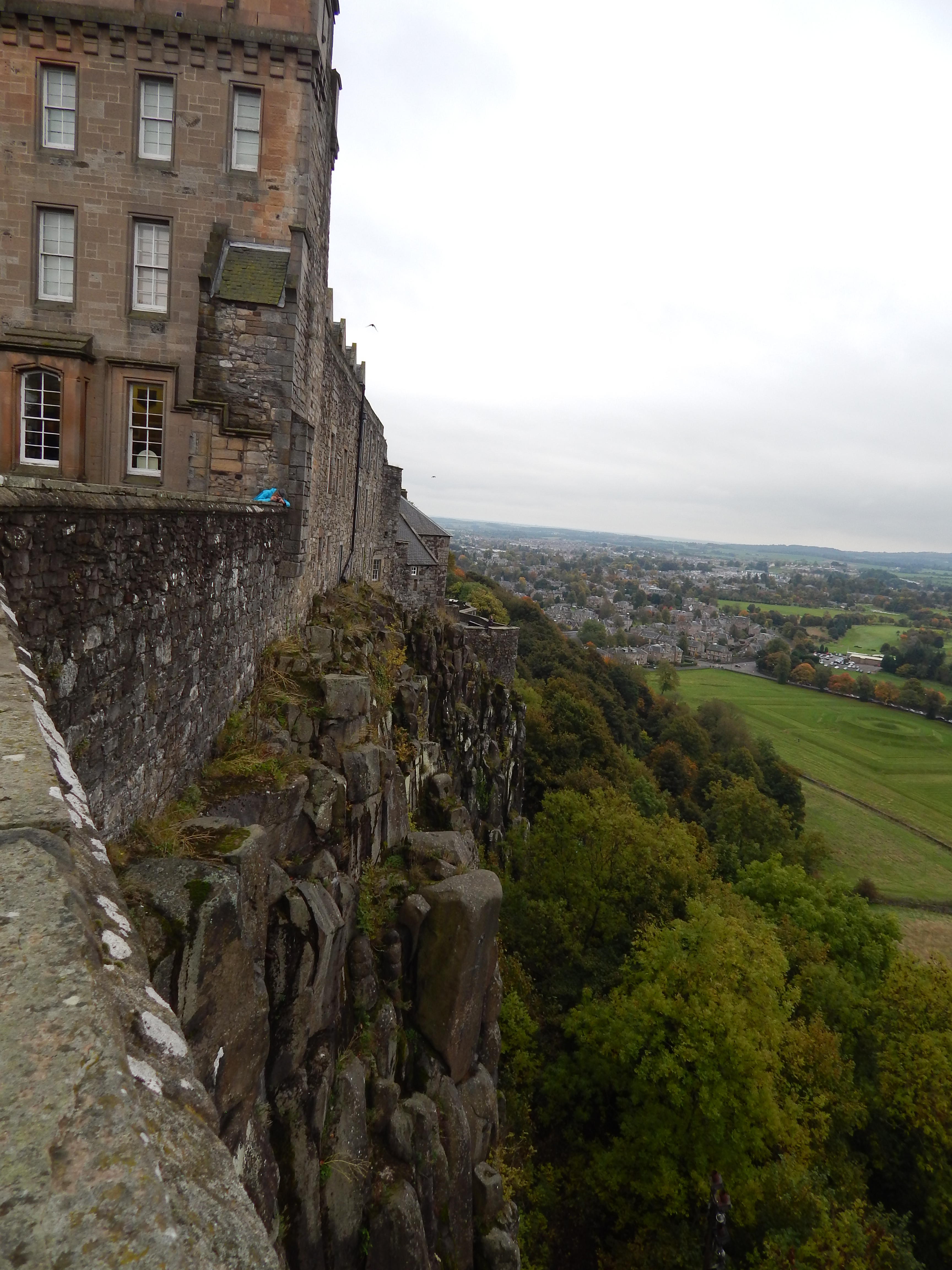
Stirling Castle has been a seat of the Scottish Throne since early in the 12th century. The Castle itself sits atop the crag with cliffs on three sides making it an easily defensible position above the strategically important bridge over the Forth. Robert Bruce, who became King of Scots on the Death of England’s Edward I, had the medieval defenses dismantled in the early 14th century to prevent the English from ever taking and holding the fortress again. The oldest structures remaining (North Gate and the Kitchens) are from this period, while most of the buildings date to the 15th and 16th centuries. The defences were rebuilt and “modernized” during the 18th century Wars of Independence from the English Crown. England, it seems, has always wanted to control the lands here, but the Scots historically want none of that. The Romans didn’t bother much, and built Hadrian’s wall across the whole of the British Isle to keep the wild and whisky soaked warriors from the low and highlands from coming south. Past the artillery placements of the outer defenses, the castle presents a combination of late Gothic idealization of the medieval and a Renaissance palace constructed by King James V. It was here that Mary, Queen of Scots spent her early years after being crowned at the age of nine months following the death of her father James V (he died when she was just 6 days old).
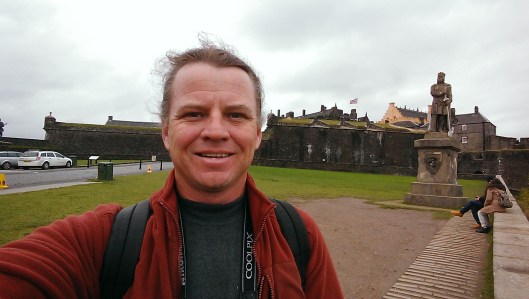
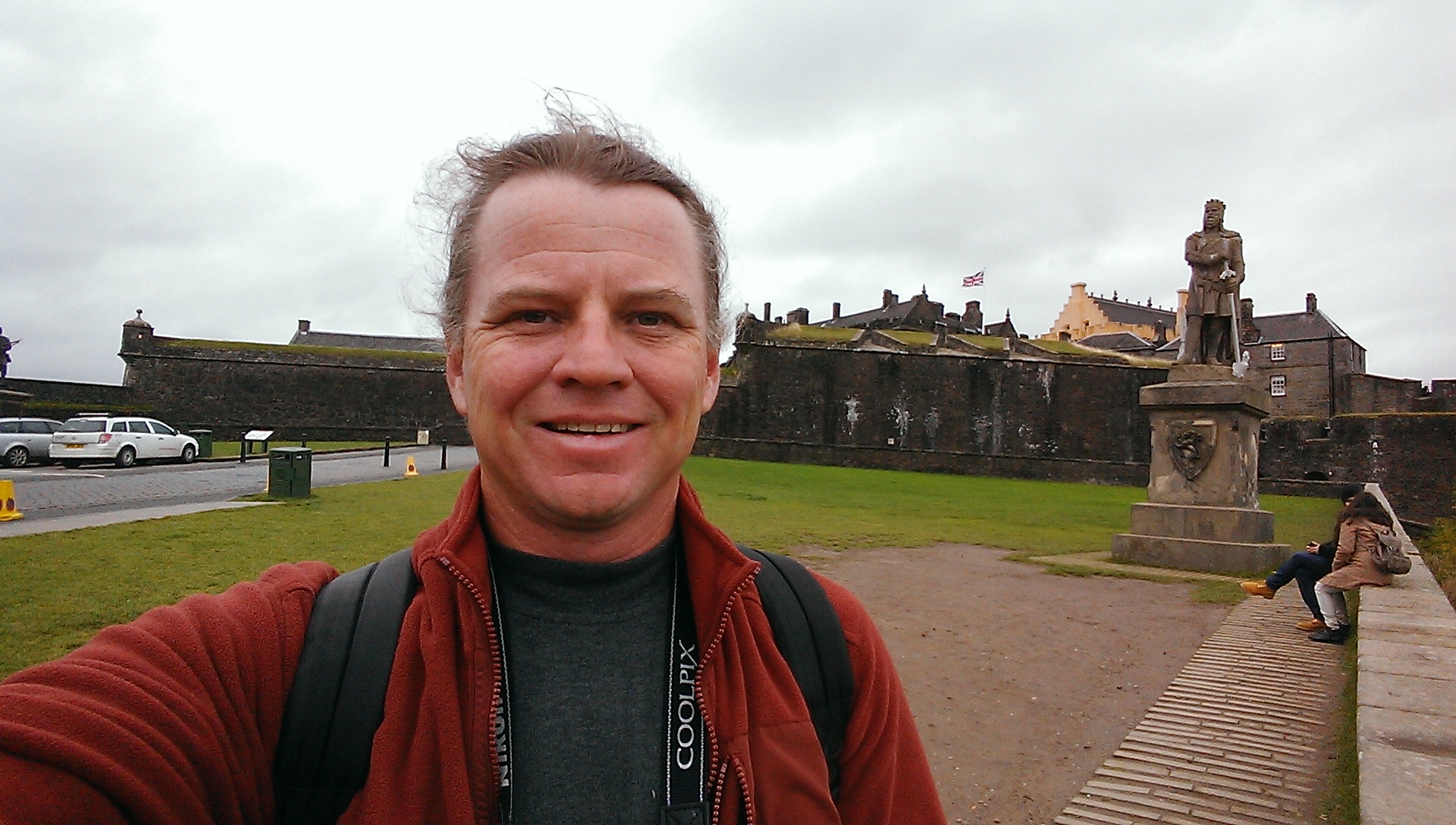
That's me with castle behind and Robert the Bruce on the right
That’s me with castle behind and Robert the Bruce on the right

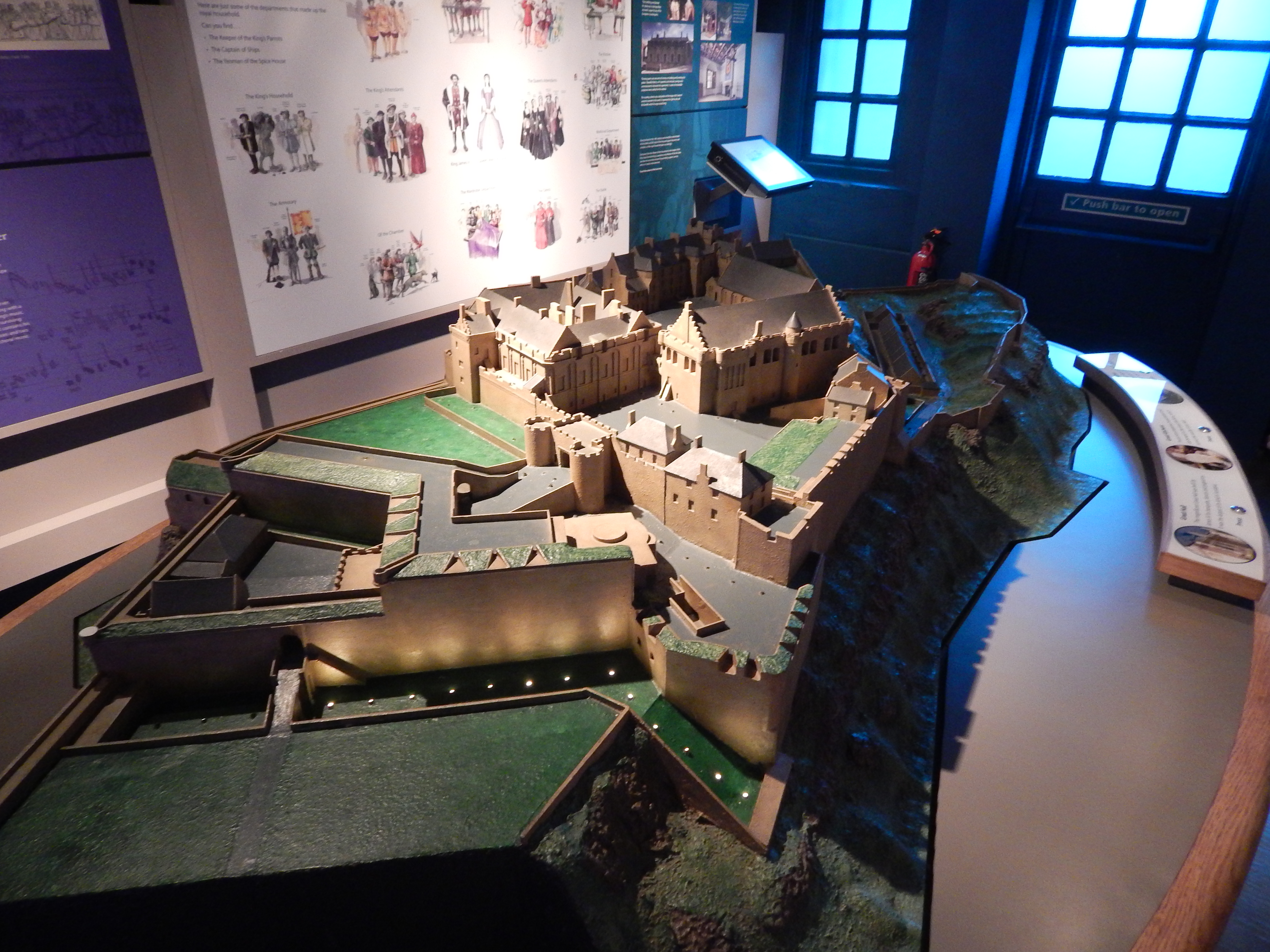
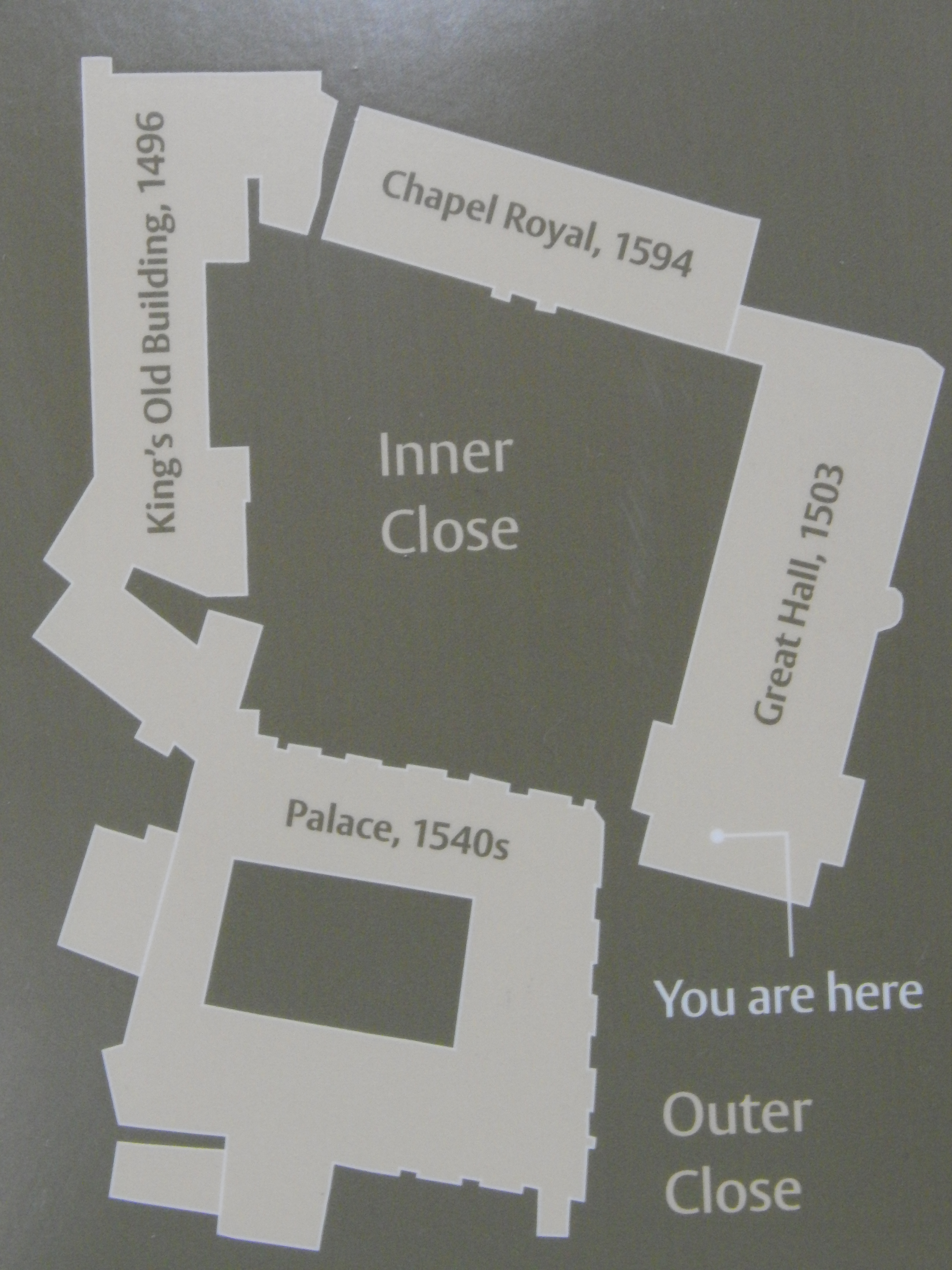
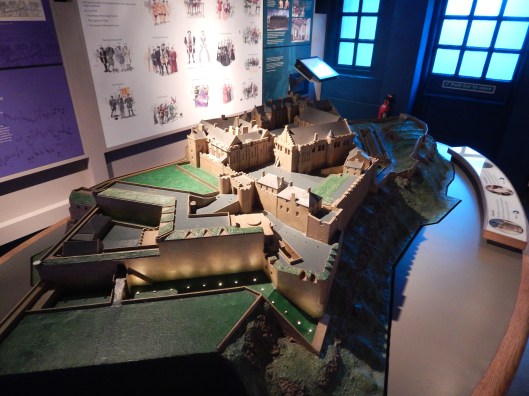
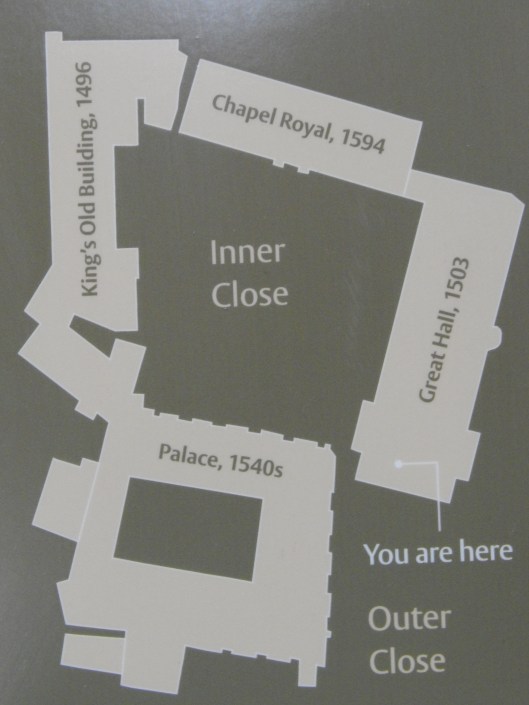
Model showing layout of castle.  (Front to back) Outer defences, Frontworks, Outer Close, Royal Palace (L), Great Hall (R), Inner Close, King's Old Building (L) and Chapel (R).

Model showing layout of castle. (Front to back) Outer defences, Forework, Outer Close, Royal Palace (L), Great Hall (R), Inner Close, King’s Old Building (L) and Chapel (R).
DSCN0432

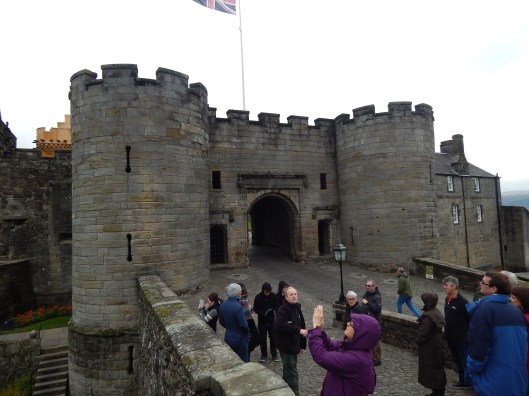
Fifteenth Century Frontworks

Fifteenth Century Forework

Bowling Green, Prince's Tower, and Royal Palace

Bowling Green, Prince’s Tower, and Royal Palace
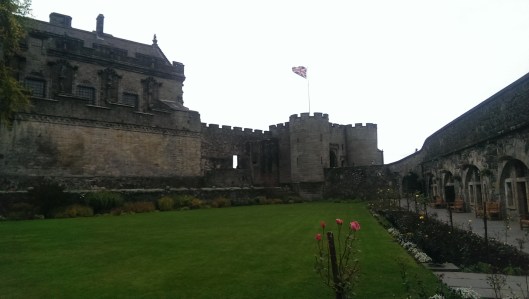
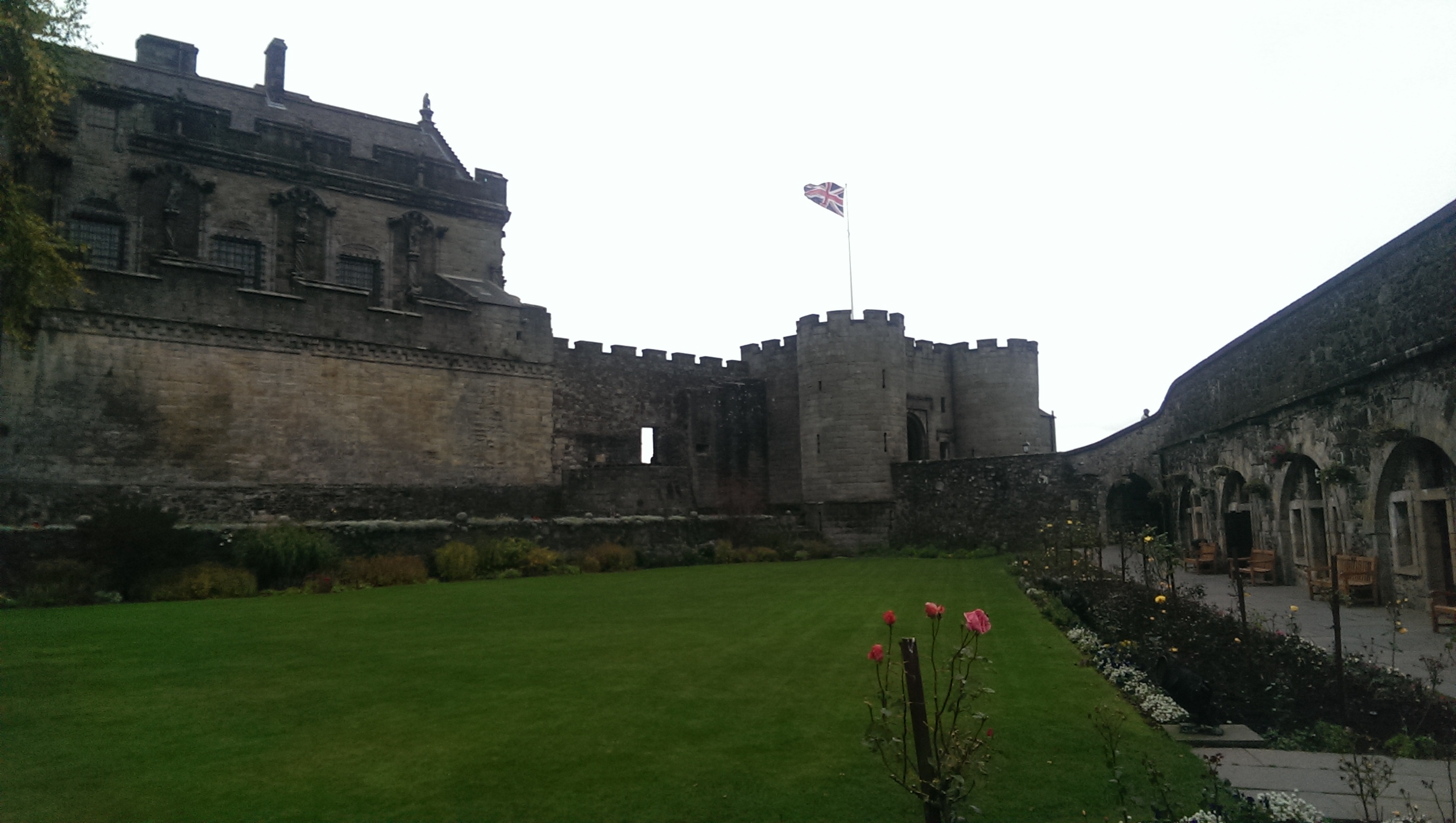
Bowling Green with Royal Palace and Frontworks

Bowling Green with Royal Palace and Forework

Again, I refer you to the Wikipedia for a wonderfully detailed history of the castle, as I am not here to provide more than an outline of the locations. http://en.wikipedia.org/wiki/Stirling_Castle I prefer to get to my experience of the visit.
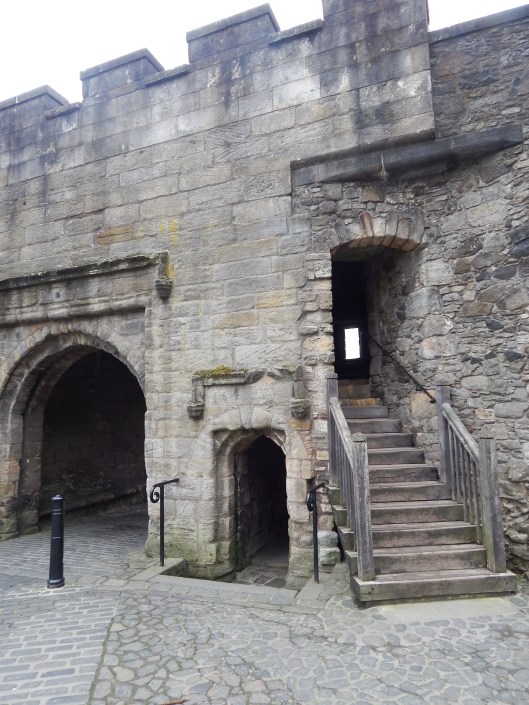
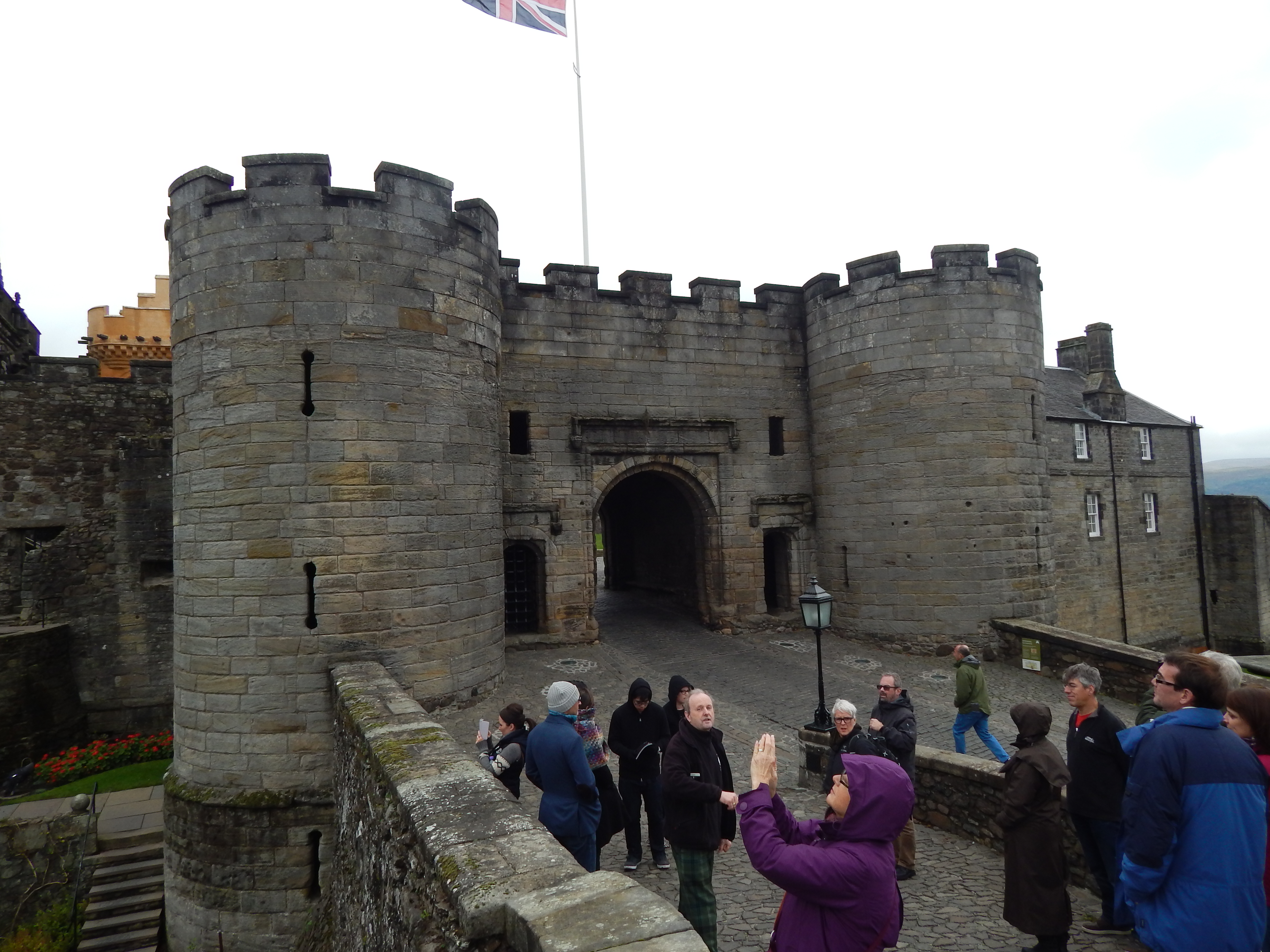
Inner Close side of Frontworks portal

Inner Close side of Forework portal

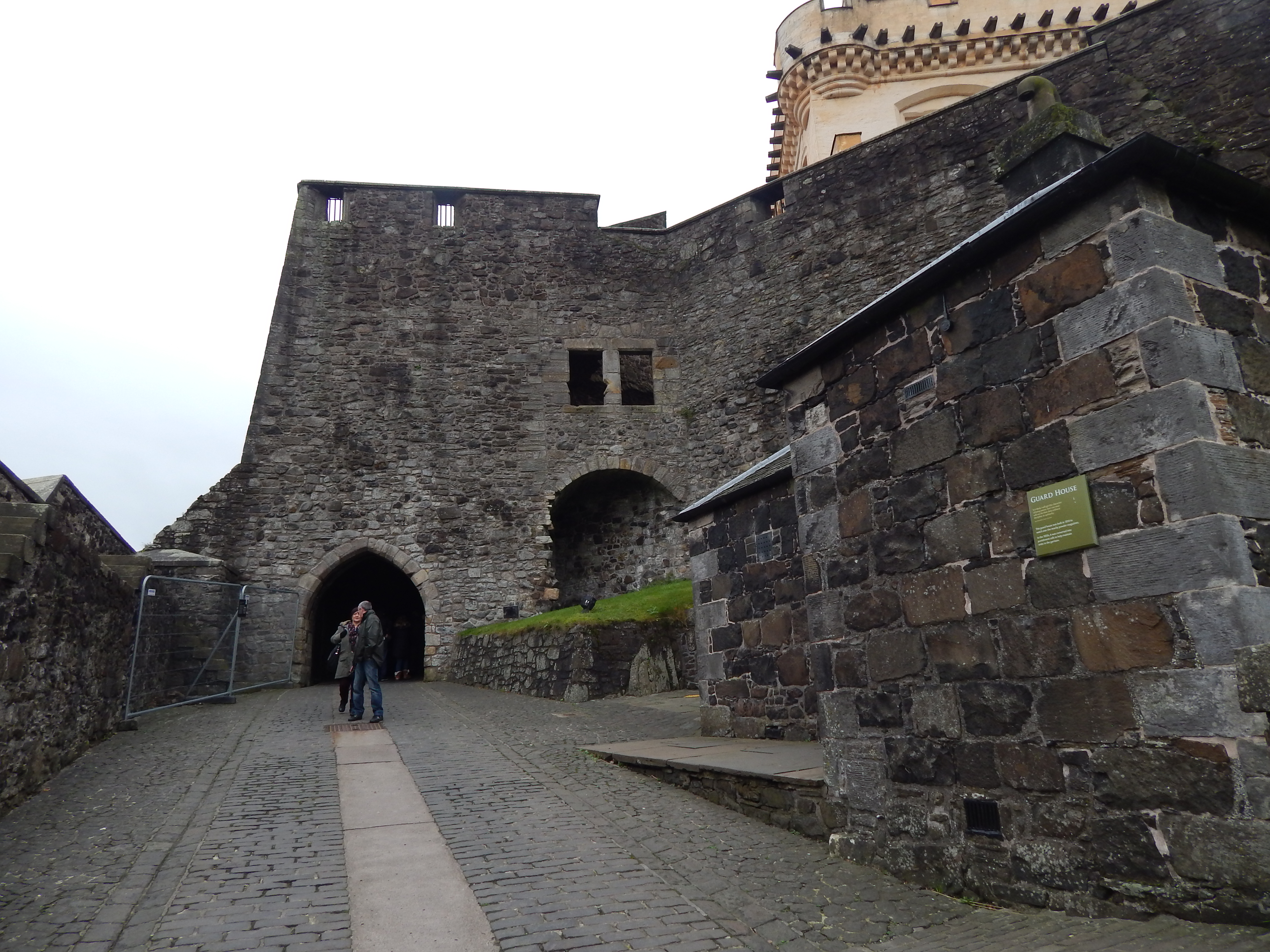
North Gate.  Old structures remaining, dating to 14th century
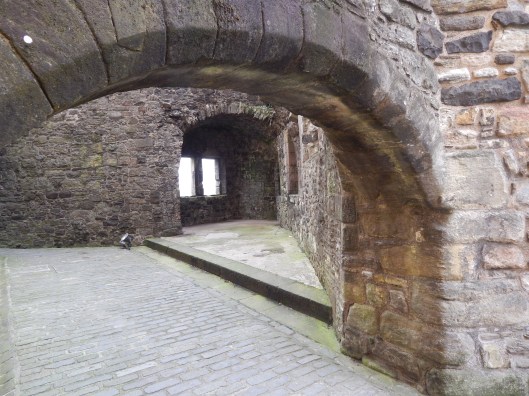
North Gate. Oldest structures remaining, dating to 14th century

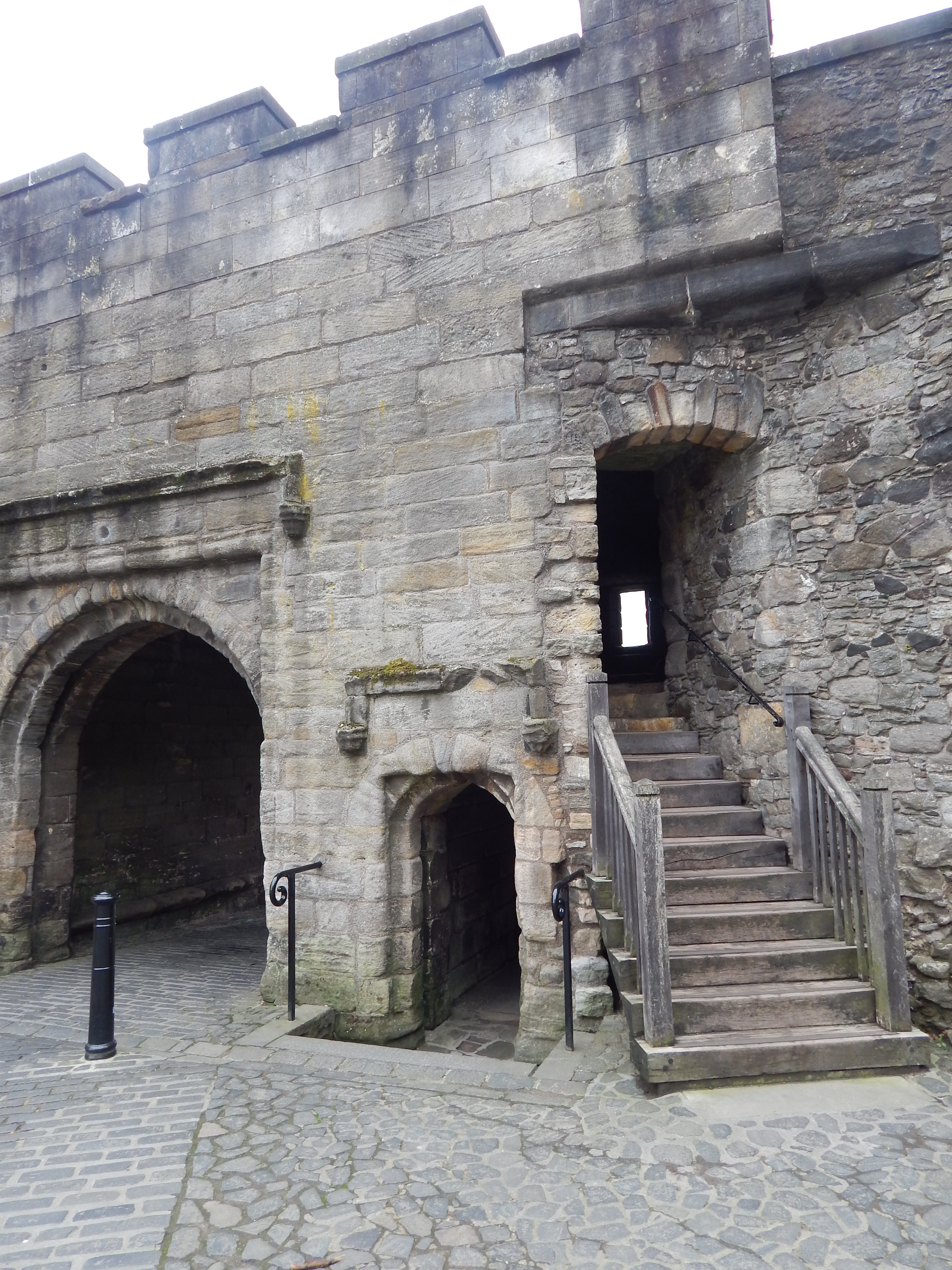
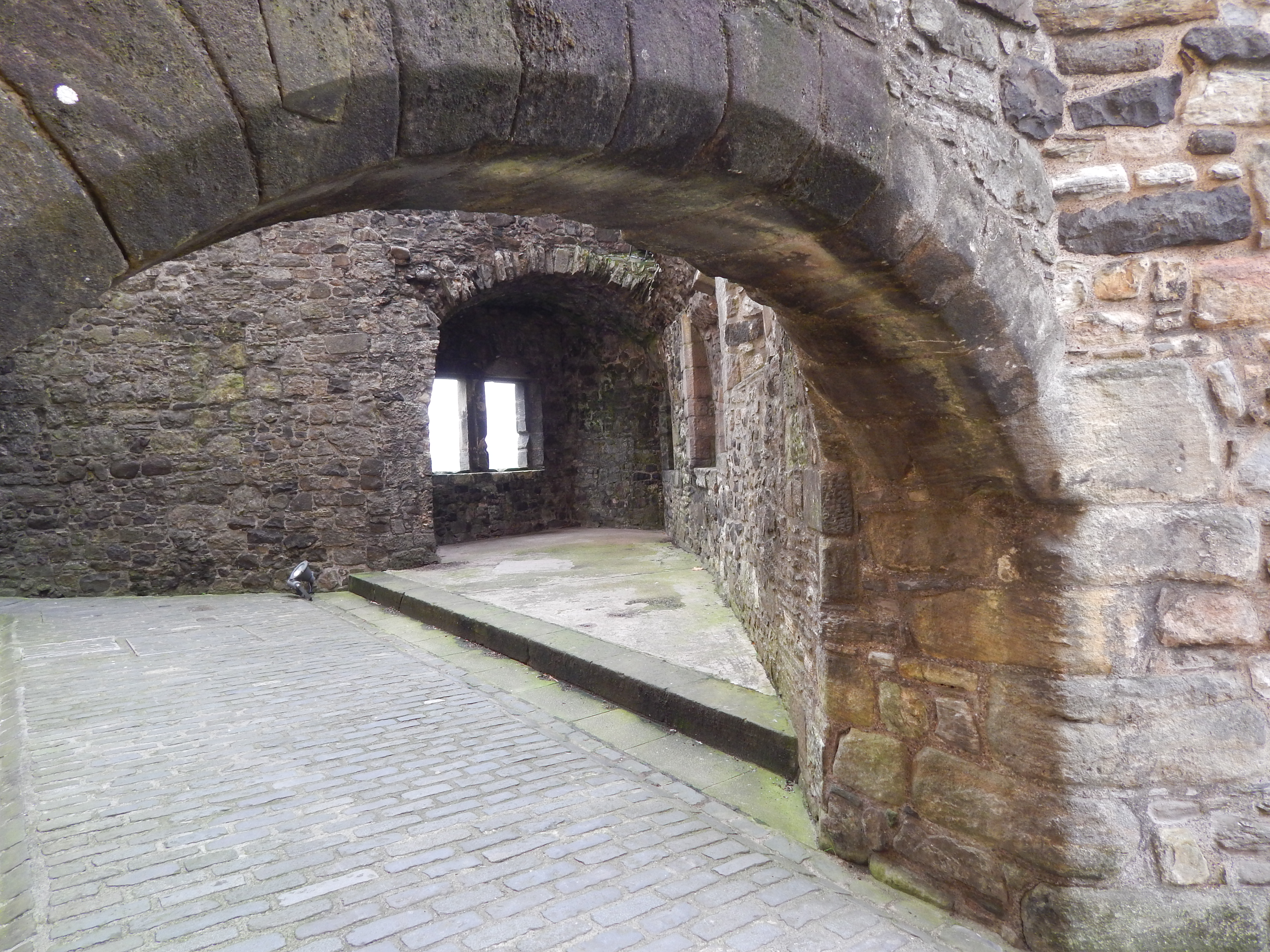
Arch and portal near North Gate

Arch and portal near North Gate

DSCN0442

Exterior of North Gate from Nether Bailey
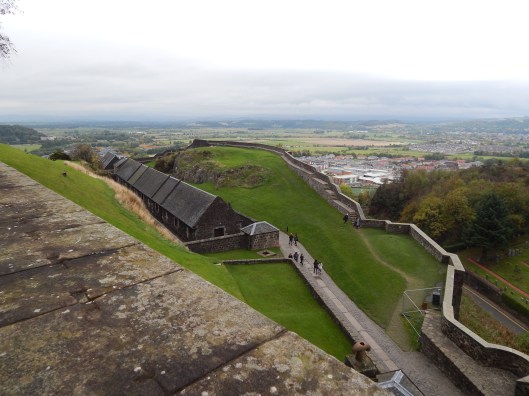
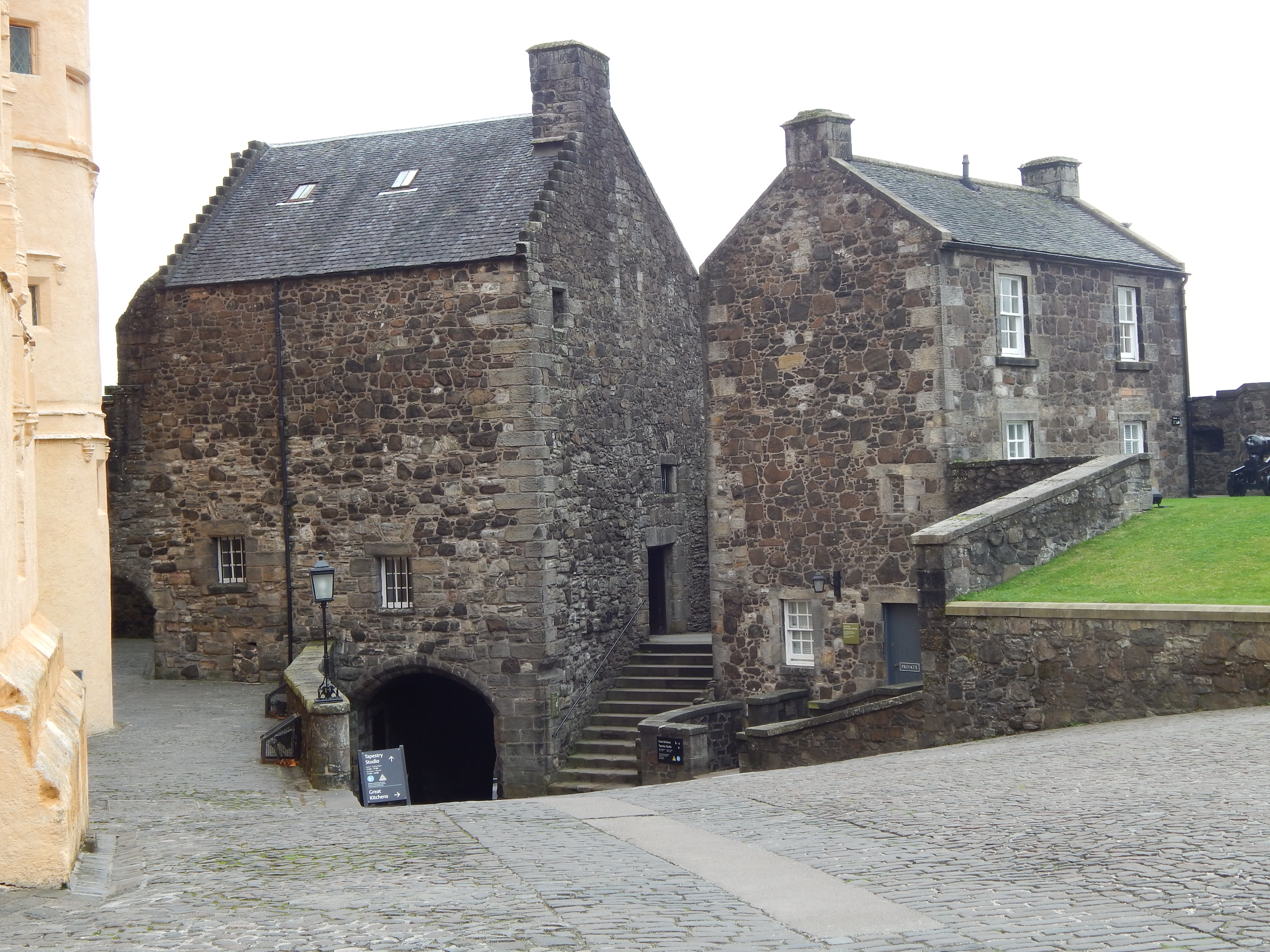
Nether Bailey

Nether Bailey

I took a brief guided tour that focused on the major events and periods of construction before spending the afternoon roaming about the vast castle grounds. Coming from the western US where rarely is anything more than 120 years old, visiting these sites that have been around and preserved for 500 or more years always leave me somewhat awe-struck. I love to stand in these courtyards and great halls and imagine them in their day. Filled with the activities of life in a castle, the walls not gray but painted in brilliant colors showing this is the proud seat of Scottish power. I imagine winter nights in the Great Hall, fires burning in the five hearths filling the room with flickering light and warmth amidst the song and entertainment on the occasion of a feast. Granted, I’m sure that most of the days were more like the day I was there. Cool and overcast with people quietly going about their business, but that’s rather dreary for a vivid imagination. The day was good, and I was quite tired after walking up and down the hills and stairways of the grounds.
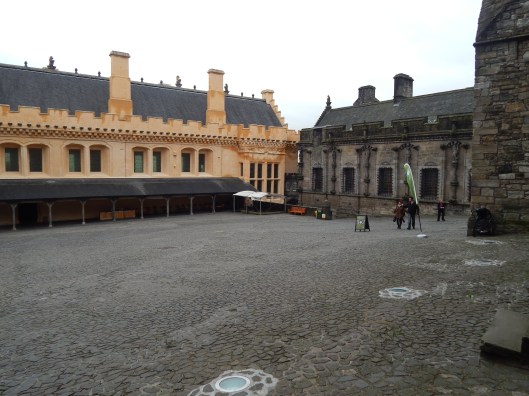
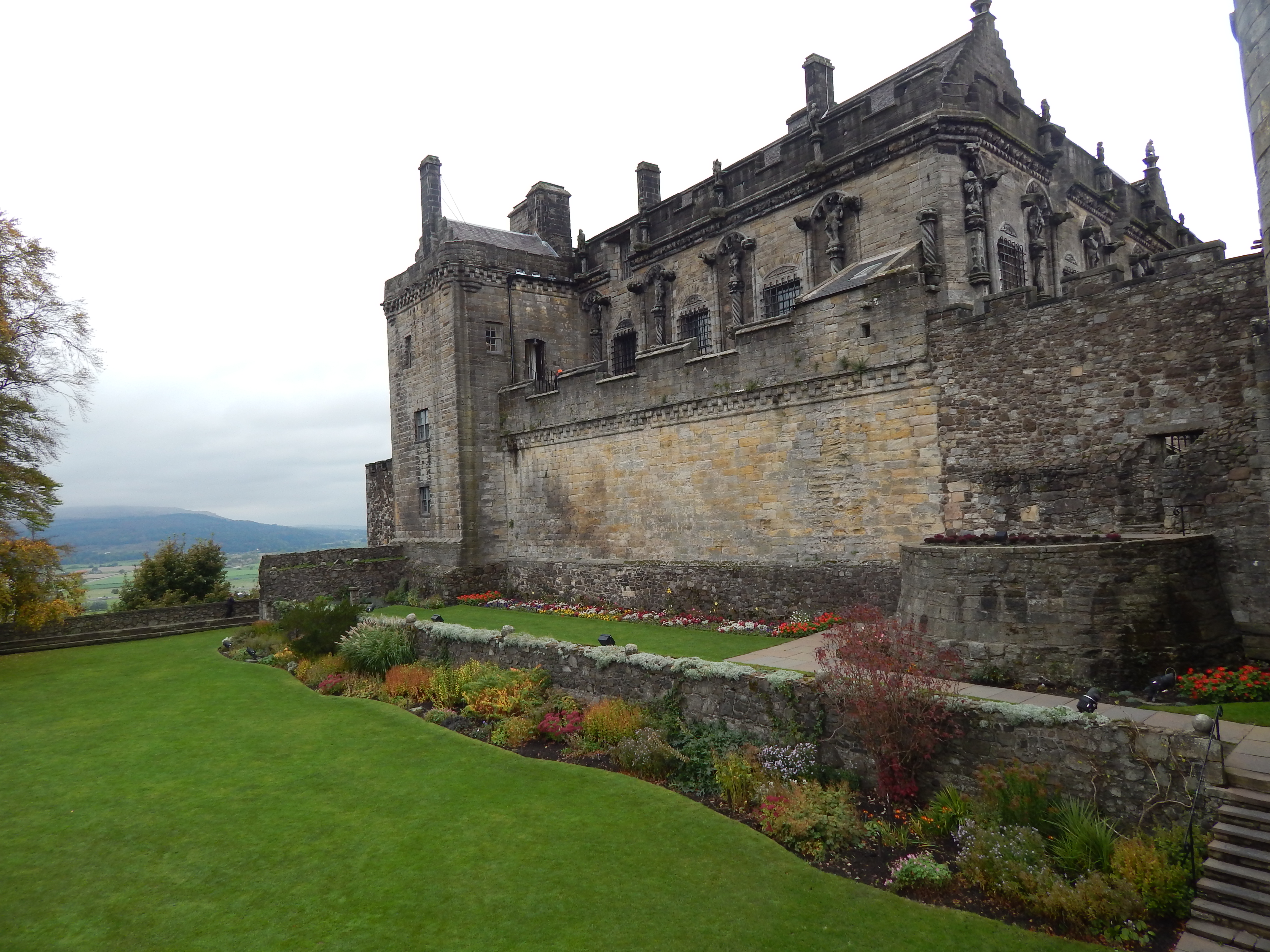
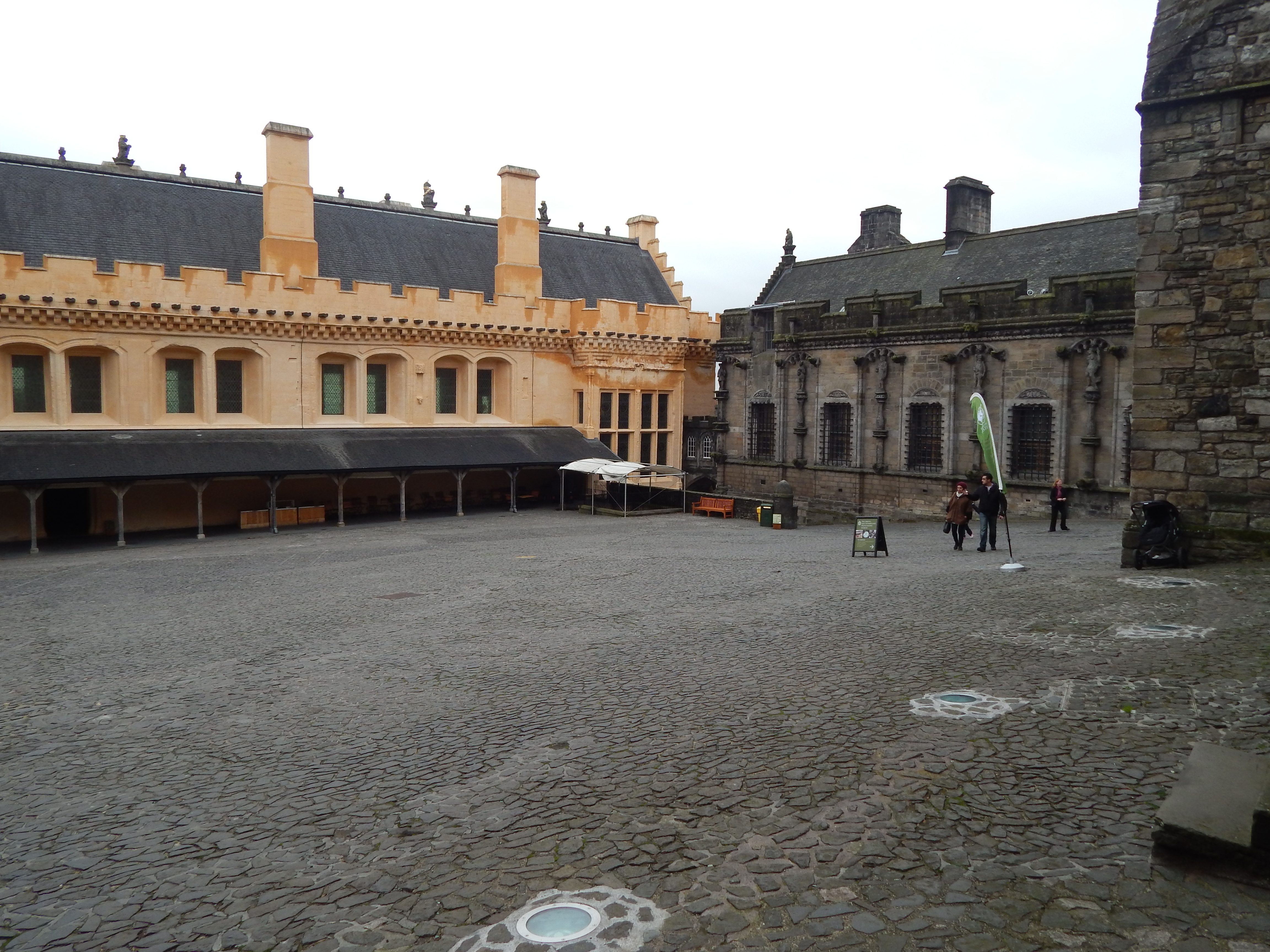
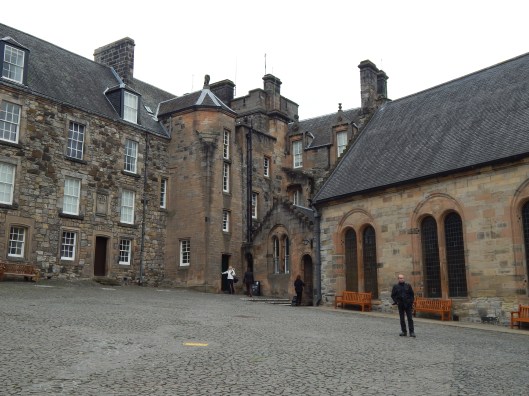
Inner Close.  Great Hall (left) & Royal Palace (right)
Inner Close. Great Hall (left) & Royal Palace (right)

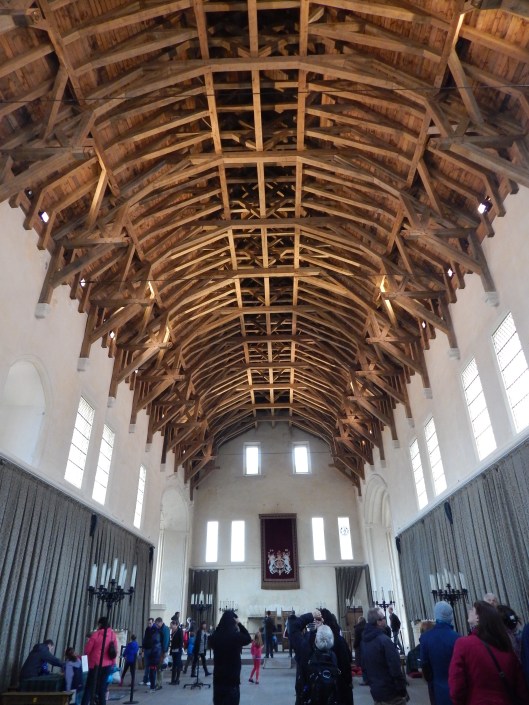
Interior of Great Hall.  Wooden Hammer truss roof restored early 21st century
Interior of Great Hall. Wooden Hammer truss roof restored early 21st century

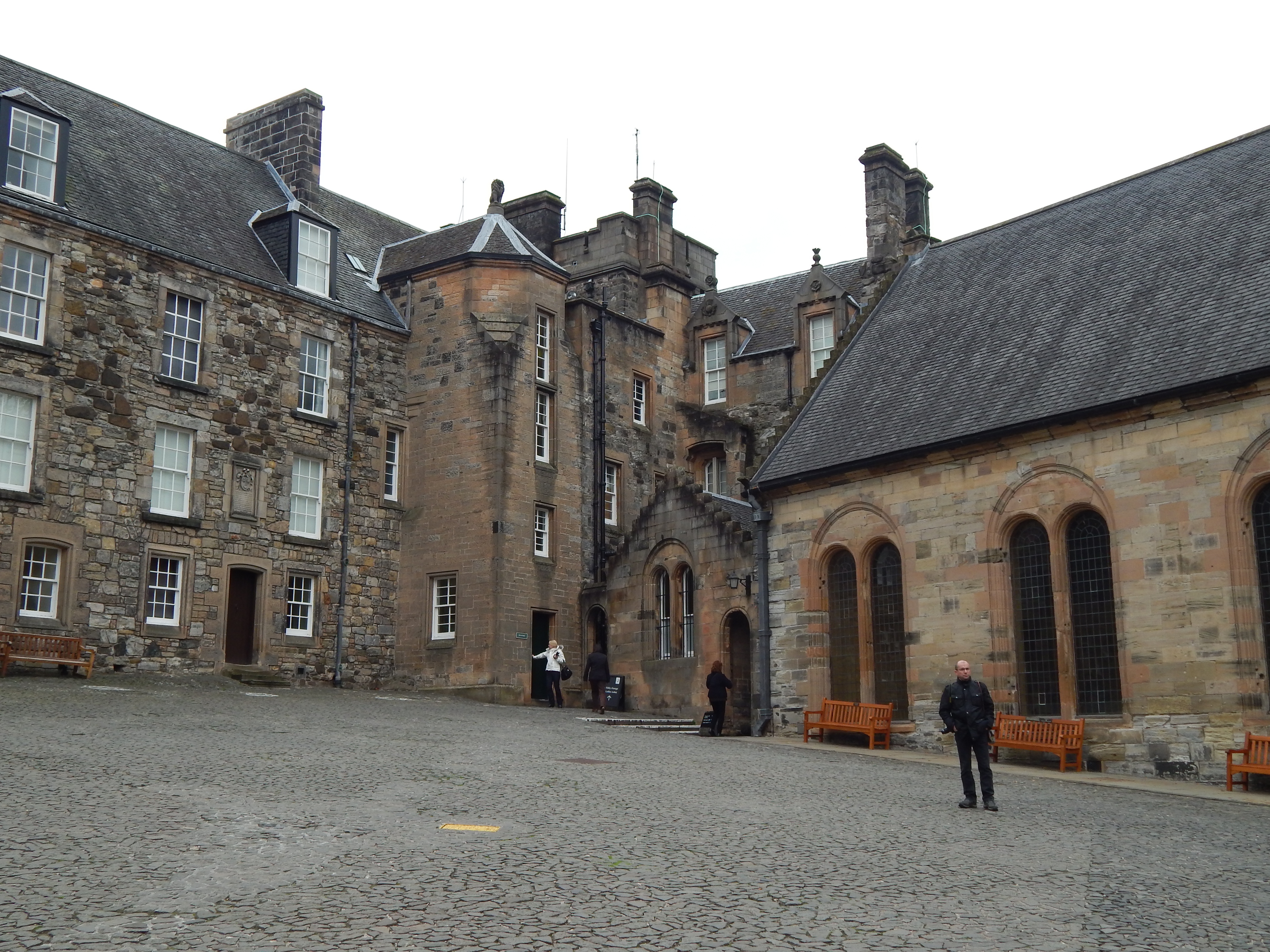
King's Old Building (left) & Chapel (right)

King’s Old Building (left) & Chapel (right)
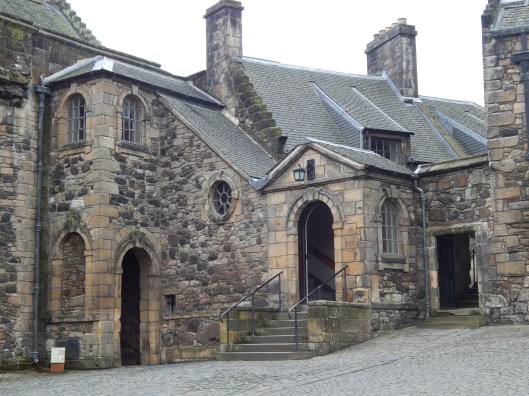
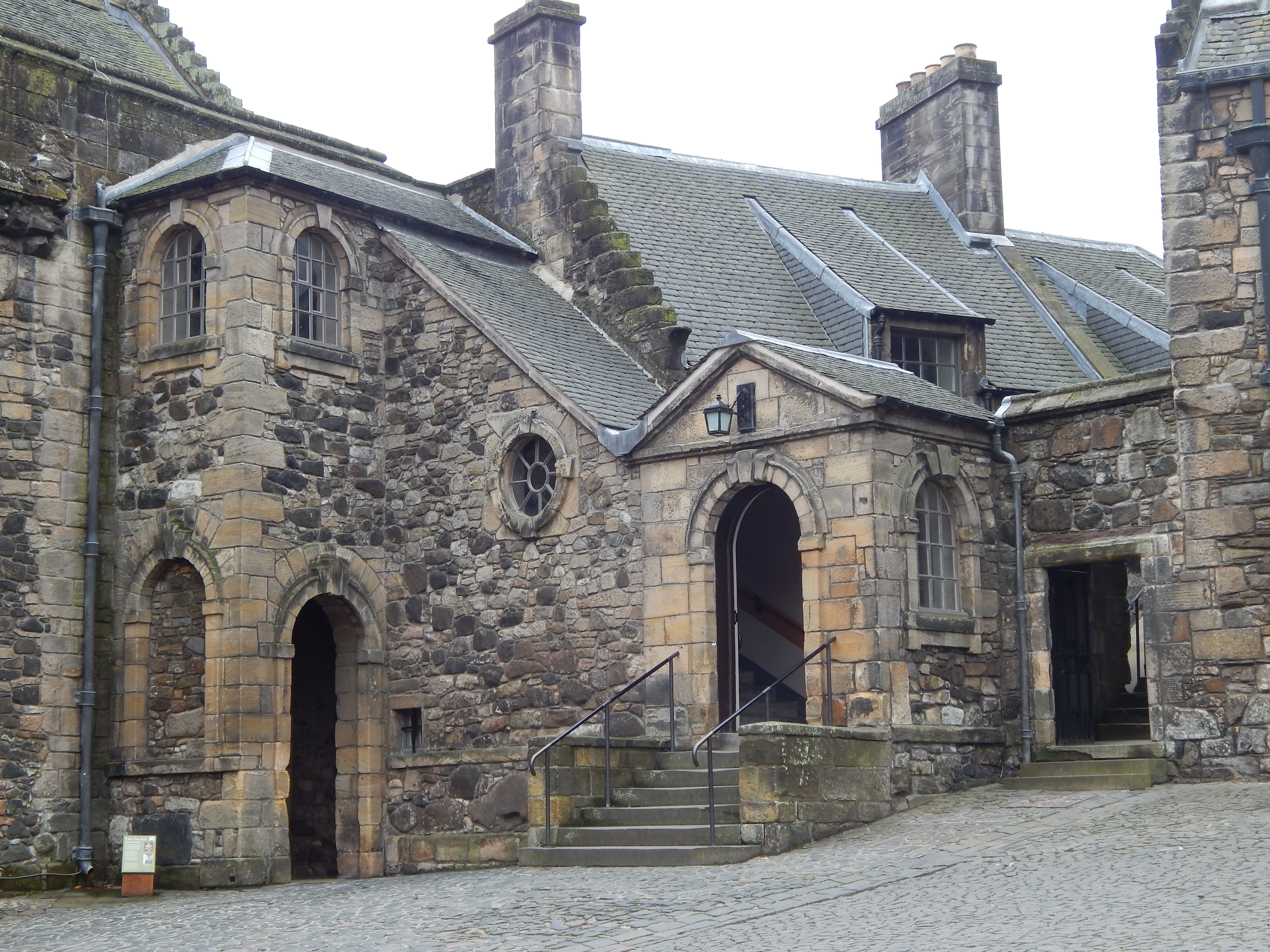
Entrance to Royal Palace

Entrance to Royal Palace

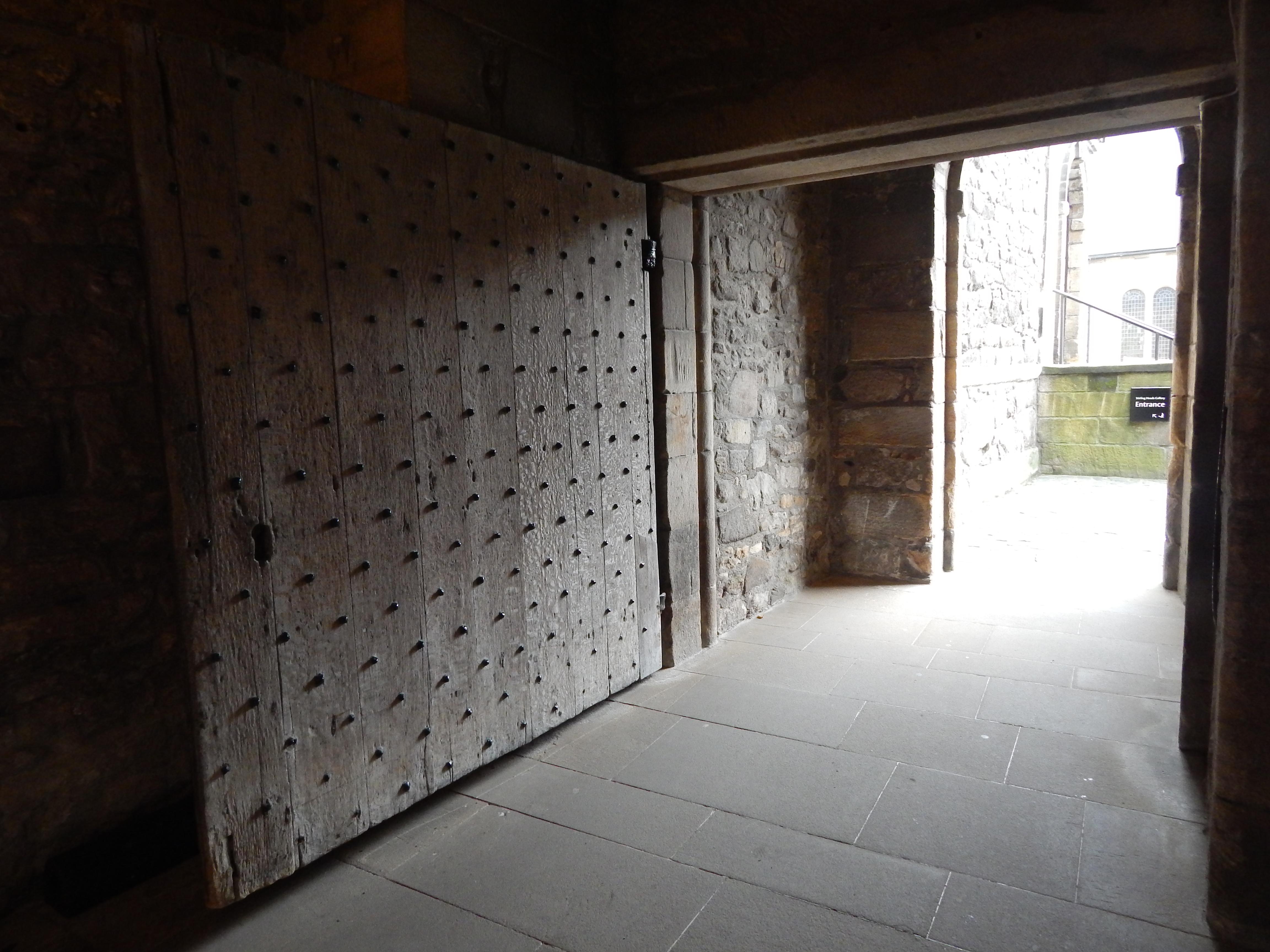
Entrance door to Royal Palace.  This is the original door that has hung here for nearly 500 years
Entrance door to Royal Palace. This is the original door that has hung here for nearly 500 years

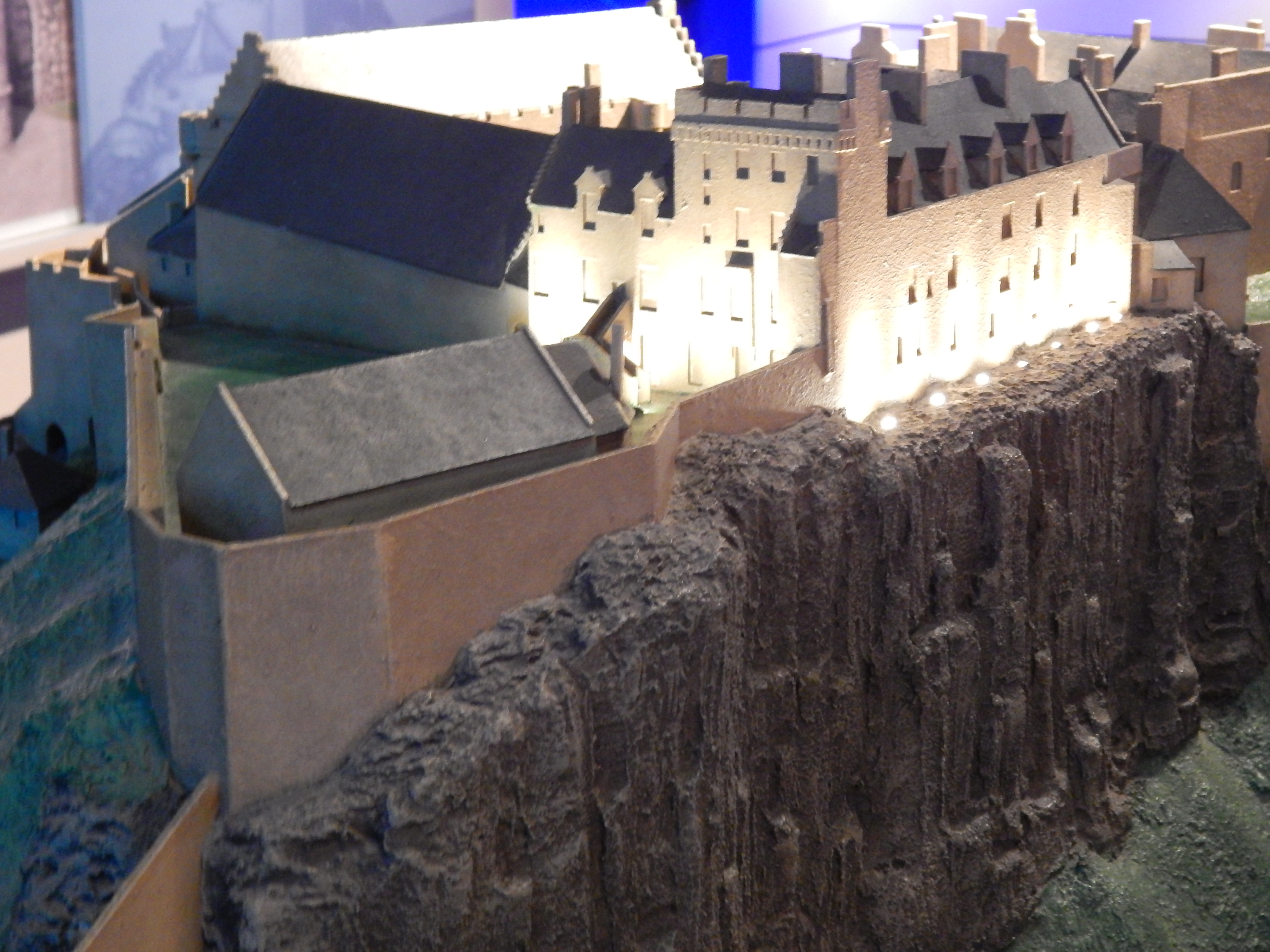
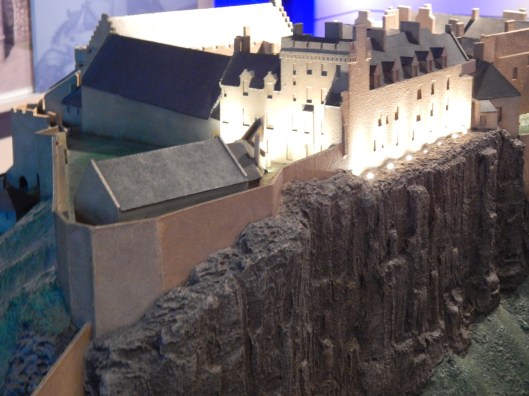
Model showing cliffs behind castle
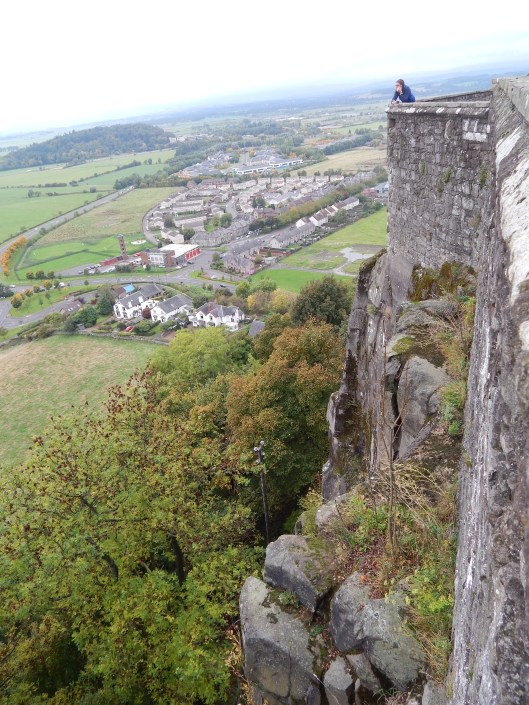
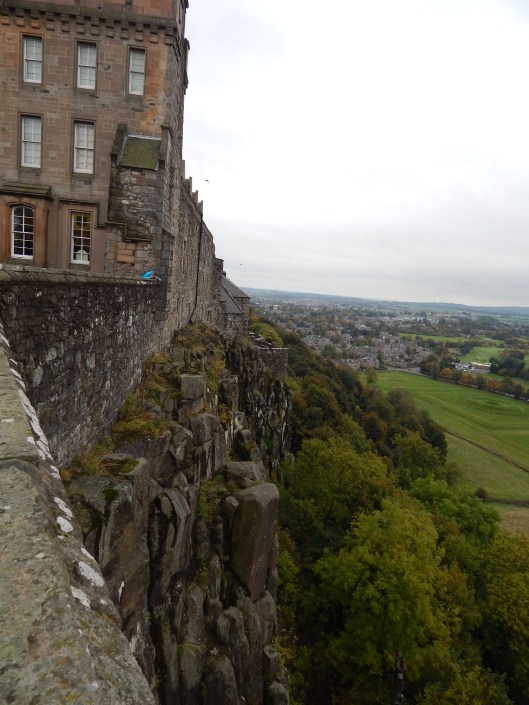
Model showing cliffs behind castle

DSCN0457 DSCN0454

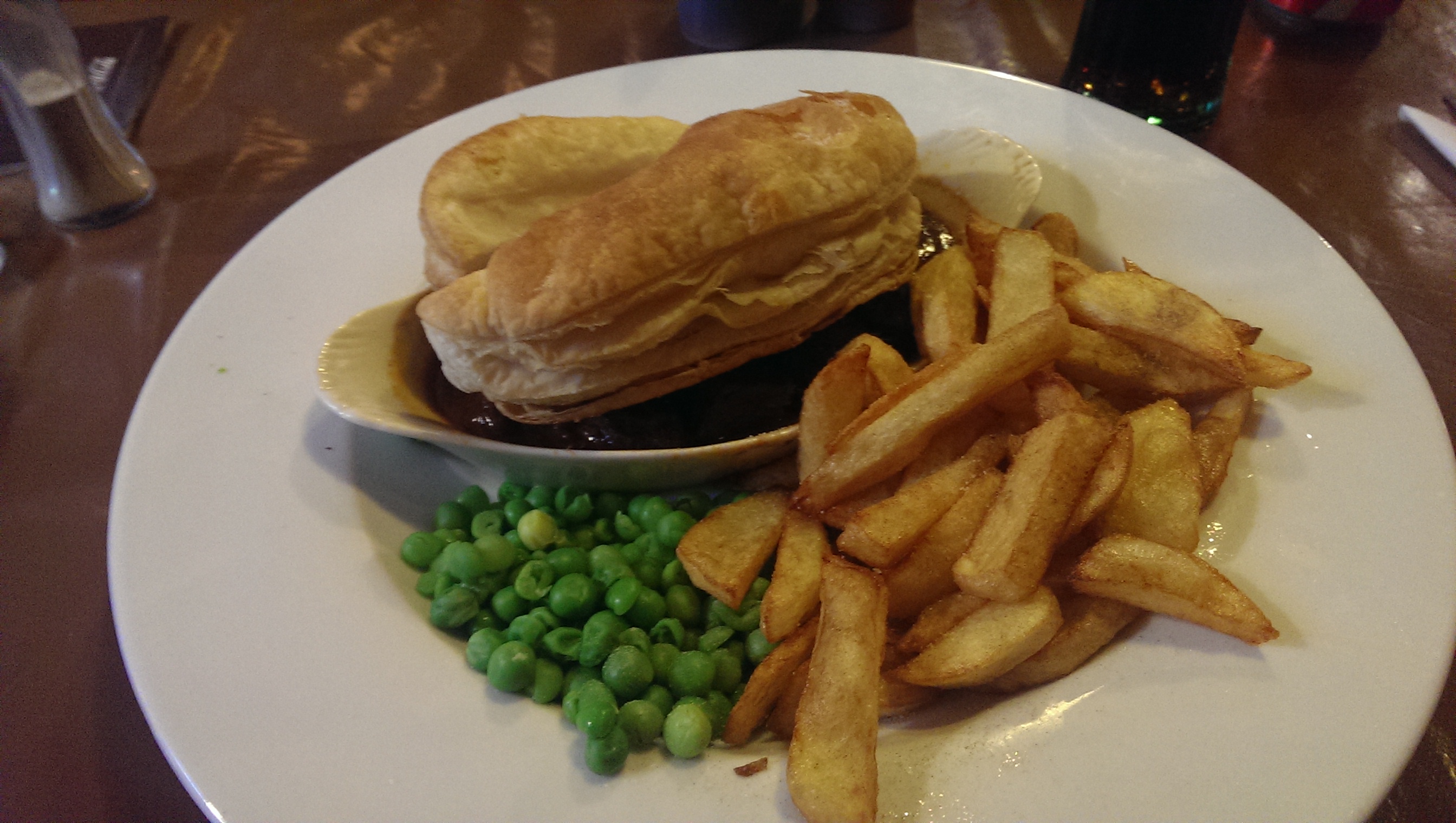
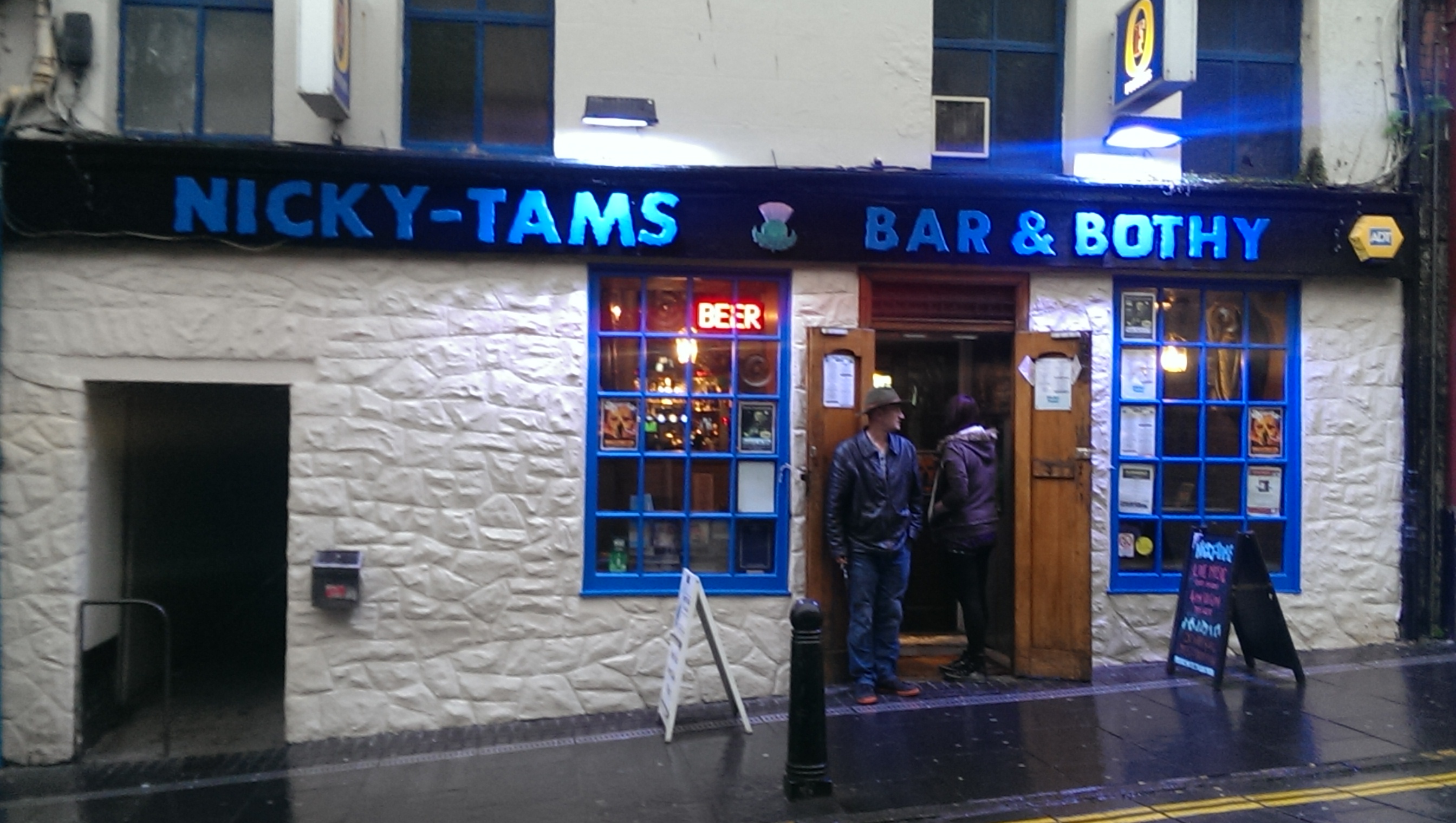
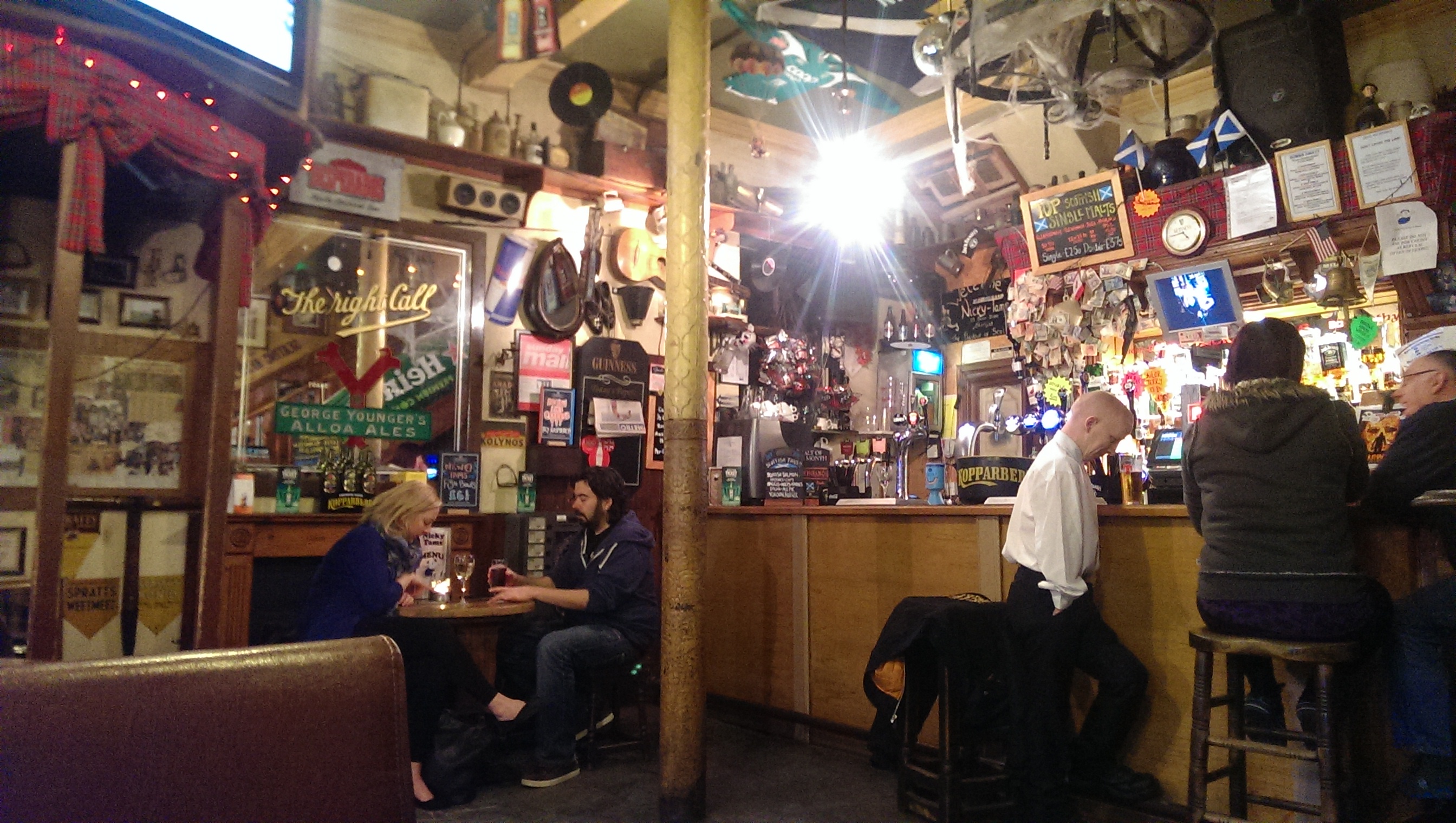
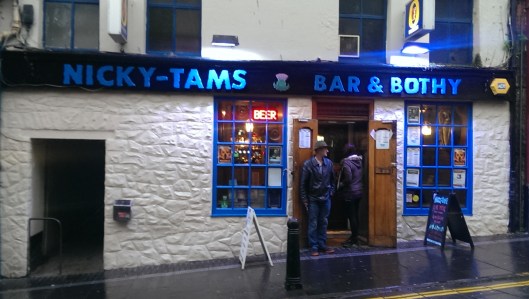
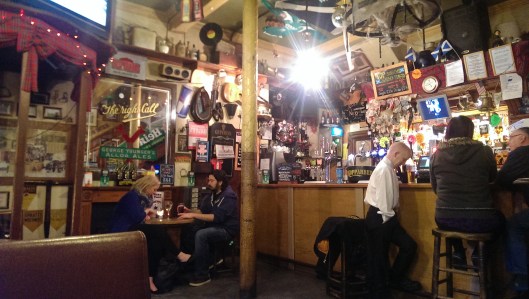
On my way back to the train station, I stopped at a pub that purported to be haunted for a bite. Haggis was on the menu, but I am not quite brave enough to try it. I opted instead for a traditional Steak and Ale Pie served with chips and the almost legendary HP brown sauce. My friend here calls the sauce repugnant, but I liked it. Who knows, maybe I’ll like the haggis, too. For tonight, I think I must venture to the local chippie (fast food) and try the pizza crunch – deep fried pizza.
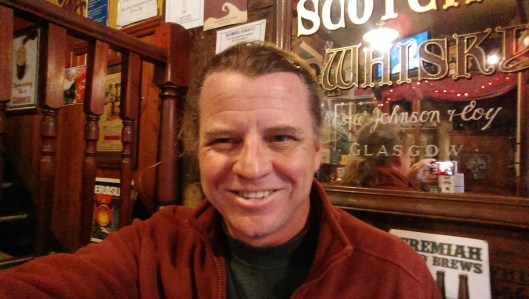
IMAG0543

Cameo by the photographer in this one
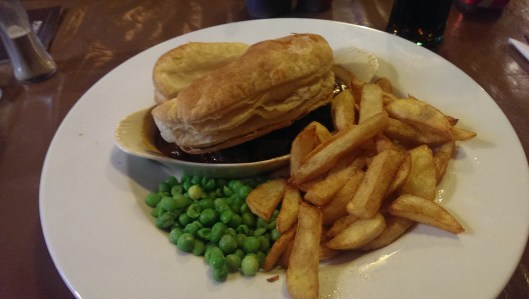
IMAG0542

Steak & Ale Pie with Chips and Peas. Always with the peas in a pub
IMAG0545

Nicky-Tams, Stirling’s most haunted pub
IMAG0541

IMAG0548

Tomorrow the journey takes me south into England. Six hours and two changes on trains from Glasgow I will be in Bath for three nights. I plan to sample the thermal waters there and take in what I have heard is one of the UK’s most beautiful cities. I also plan a day trip to Glastonbury, home of Christianity in Britain and legendary burial-place of King Arthur.

After a partly cloudy morning, the rain has returned.  Time to find the chippie and get busy packing my kit for tomorrow’s journey.

Return to the Gothic

18 Friday Oct 2013

Posted by savagemythology in Uncategorized

≈ 2 Comments

Tags

glasgow, Glasgow Cathedral, scotland, travel

17 October, 2013

DSCN0361

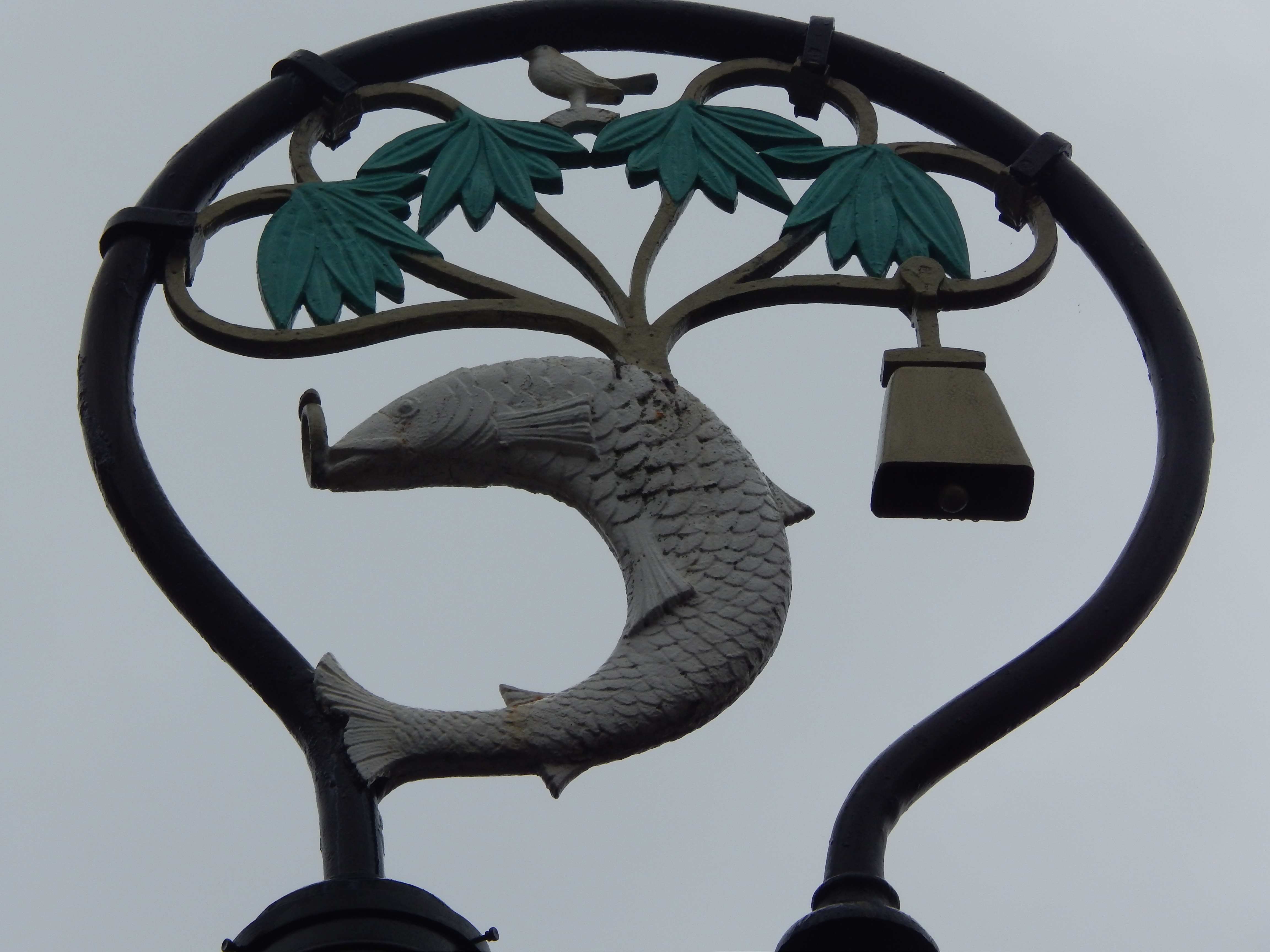
A bird that never flew, A tree that never grew, A bell that never rang, A fish that never swam. Let Glasgow Flourish

A bird that never flew,
A tree that never grew,
A bell that never rang,
A fish that never swam.
Let Glasgow Flourish

DSCN0322

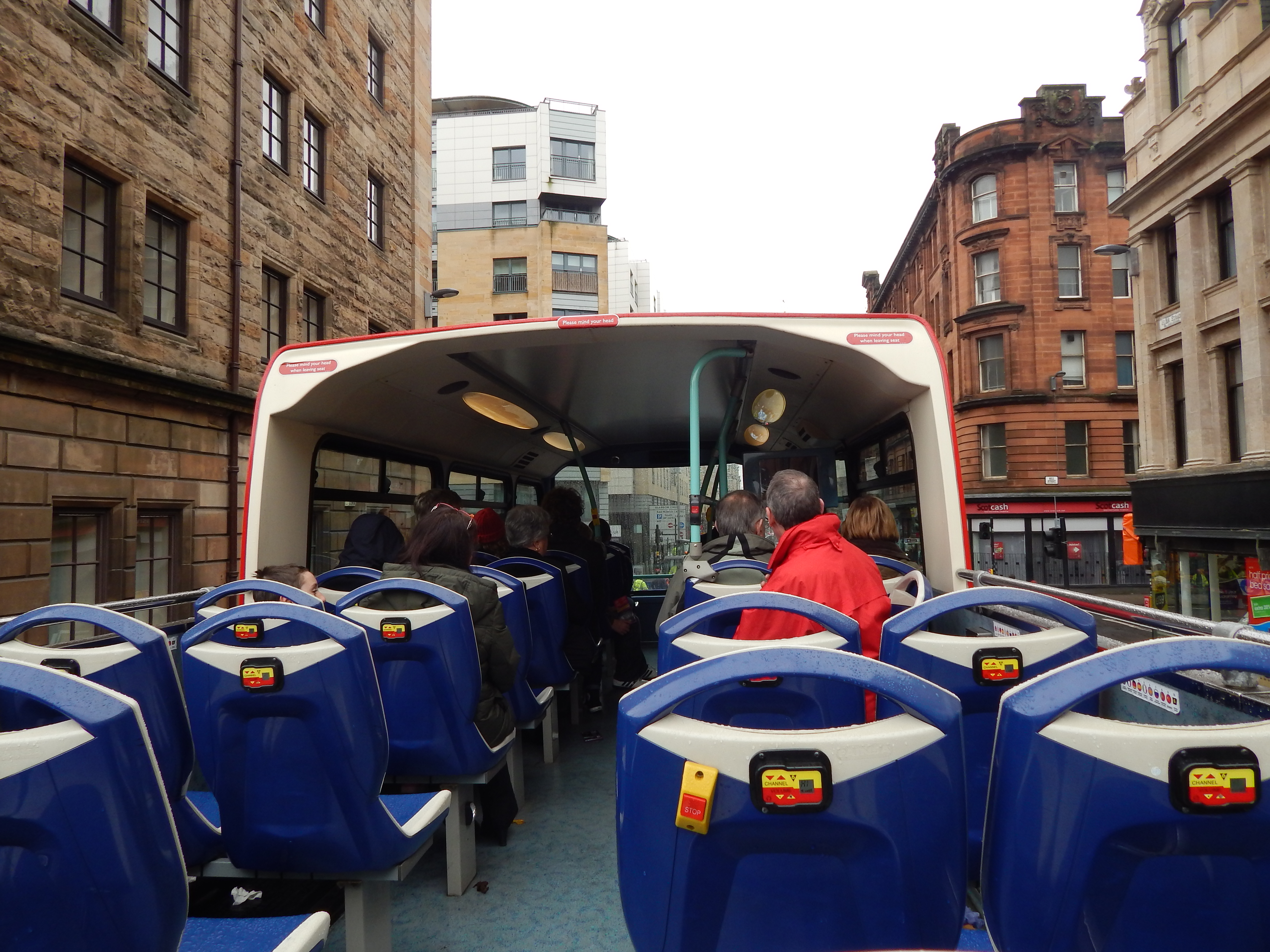
I took a bus tour around the city today. There was a two fold reasoning for this. It allowed me to see Glasgow from atop an open air double-decker bus, and also gave me a taste of the history of the city as told by the guide. The day was typically Glaswegian – grey and misty, but I was not deterred from riding in the open section of the top deck. The other, perhaps primary, reason for the outing was to visit the Gothic Glasgow Cathedral of Saint Mungo.

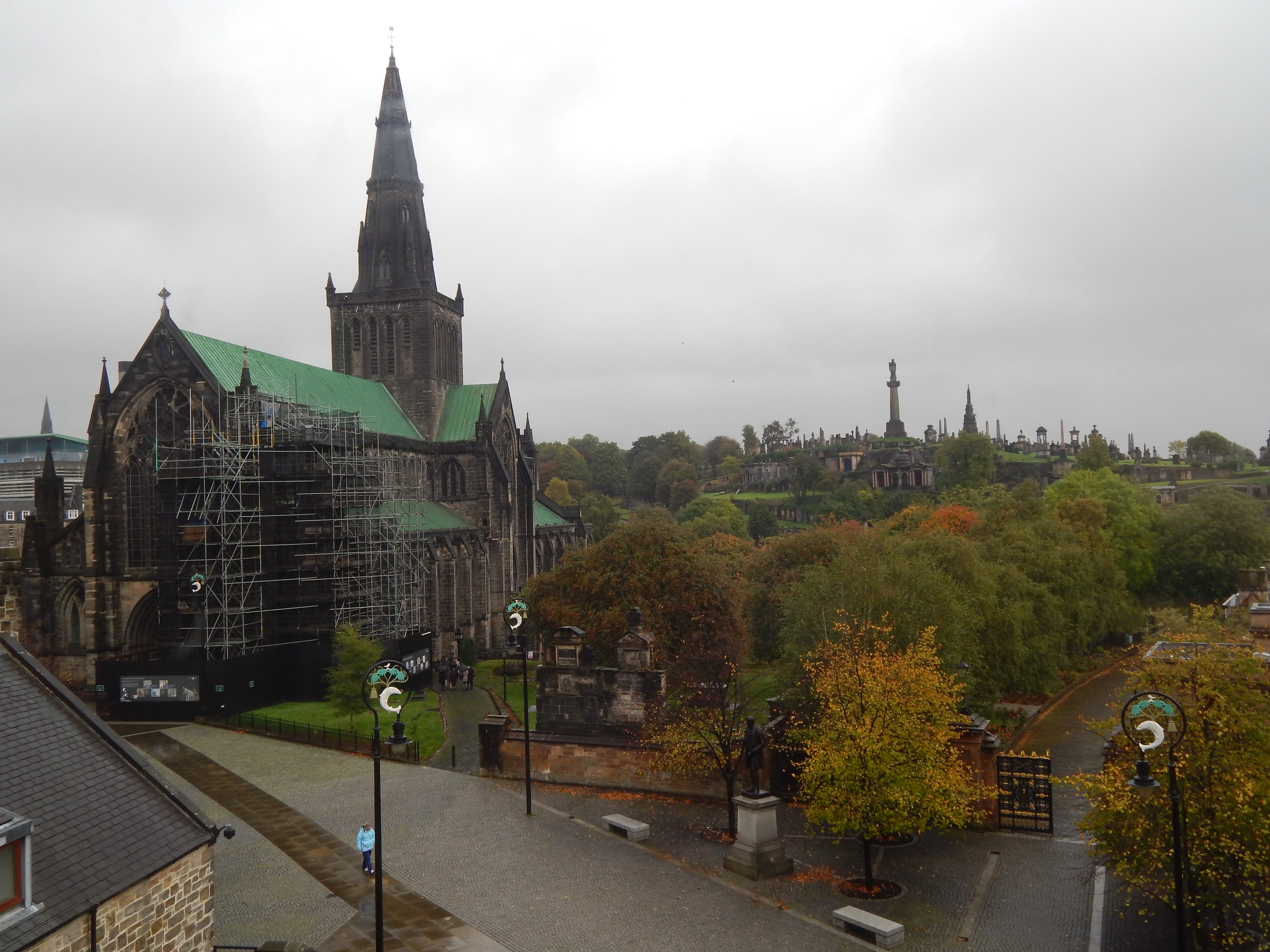
View of the Cathedral with the Necropolis behind.

View of the Cathedral with the Necropolis behind.

DSCN0357

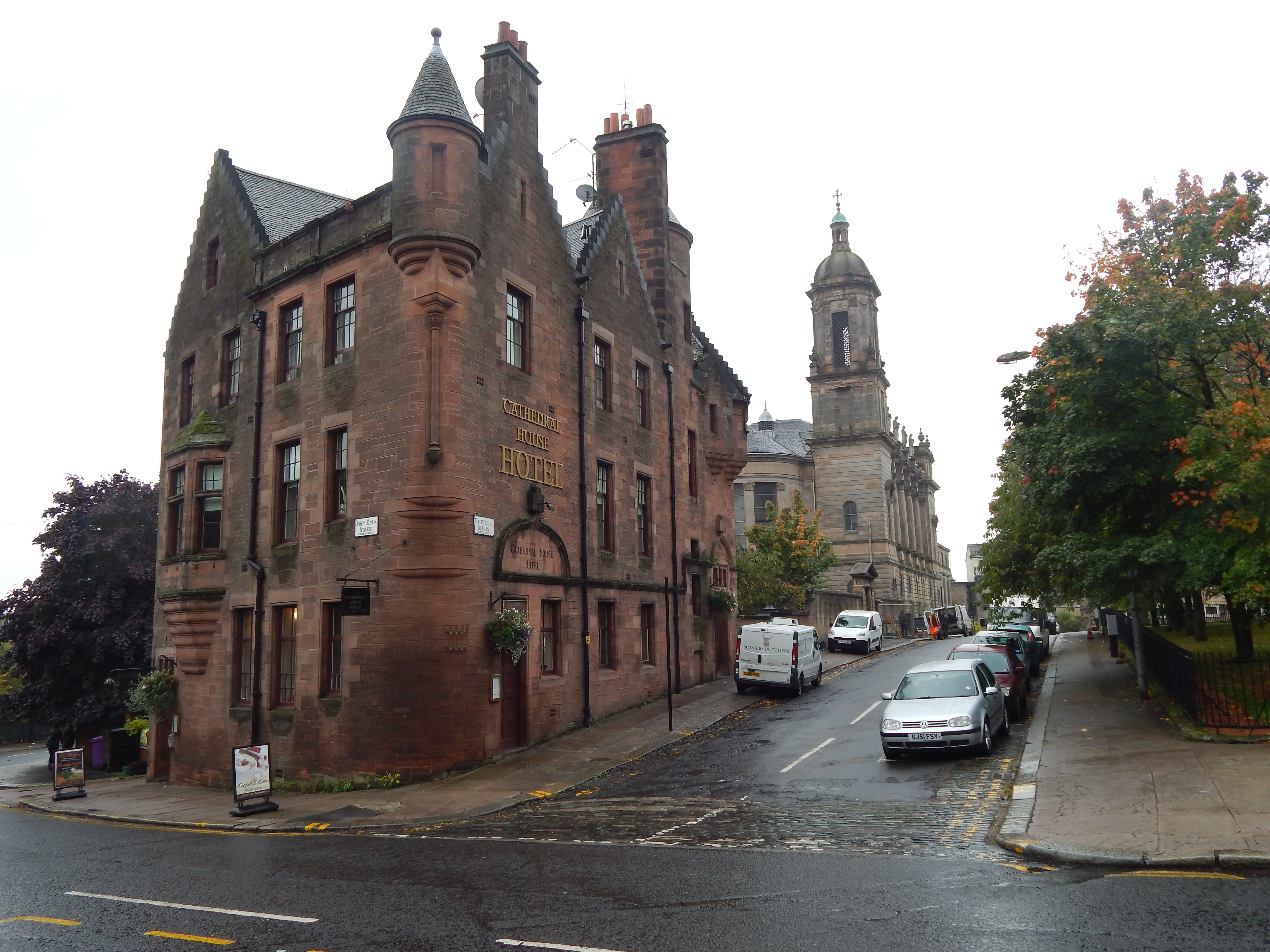
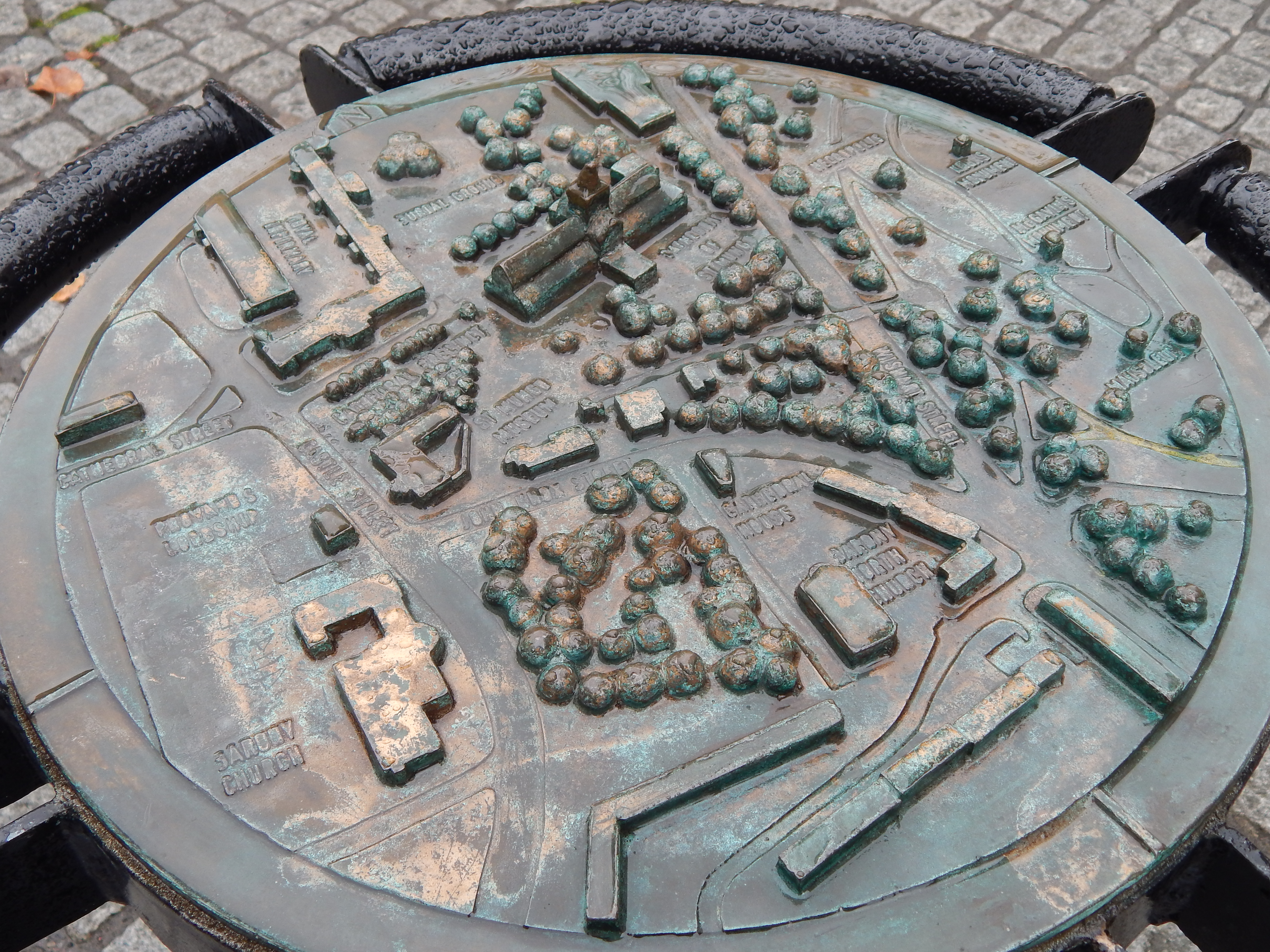
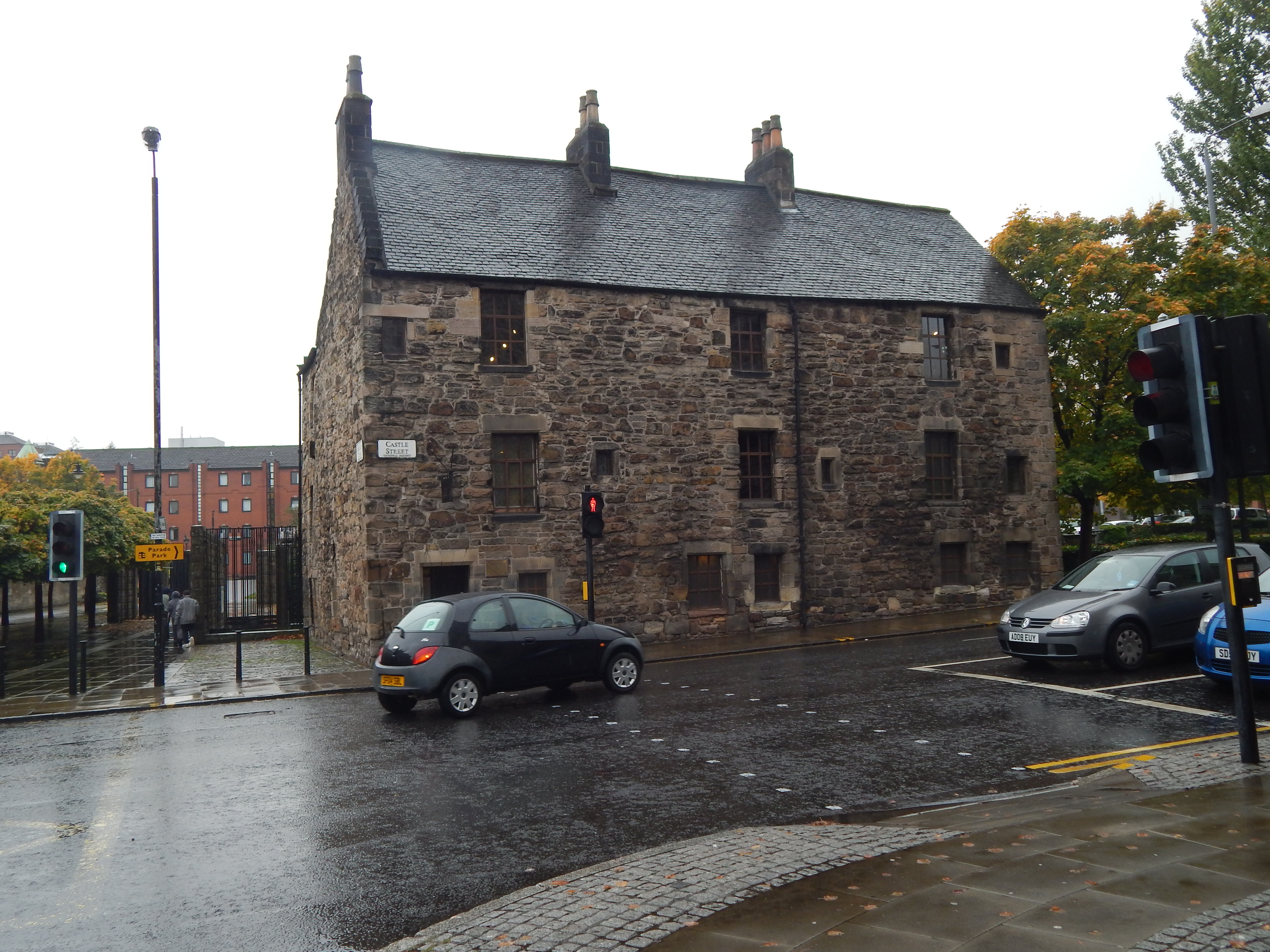
At the entrance to the precinct (plaza) in front, there is a bronze plaque that depicts the immediate surroundings. Across the street is the oldest dwelling in Glasgow. Mary, Queen of Scots, stayed here in the mid 16th century and within the walls most likely penned “the Casket Letters” that played a part in her ultimate fate. ( http://en.wikipedia.org/wiki/Casket_letters )

Oldest dwelling in Glasgow, dating to 14th Century.

Oldest dwelling in Glasgow, dating to 14th Century.

I am not a religious, church going man – I practice a spiritual life focused on a personal connection with what I understand to be God – but the Cathedrals have a special attraction for me. It may be the sacred geometry in their construction, it may be the spiritual energy focused there that comes from hundreds of years of worship. As I did on my trip to France fifteen years ago, I plan to visit every cathedral that I can. I will pray and light candles for various people in my life. I am not a Catholic and do no subscribe to the dogmas of the Churches of England or Scotland, but I am sure God understands.

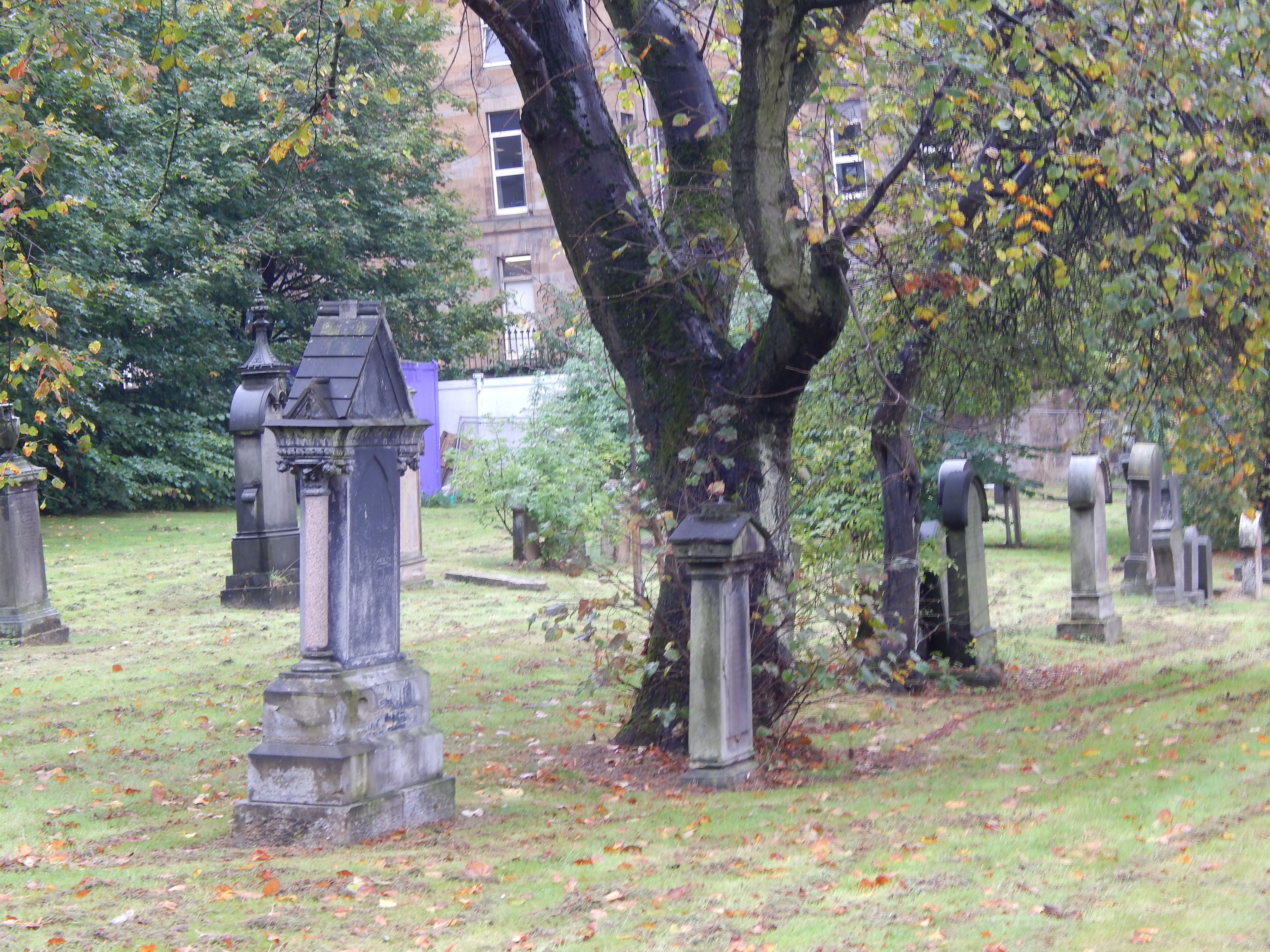
Church burial ground - graves dating to 19th century.

Church burial ground – graves dating to 19th century.

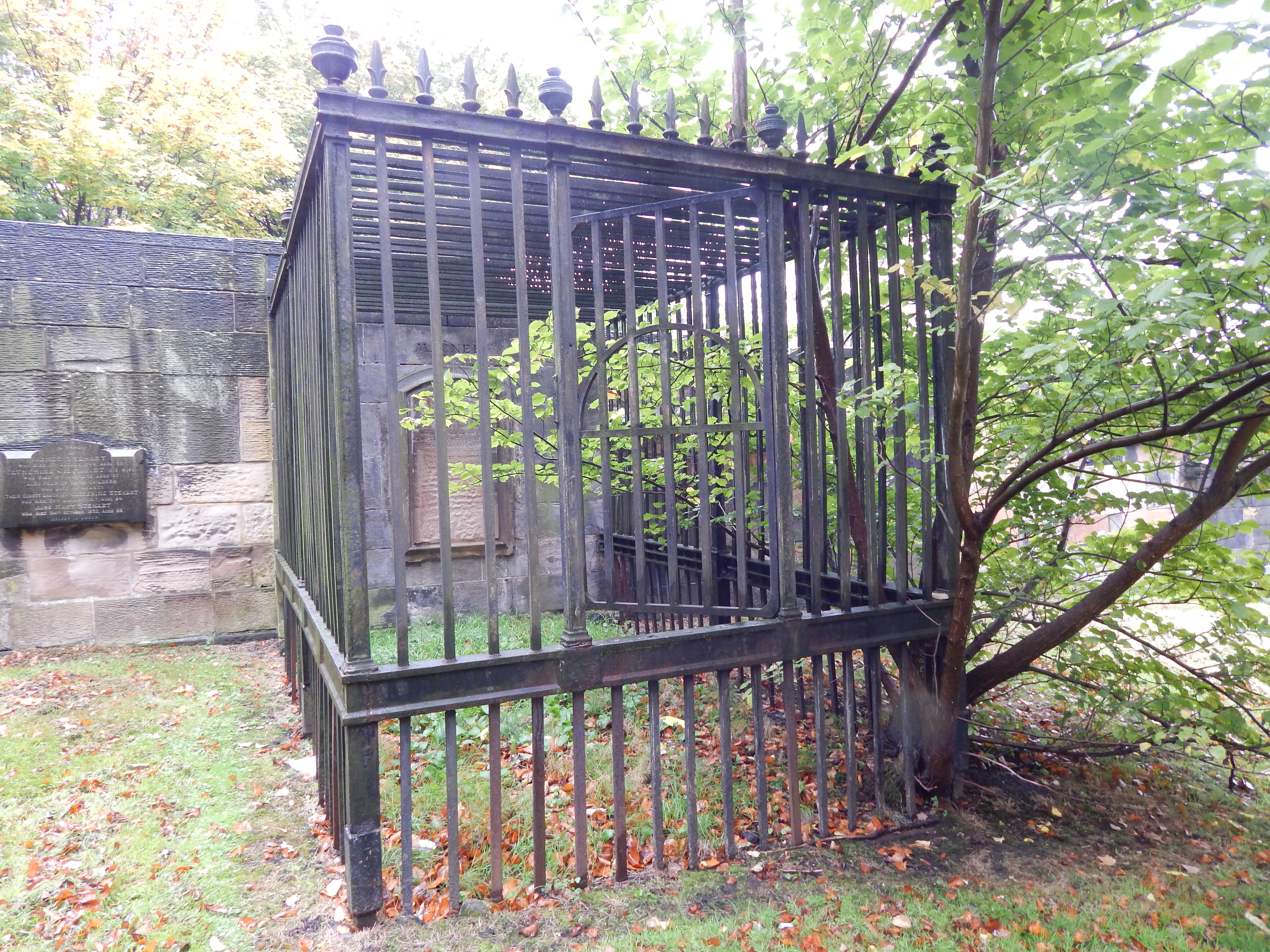
19th century grave.  Either they didn't want grave robbers getting in, or the dead getting out.  You decide.  I think the latter is the better story.

19th century grave. Either they didn’t want grave robbers getting in, or the dead getting out. You decide. I think the latter is the better story.

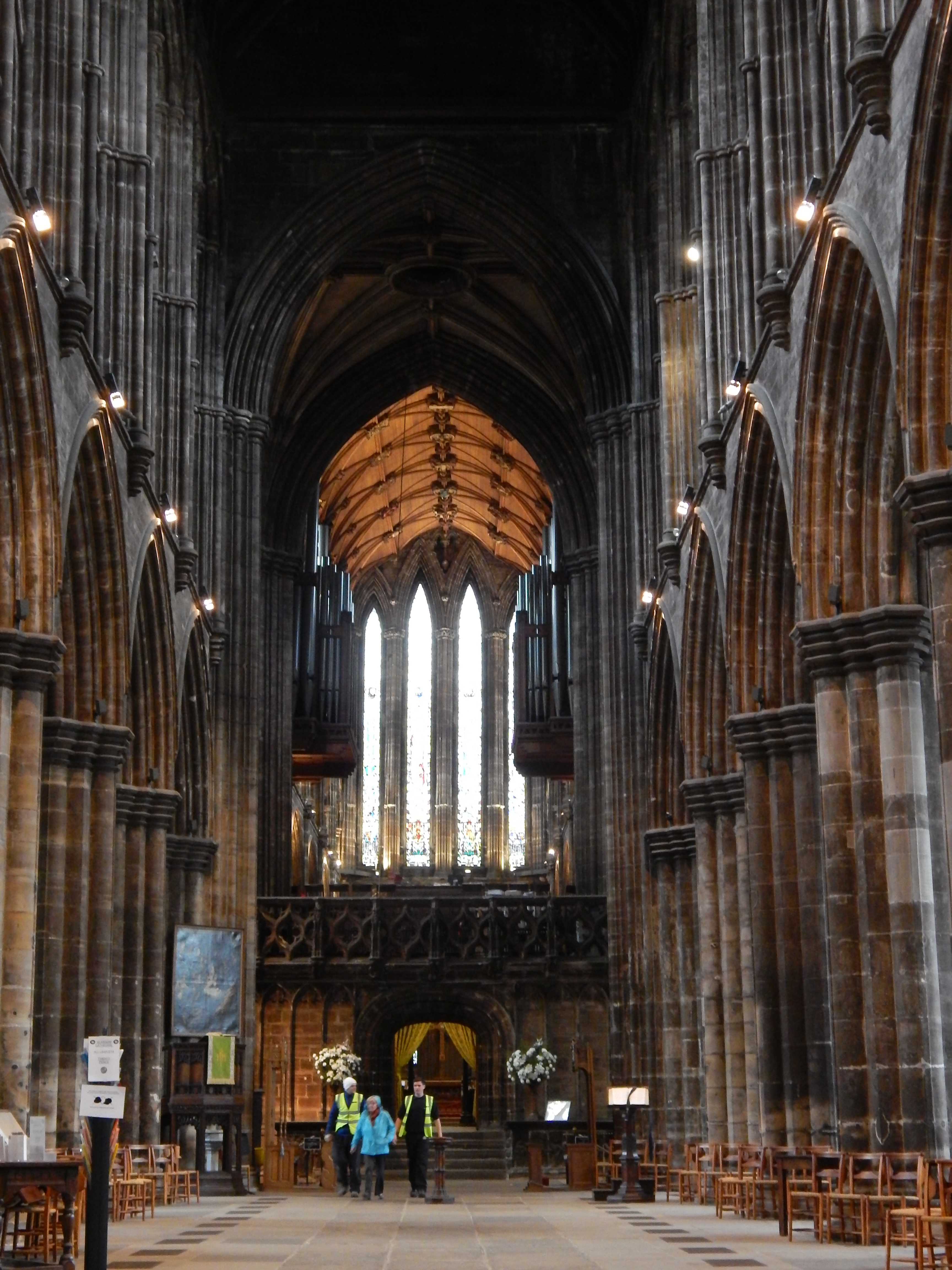
View in the nave toward the apse and choir.

View in the nave toward the apse and choir.


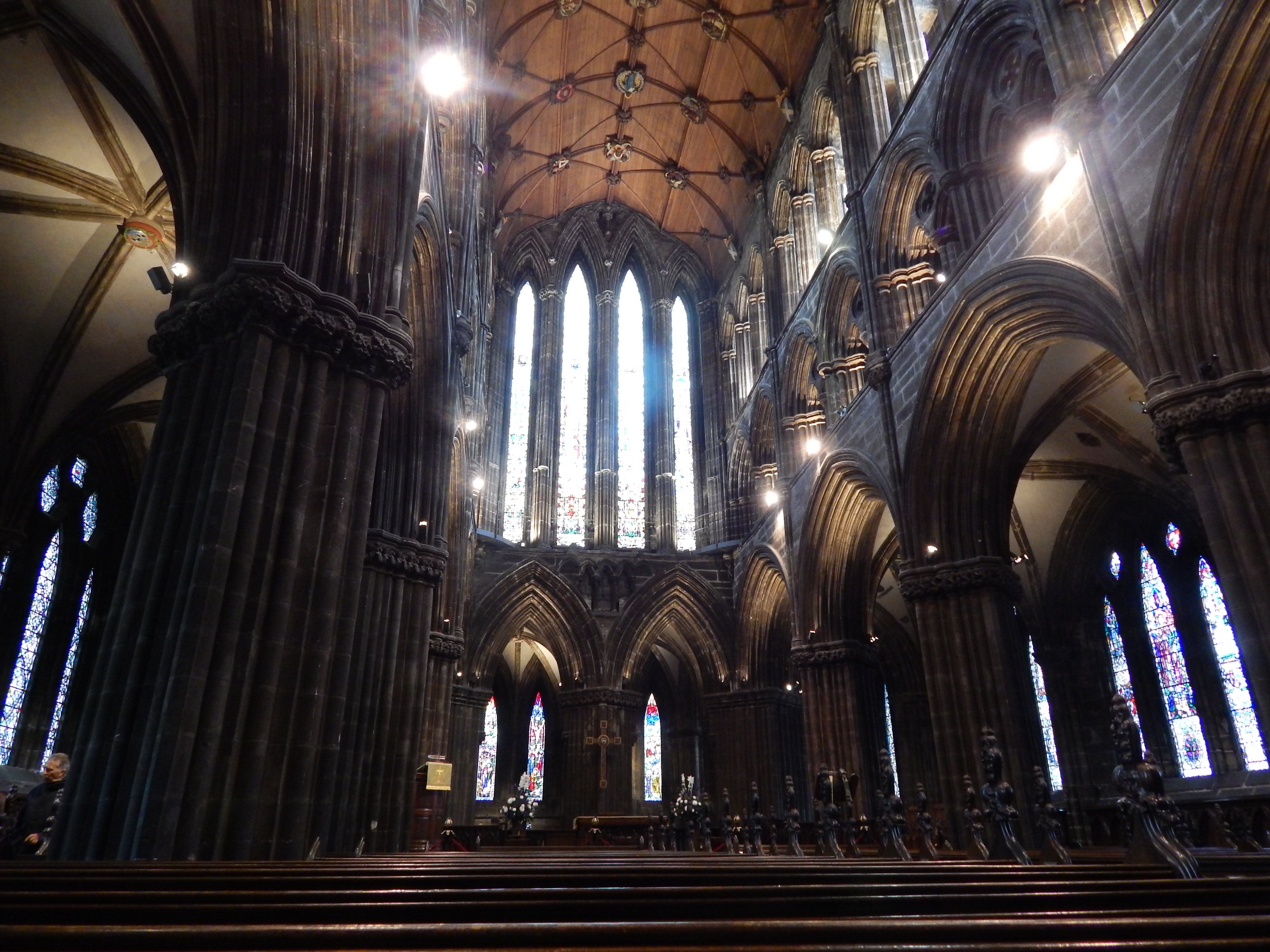
Apse and altar

Apse and altar

Apse windows

Apse windows

DSCN0336

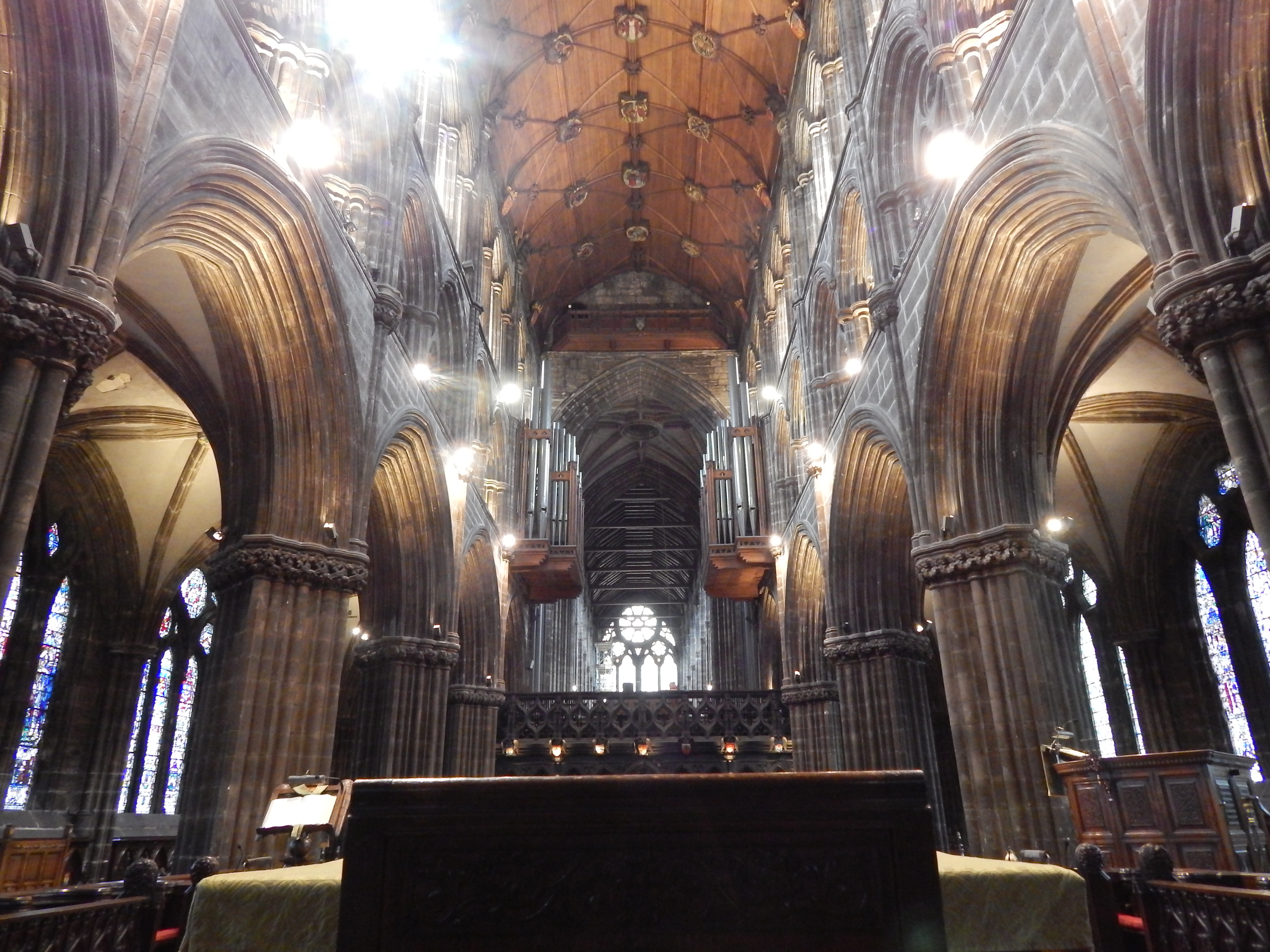
From behind altar, toward rose window

From behind altar, toward rose window

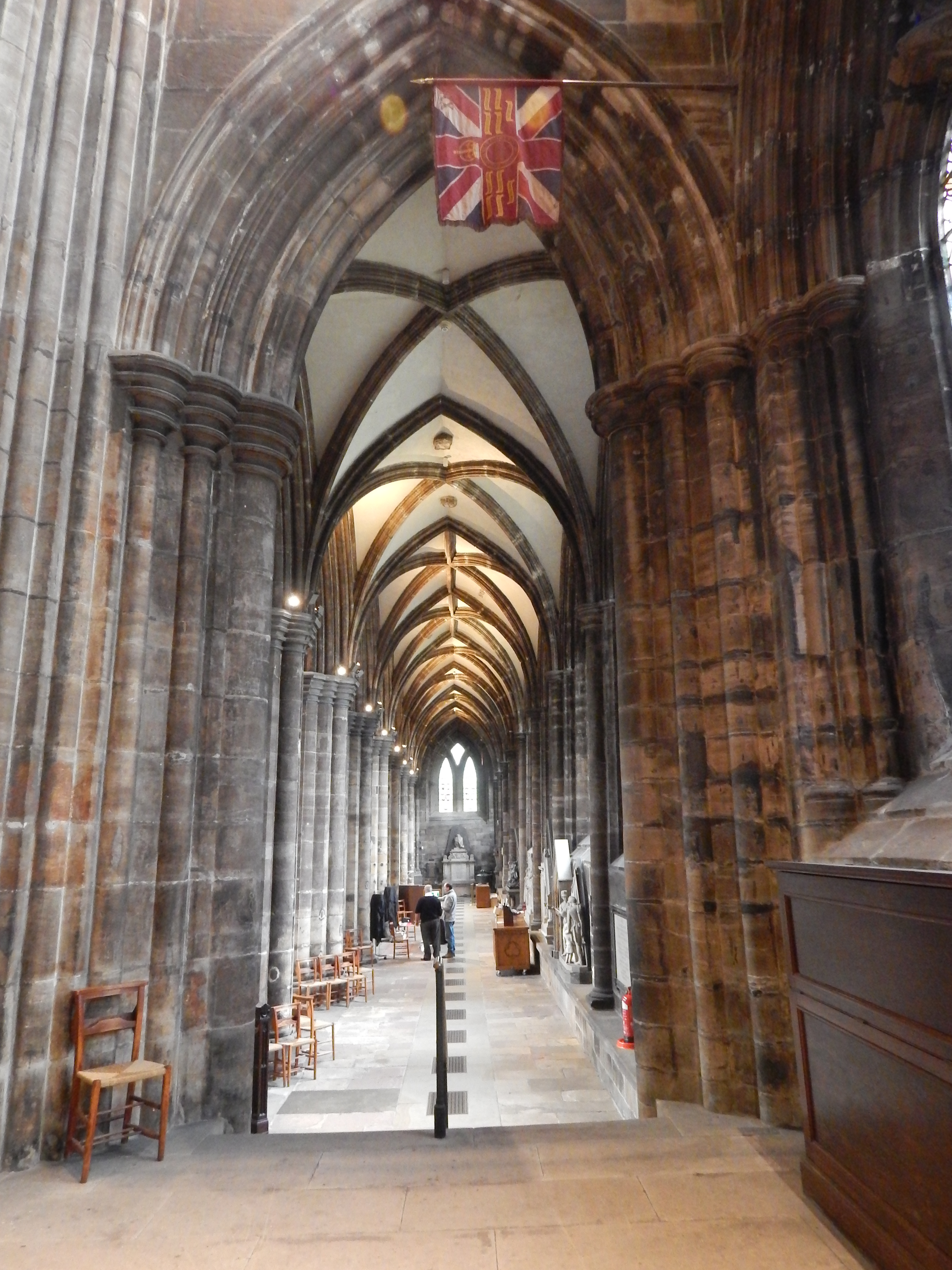
Nave, side aisle

Nave, side aisle

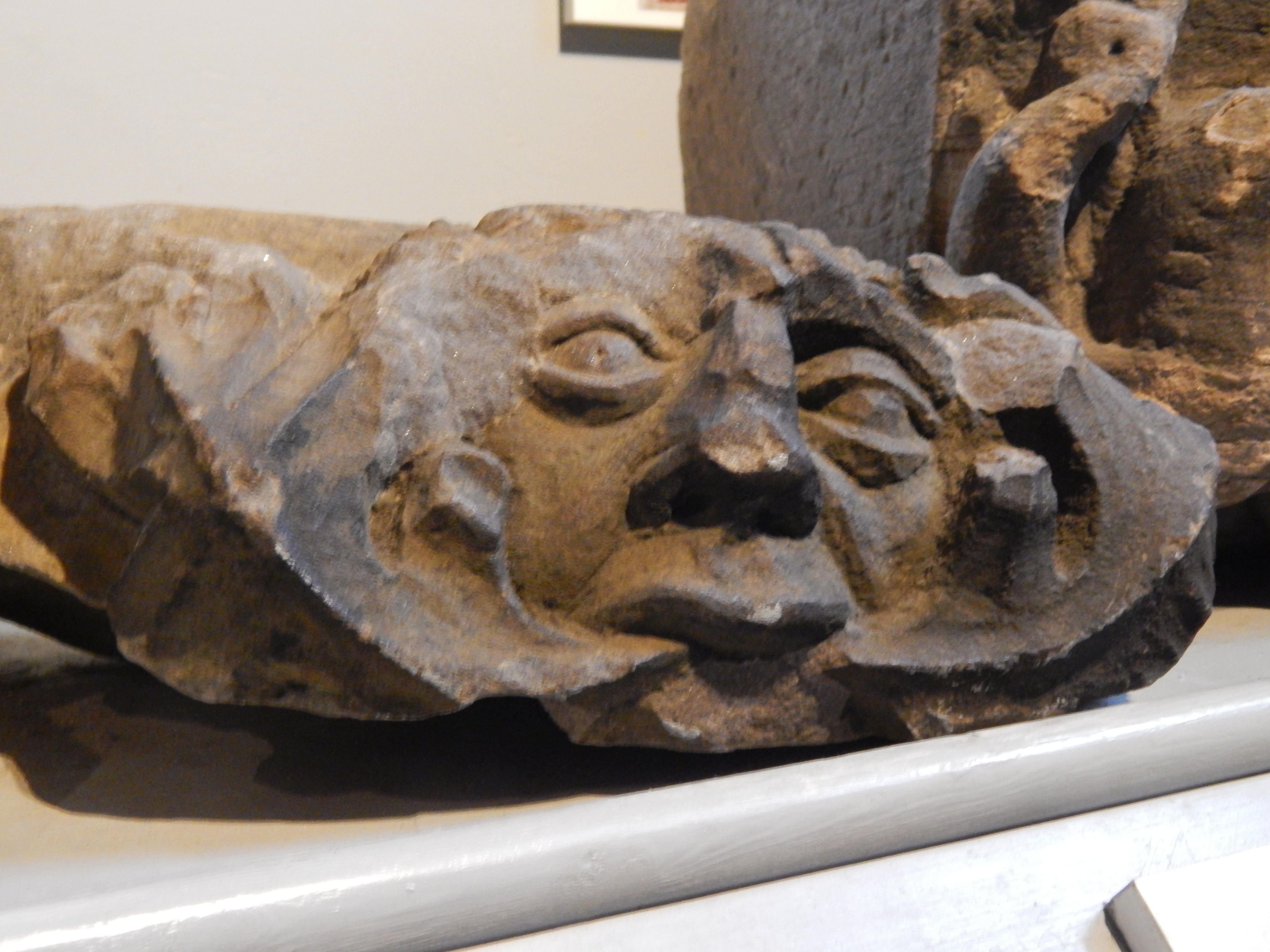
Carving from Romanesque cathedral that stood here previously.  est. 9-12th century

Carving from Romanesque cathedral that stood here previously. est. 9-12th century

I will not try to fill out the 700 year history of the building – there is a fantastic article at Wikipedia: http://en.wikipedia.org/wiki/Glasgow_Cathedral#History

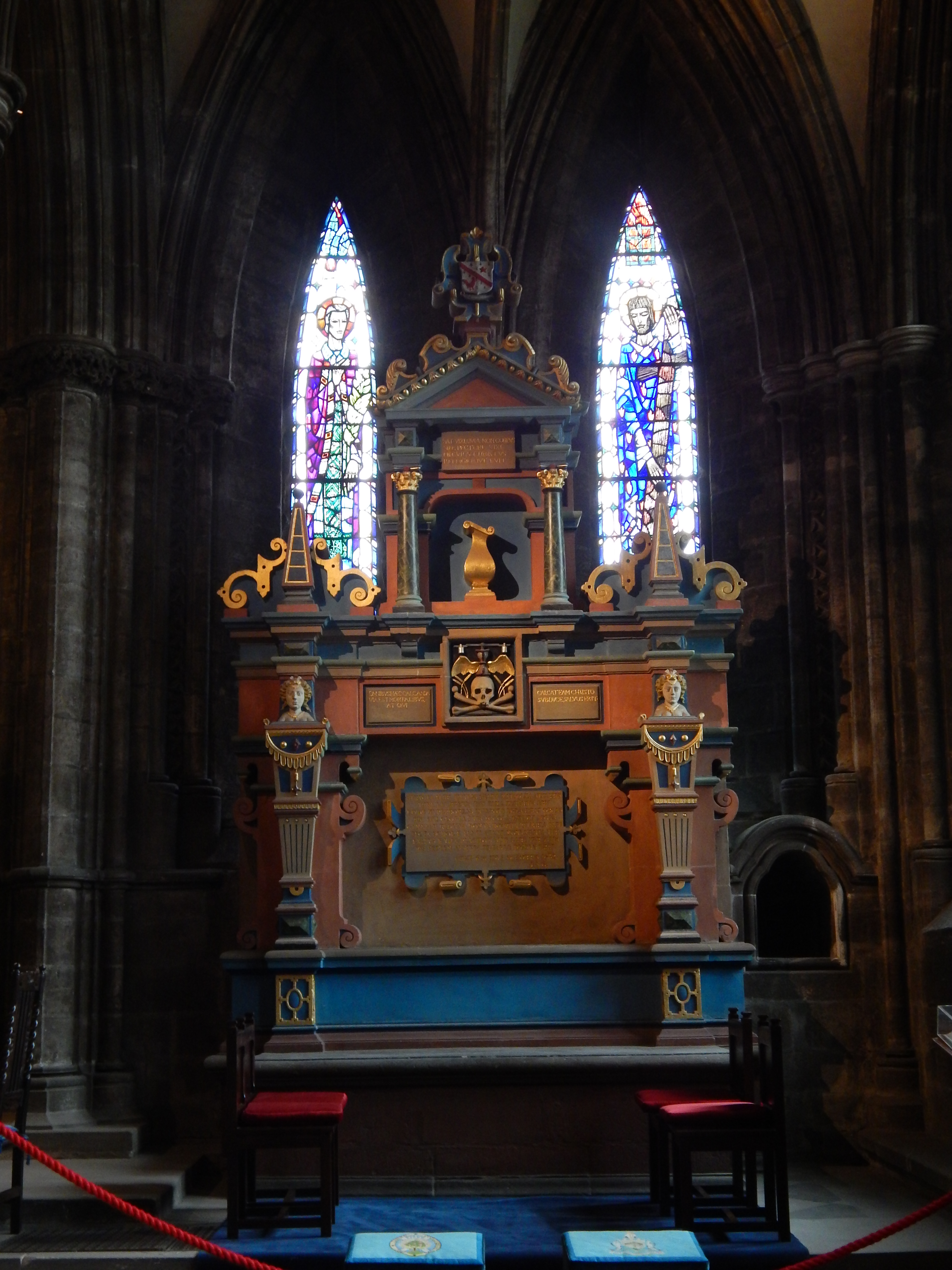
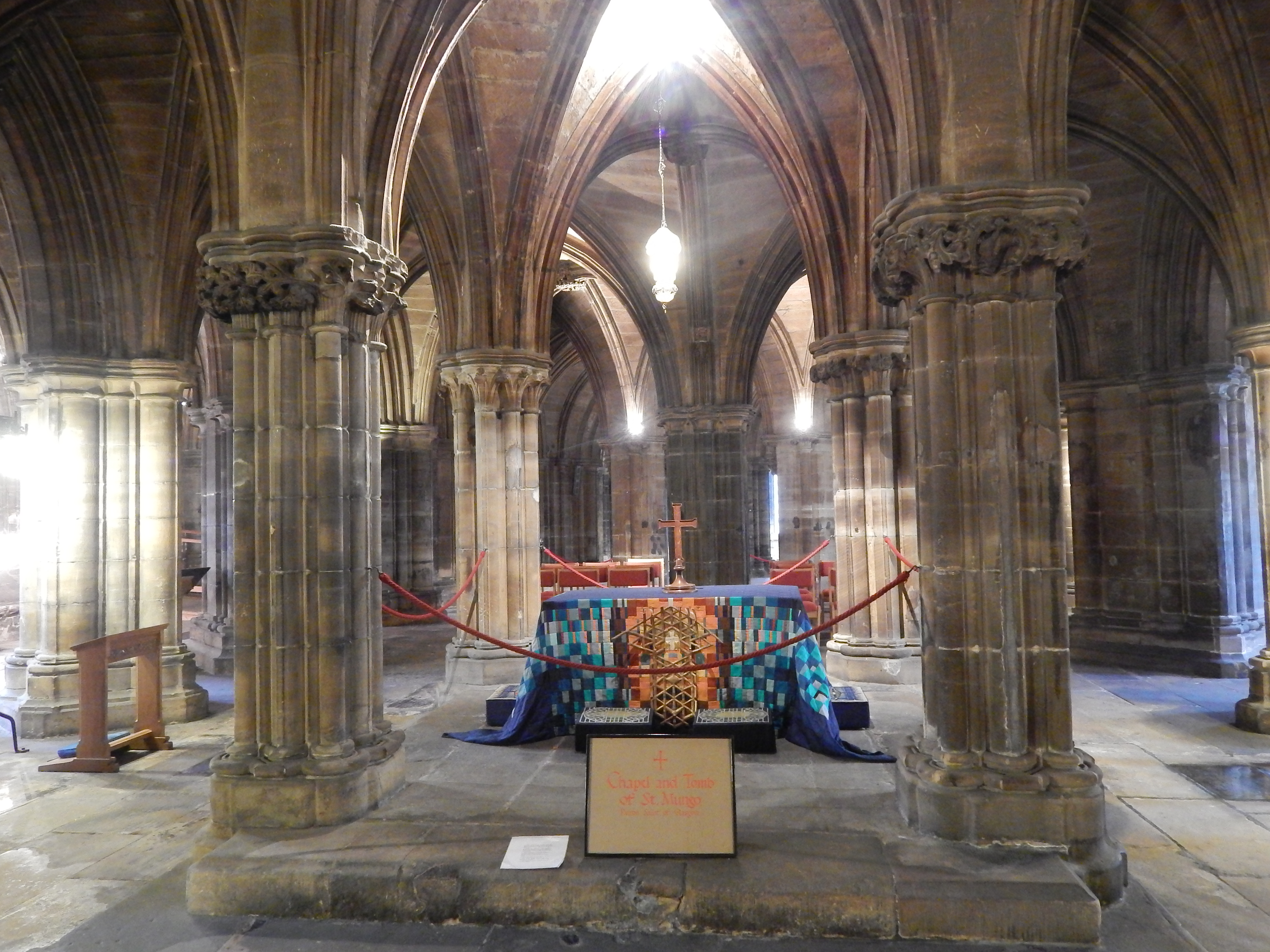
I stopped at one small chapel in the crypt for a quiet moment of prayer. I learned later that the particular spot I stopped was the Nurses Chapel. For reasons I will not go into here, this has particular significance for me. (As an aside, the first Women’s Nursing College started at the University of Glasgow in the late 1860s.)

Crypt.  Tomb of St. Mungo, Nurses Chapel beyond.

Crypt. Tomb of St. Mungo, Nurses Chapel beyond.

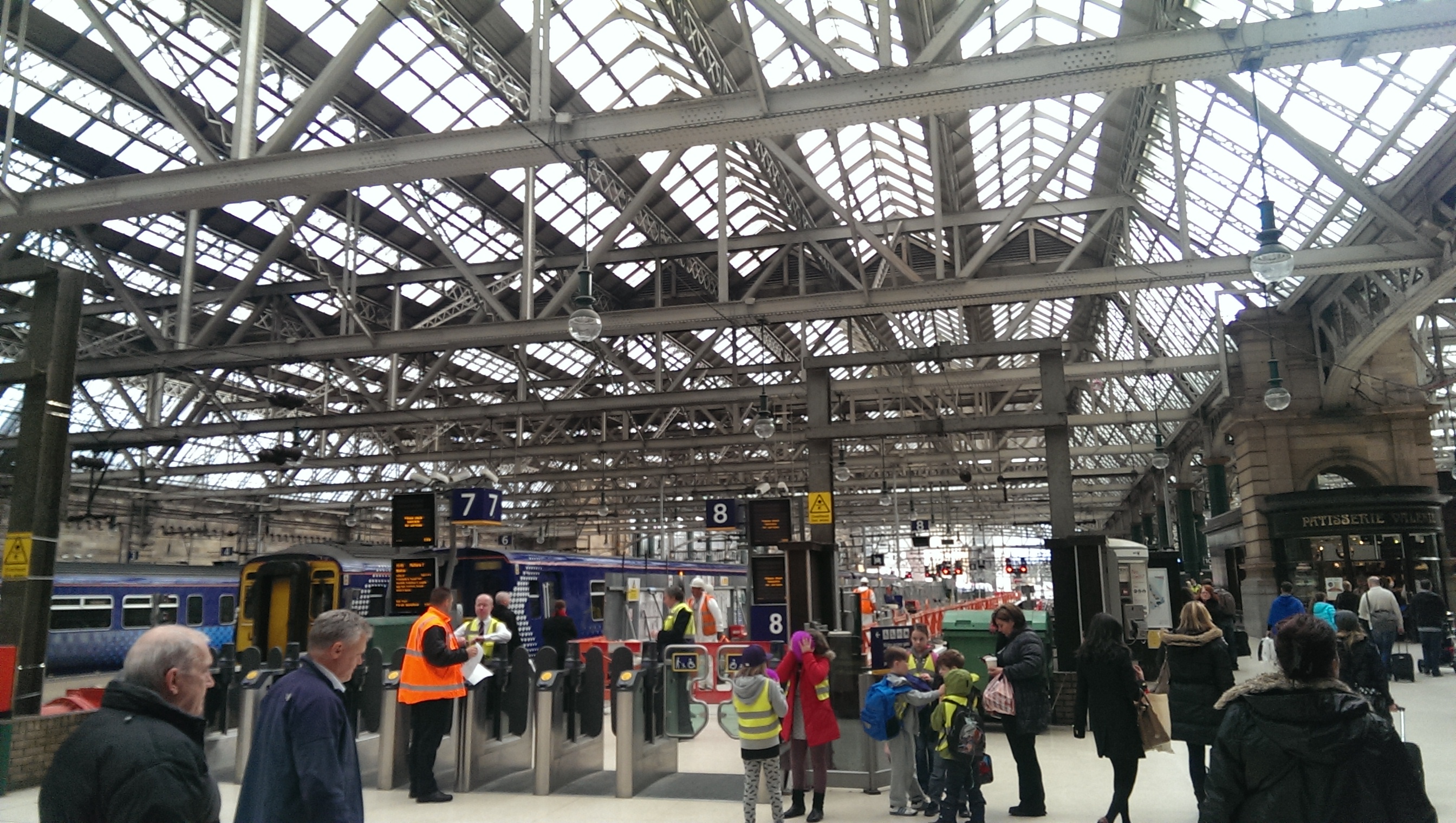
After the bus tour, I stopped at Central Station and collected tickets for the train journeys to Bath and London next week, and Portsmouth (where I have booked a cabin on an overnight ferry to Normandy) the following week. Finally had fish and chips in a proper neighborhood pub tonight.

Cast iron canopy, Central Station

Cast iron canopy, Central Station

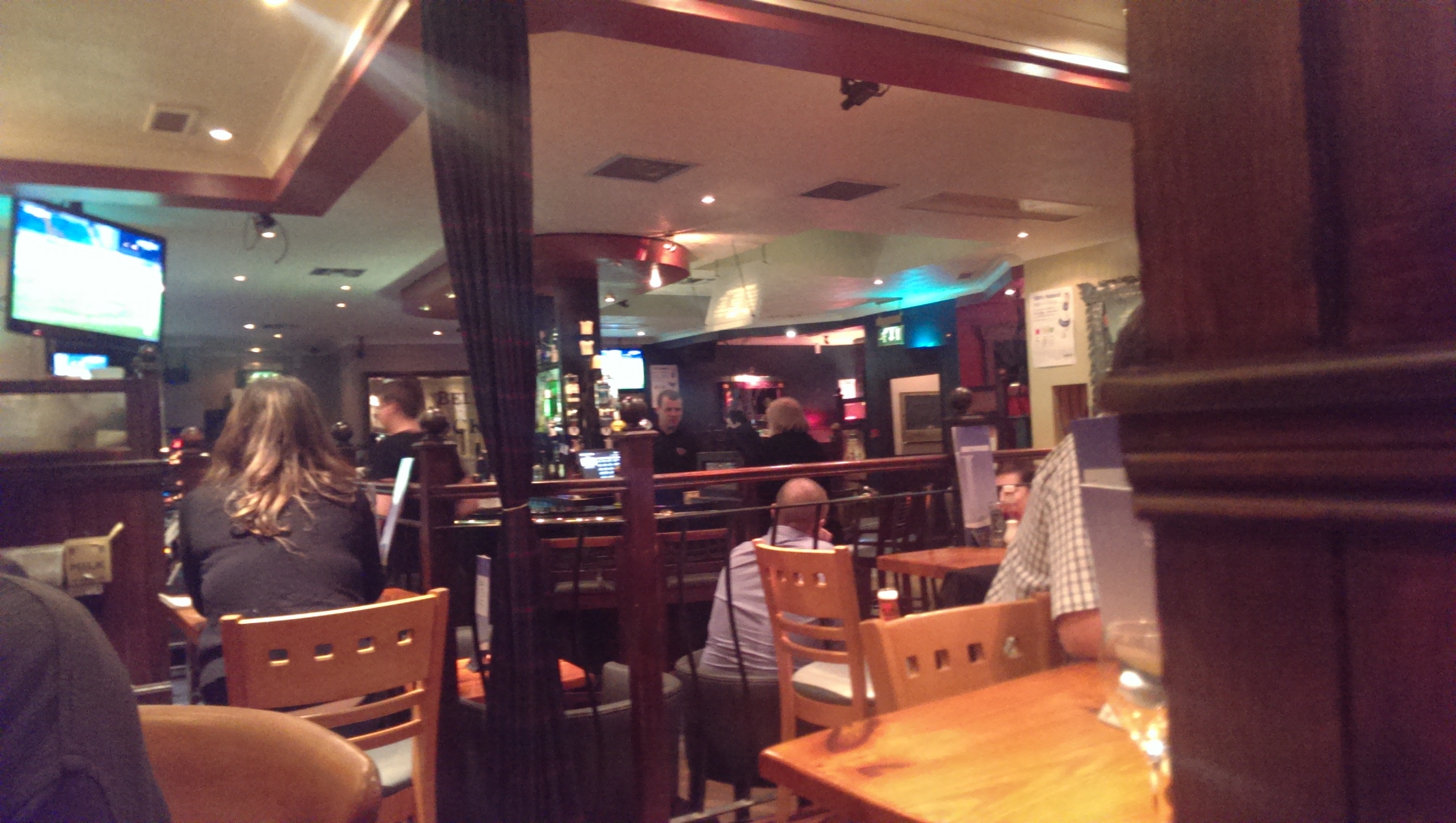
Lock 27 pub, Anniesland, Glasgow

Lock 27 pub, Anniesland, Glasgow


IMAG0523

Tomorrow I will venture by rail to Stirling to see the castle there and the Victorian monument to William Wallace. Stay Tuned.

Cheers!

IMAG0520

← Older posts
Newer posts →

Subscribe

  • Entries (RSS)
  • Comments (RSS)

Archives

  • April 2016
  • March 2016
  • March 2015
  • February 2015
  • April 2014
  • March 2014
  • November 2013
  • October 2013
  • September 2013

Categories

  • Uncategorized

Meta

  • Create account
  • Log in

Blog at WordPress.com.

  • Subscribe Subscribed
    • savagemythology
    • Join 37 other subscribers
    • Already have a WordPress.com account? Log in now.
    • savagemythology
    • Subscribe Subscribed
    • Sign up
    • Log in
    • Report this content
    • View site in Reader
    • Manage subscriptions
    • Collapse this bar
 

Loading Comments...